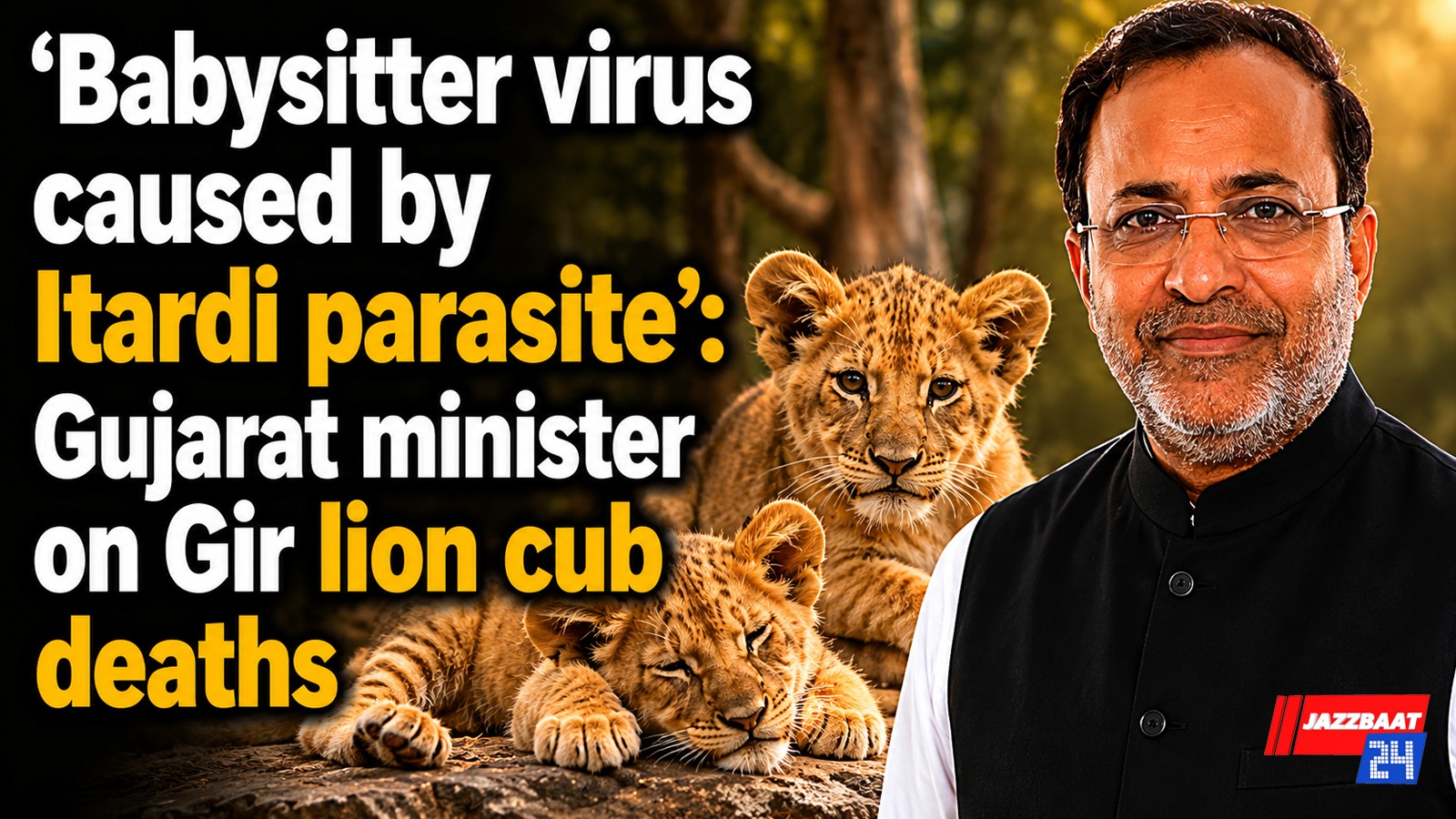
A senior Gujarat minister has attributed the recent deaths of Asiatic lion cubs in the Gir forest region to a suspected “babysitter virus” linked with an Itardi parasite, even as wildlife officials continue investigations into the exact cause.
Forest authorities said multiple lion cubs have died in and around the Gir landscape over the past few days, triggering concern among conservation teams and prompting an emergency health response in the region. Samples from the dead cubs have been sent to laboratories for detailed testing to confirm whether a viral or parasitic infection is responsible.
Arjun Modhwadia stated that preliminary observations point toward a “babysitter virus” associated with an Itardi parasite, which he said can affect wild animals in certain conditions. He added that treatment and preventive measures are already being implemented based on observed symptoms, while officials wait for final lab confirmation.
According to forest department sources, the deaths have occurred across different parts of the Gir ecosystem, including areas in Gir Somnath and Amreli districts. In response, the department has intensified surveillance and launched de-ticking and health monitoring drives for lions in the surrounding regions to prevent any possible spread.
Officials have also isolated several lions showing symptoms of illness and brought in veterinary experts from Junagadh Veterinary College to assist in diagnosis and treatment. Wildlife teams are closely tracking movements of lion prides within a 10-km radius of the affected zones.
Authorities, however, have urged caution against speculation, saying that it is too early to confirm a widespread outbreak. They emphasized that only a limited number of deaths have been recorded so far and that there is no evidence of a large-scale epidemic in the Gir landscape.
The Gir forest is home to the world’s only wild population of Asiatic lions, and any health threat to cubs is considered particularly serious due to their vulnerability and the relatively small population base. Conservation experts note that cub mortality can occur due to infections, parasites, or natural causes, especially during seasonal changes.
Meanwhile, monitoring efforts have been stepped up across the protected area, with forest officials maintaining round-the-clock surveillance and coordinating with wildlife health specialists.
As investigations continue, authorities say the priority remains to stabilize the situation and prevent further losses while the exact cause of the cub deaths is scientifically established.