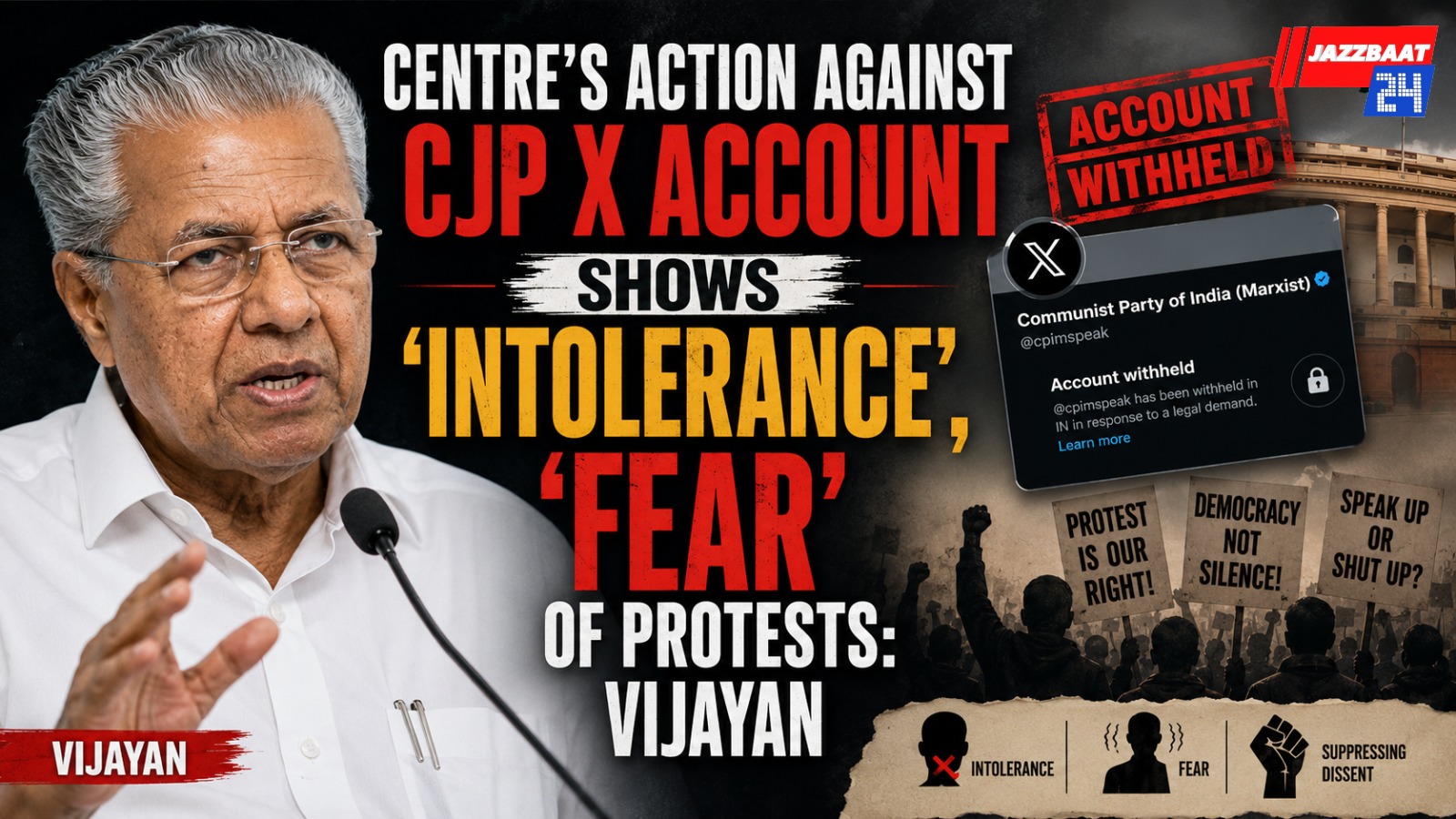
Thiruvananthapuram: Kerala Leader of Opposition Pinarayi Vijayan has strongly criticised the Centre over the withholding of the X (formerly Twitter) account of the satirical political collective Cockroach Janata Party (CJP), alleging that the move reflects “intolerance” and “fear” towards democratic protests.
In a statement issued on Saturday, Vijayan said the action against the social media handle shows the government’s anxiety over the rapid rise of CJP as a youth-driven digital protest movement. He questioned the rationale behind the decision, asking, “Why is the BJP scared of it?”
According to Vijayan, the sudden popularity of CJP indicates deep public dissatisfaction, particularly among young people facing unemployment, inequality and lack of opportunities. He claimed that such movements are gaining more attention than official political communication channels, which he said reflects a shift in public sentiment.
The CPI(M) leader argued that the issue should not be reduced to a reaction to a particular remark or satire, but seen as a broader expression of political frustration. He added that attempts to curb such digital movements would go against the constitutional principles of free speech and democratic participation.
Vijayan further alleged that the Centre’s response indicates an effort to suppress dissenting voices rather than engage with them politically. He said disagreements with protest forms are natural in a democracy, but using administrative or legal mechanisms to silence them undermines democratic values.
He also called upon all democratic forces to oppose what he described as growing restrictions on freedom of expression in the digital space.
The controversy erupted after the CJP’s X account was withheld in India earlier this week, triggering political reactions across parties. The group, which emerged recently as a satirical online movement, had gained significant traction on social media before its account restriction.
While opposition leaders have criticised the move as censorship, others have alleged that such online campaigns may have wider political or coordinated motives.
The issue has now become part of a larger political debate over digital freedom, online dissent, and the limits of satire in India’s political landscape.