

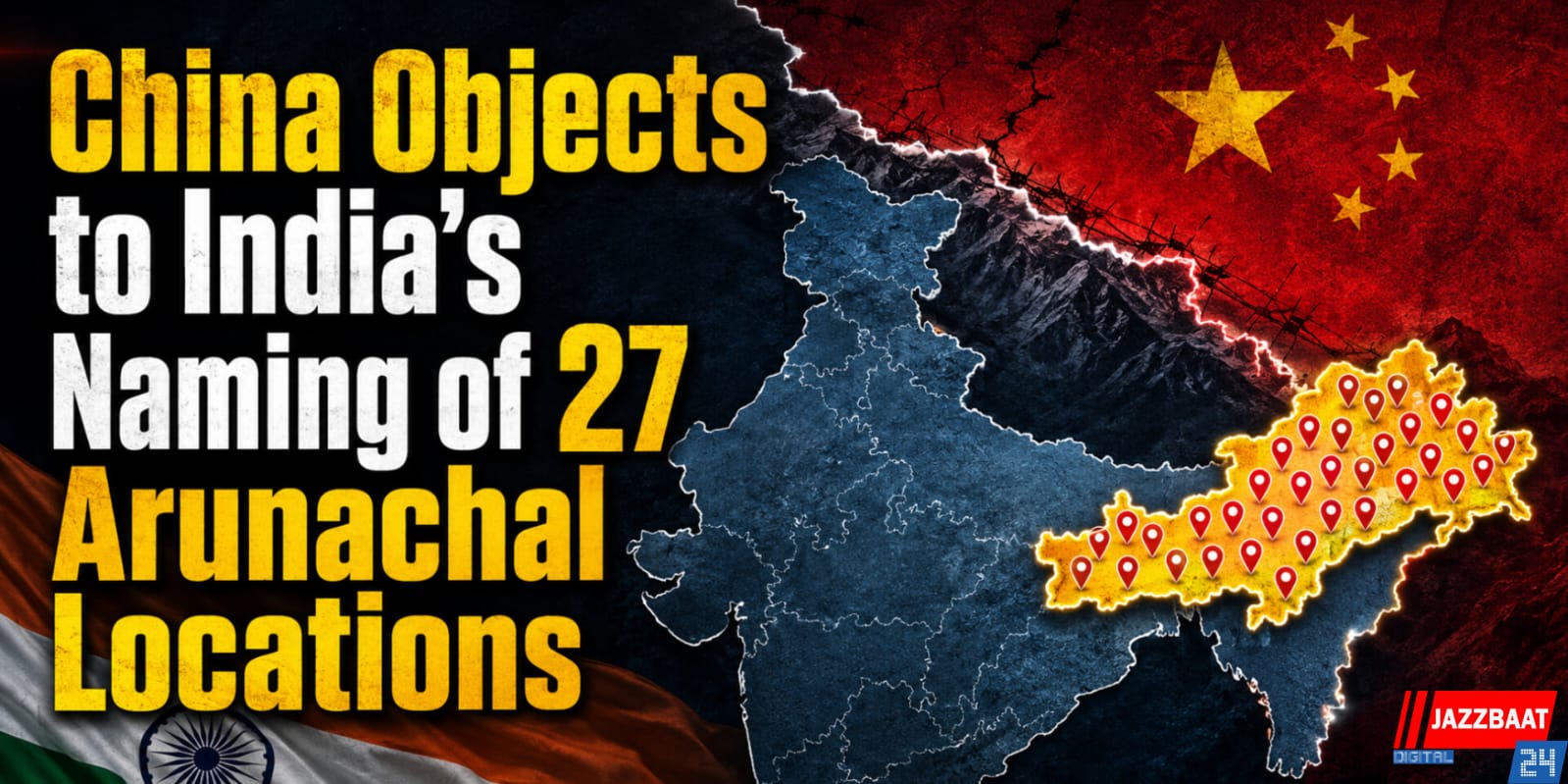
China has criticised India’s decision to formally name 27 locations in Arunachal Pradesh, saying the move could complicate efforts to settle the long-running border dispute and affect the recent improvement in bilateral relations.
The Indian government has officially identified 27 geographical locations in Arunachal Pradesh on updated Survey of India maps. The list includes several mountain passes, a high-altitude lake, land areas and memorial sites linked to the 1962 India-China war. The move is being seen as part of New Delhi’s broader effort to reinforce its territorial claims and establish standard Indian names for locations along the sensitive border.
Beijing reacted sharply to the development. Chinese officials and state-linked media have described India’s action as unilateral and argued that such moves could add complications to negotiations over the boundary question. China claims Arunachal Pradesh as part of what it calls “Zangnan” or southern Tibet, while India has repeatedly rejected Beijing’s territorial claims and maintained that Arunachal Pradesh is an integral and inalienable part of the country.
The latest dispute comes against the backdrop of a broader attempt by India and China to stabilise their strained relationship following years of military tensions along the Line of Actual Control (LAC). Both sides have taken steps in recent years to restore diplomatic engagement and reduce tensions, although the boundary issue remains unresolved.
The naming dispute is not new. China has repeatedly announced its own names for locations in Arunachal Pradesh, including a list of 27 names in 2025. India rejected those names, calling them fictitious and saying that changing names cannot alter the territory’s status.
In April 2026, India again rejected China’s attempts to assign names to places in Arunachal Pradesh. External Affairs Ministry spokesperson Randhir Jaiswal said such actions could inject negativity into bilateral relations and undermine efforts to improve mutual understanding.
China, however, has maintained that it has the right to name places in what it considers its territory. Beijing has also said that its policy of improving relations with India has not changed.
The latest exchange highlights how sensitive the Arunachal Pradesh issue remains. While New Delhi and Beijing are trying to improve ties, competing territorial claims and moves involving place names continue to create fresh friction along the disputed frontier.