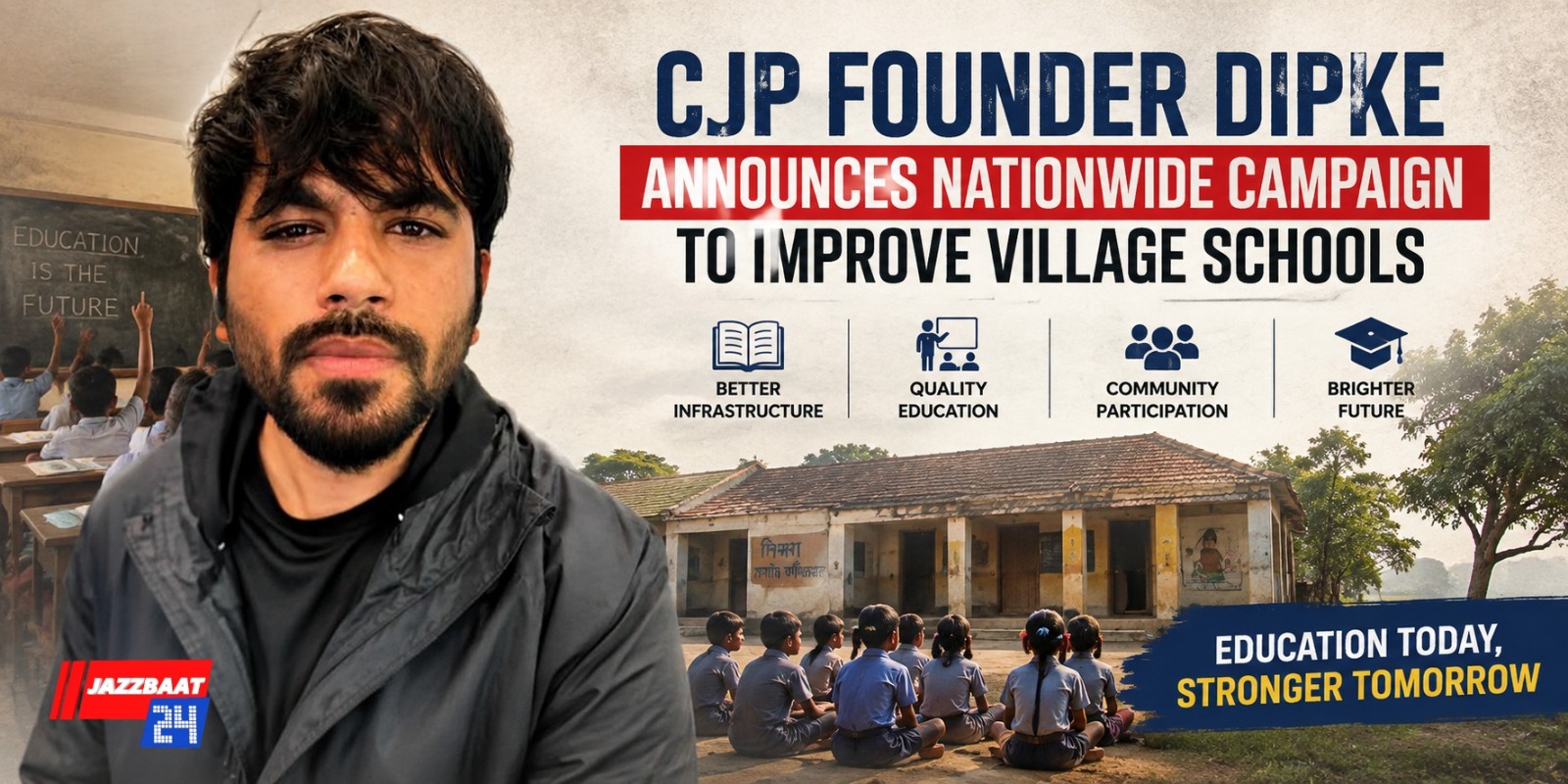
Cockroach Janta Party (CJP) founder Abhijeet Dipke has announced a nationwide campaign aimed at improving government schools in rural and village areas, putting the spotlight on the condition of public education infrastructure across India. The campaign is scheduled to begin on August 15, according to reports.
Dipke has questioned the priorities of governments when it comes to public spending, arguing that while major national infrastructure projects receive attention, many government schools in villages continue to struggle with basic facilities. The campaign will seek to highlight these gaps and push authorities towards improving the quality of education available to children in rural India.
The initiative is expected to focus on a social audit of rural government schools, with citizens and volunteers being encouraged to document the condition of schools and bring local problems into the public domain. Issues such as inadequate infrastructure, shortage of facilities and the broader quality of education are expected to form part of the campaign.
Dipke's latest announcement marks a shift in focus for the CJP, which has emerged in recent months through a series of student-led campaigns on education, examinations and employment. The organisation initially gained attention through protests over alleged irregularities in competitive examinations and later expanded its activities beyond a single issue.
The CJP had earlier organised nationwide protests demanding reforms in the education system and greater accountability over examination-related controversies. Its campaign included demonstrations in several cities and a prolonged protest at Delhi's Jantar Mantar.
The focus on village schools also echoes concerns raised during the CJP's earlier protests. Activist Sonam Wangchuk had stressed that the foundation of India's development must include schools located in villages and argued for greater attention to government education rather than allowing the quality gap between private and public schools to widen.
The proposed campaign could therefore take the CJP's education movement to the grassroots, with rural schools becoming the centre of its next phase. By involving citizens in documenting problems and demanding action, the organisation hopes to turn concerns about government schools into a broader national conversation.
With the campaign set to begin on Independence Day, Dipke and the CJP are looking to shift the debate from examination controversies to the larger question of how India can ensure better and more equal educational opportunities for children living in villages.