
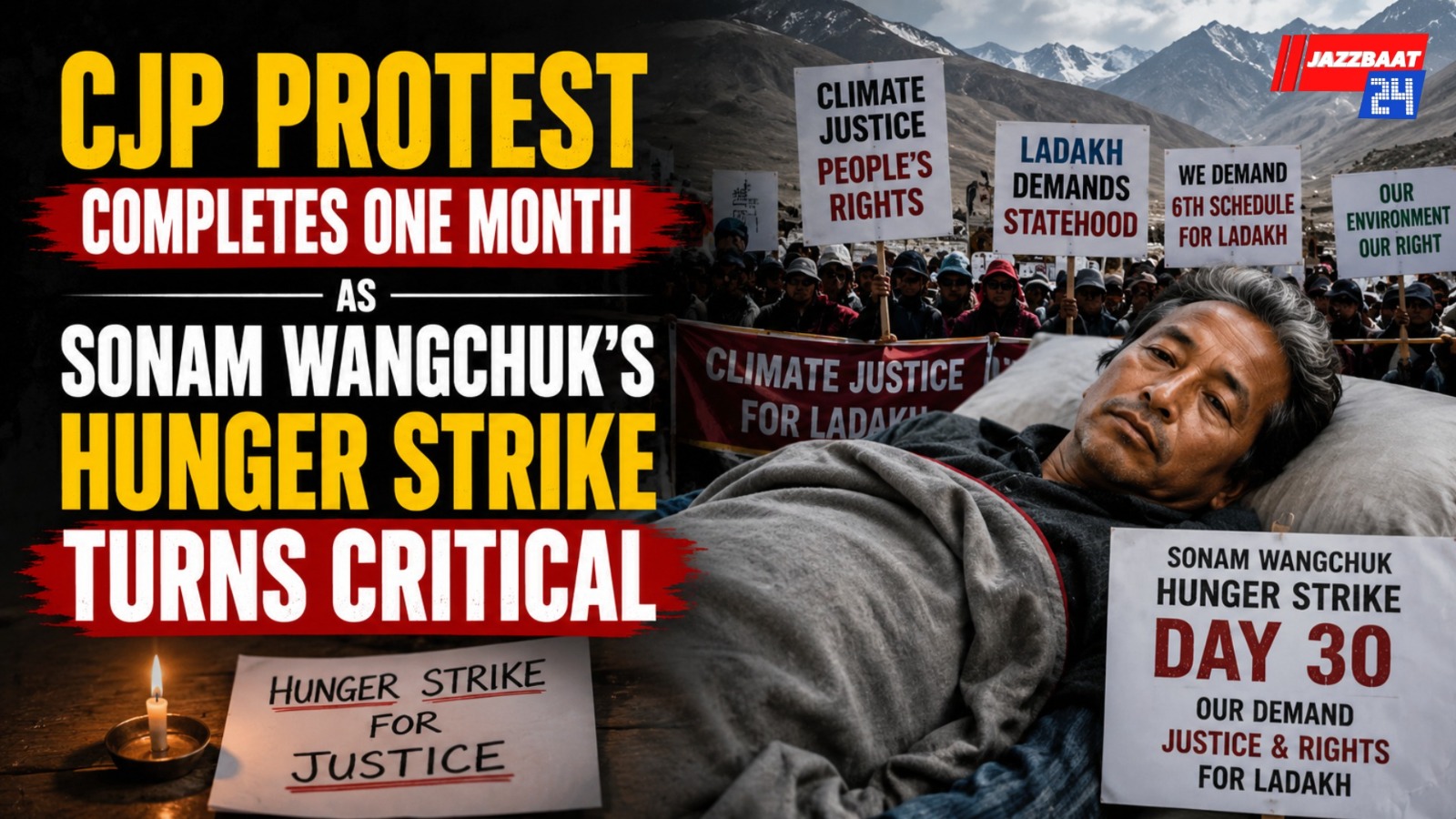
The protest led by the Cockroach Janta Party (CJP) at Delhi's Jantar Mantar has completed one month, while social activist Sonam Wangchuk's indefinite hunger strike has entered a critical phase, drawing nationwide attention and intensifying pressure on the Centre. The demonstration, which began on June 20, has evolved into one of the country's most closely watched youth-led protests, focusing on alleged irregularities in competitive examinations, including the NEET paper leak.
Wangchuk joined the agitation on June 28 and has now been fasting for over two weeks. According to health updates shared by the protest organisers, he has lost around 8.5 kilograms, is suffering from muscle loss, low blood sugar and severe weakness, but has refused to end his fast despite repeated appeals from supporters and political leaders. His deteriorating condition has sparked growing concern among doctors, activists and opposition leaders.
As concerns over his health mount, a Public Interest Litigation (PIL) has been filed in the Delhi High Court seeking immediate medical intervention. The petition urges the Centre and the Delhi Government to shift Wangchuk to a government hospital and ensure urgent treatment, arguing that his life is at serious risk if medical care is delayed. The High Court has sought responses from the authorities and is hearing the matter on priority.
Meanwhile, the CJP has accused the Central Government of remaining silent despite the prolonged protest. Party founder Abhijeet Dipke said the demonstrators have "received nothing but silence" from the authorities, adding that the movement will continue until their demands are addressed. To further strengthen the campaign, the organisation has announced a one-day mass hunger strike at Jantar Mantar in solidarity with Wangchuk and has also planned a march to Parliament during the ongoing Monsoon Session.
The protest has received support from several public figures and opposition leaders. Congress MP Shashi Tharoor recently appealed to Wangchuk to end his fast, saying that the country needs his voice and leadership more than his sacrifice. While expressing solidarity with the students' demands, Tharoor urged him to continue the fight through dialogue rather than risking his life.
With the protest entering its second month and Wangchuk's health continuing to decline, the movement has become a major national issue. As legal proceedings continue and public support grows, attention now remains focused on whether the government will respond to the protesters' demands or whether the agitation will intensify further in the coming days.