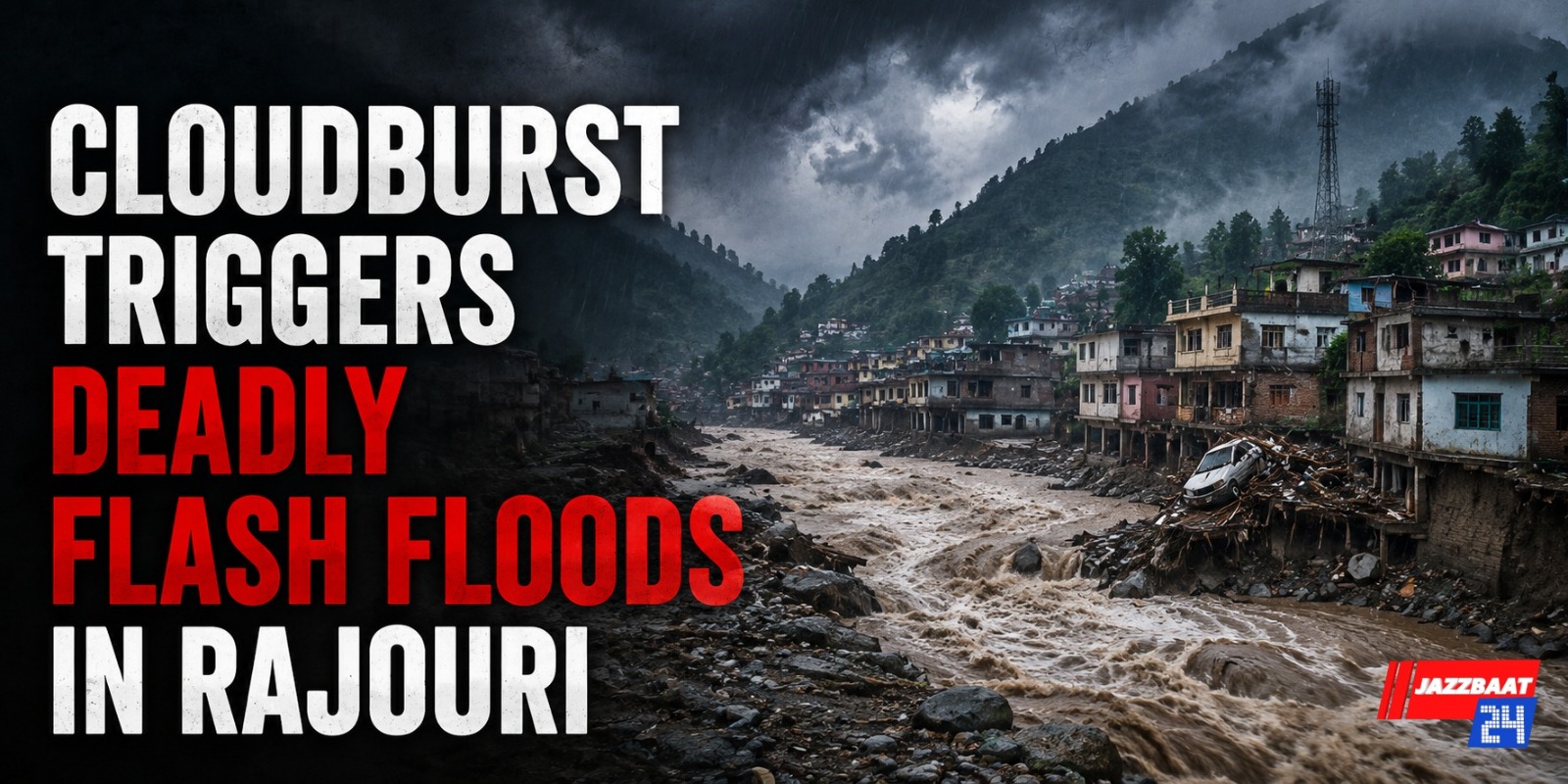
Rajouri, August 20: A cloudburst and intense rainfall triggered devastating flash floods in Jammu and Kashmir’s Rajouri district, leaving at least four people dead and causing widespread damage to homes, roads and other infrastructure.
The sudden surge of water swept through several areas, carrying mud, stones and debris and damaging residential structures. Several houses were either washed away or severely damaged as floodwaters moved through low-lying areas with considerable force. Roads and other public infrastructure were also affected, disrupting connectivity in parts of the district.
The disaster has added to the growing monsoon crisis across Jammu and Kashmir, where heavy rainfall has triggered flash floods and landslides in several districts. Rajouri and neighbouring Poonch have repeatedly remained vulnerable to sudden flooding during periods of intense rainfall. The India Meteorological Department had earlier identified Rajouri among the districts facing a low to moderate flash-flood risk following heavy rain.
Rescue and relief teams have been deployed in affected areas to assist residents and assess the extent of the damage. Local authorities are monitoring water levels and vulnerable locations while efforts are underway to restore damaged infrastructure and ensure essential services.
The latest incident comes amid a series of extreme weather events across the Himalayan region this monsoon. In July, flash floods in Jammu and Kashmir caused deaths, damaged homes and washed away roads and bridges across parts of Rajouri and Poonch. Rescue teams, including personnel from the SDRF, police, CRPF and civil administration, were deployed during earlier flood emergencies.
The repeated flooding has raised concerns about the vulnerability of hill districts to intense, short-duration rainfall. Cloudbursts can release enormous amounts of water within a limited area over a very short period, producing powerful torrents that can quickly overwhelm streams, roads and drainage systems.
Residents in vulnerable areas have been advised to remain alert and follow instructions issued by local authorities. People have also been urged to avoid crossing swollen streams, rivers and flooded roads, particularly during periods of heavy rainfall.
With the monsoon remaining active across the region, authorities are keeping a close watch on weather conditions and possible further flooding. The immediate priority remains rescuing those affected, providing shelter and assistance to displaced families, and restoring damaged roads and essential infrastructure.
The Rajouri disaster once again highlights the growing risks posed by extreme rainfall and flash floods in Jammu and Kashmir, where difficult terrain and fragile infrastructure can magnify the impact of sudden weather events.