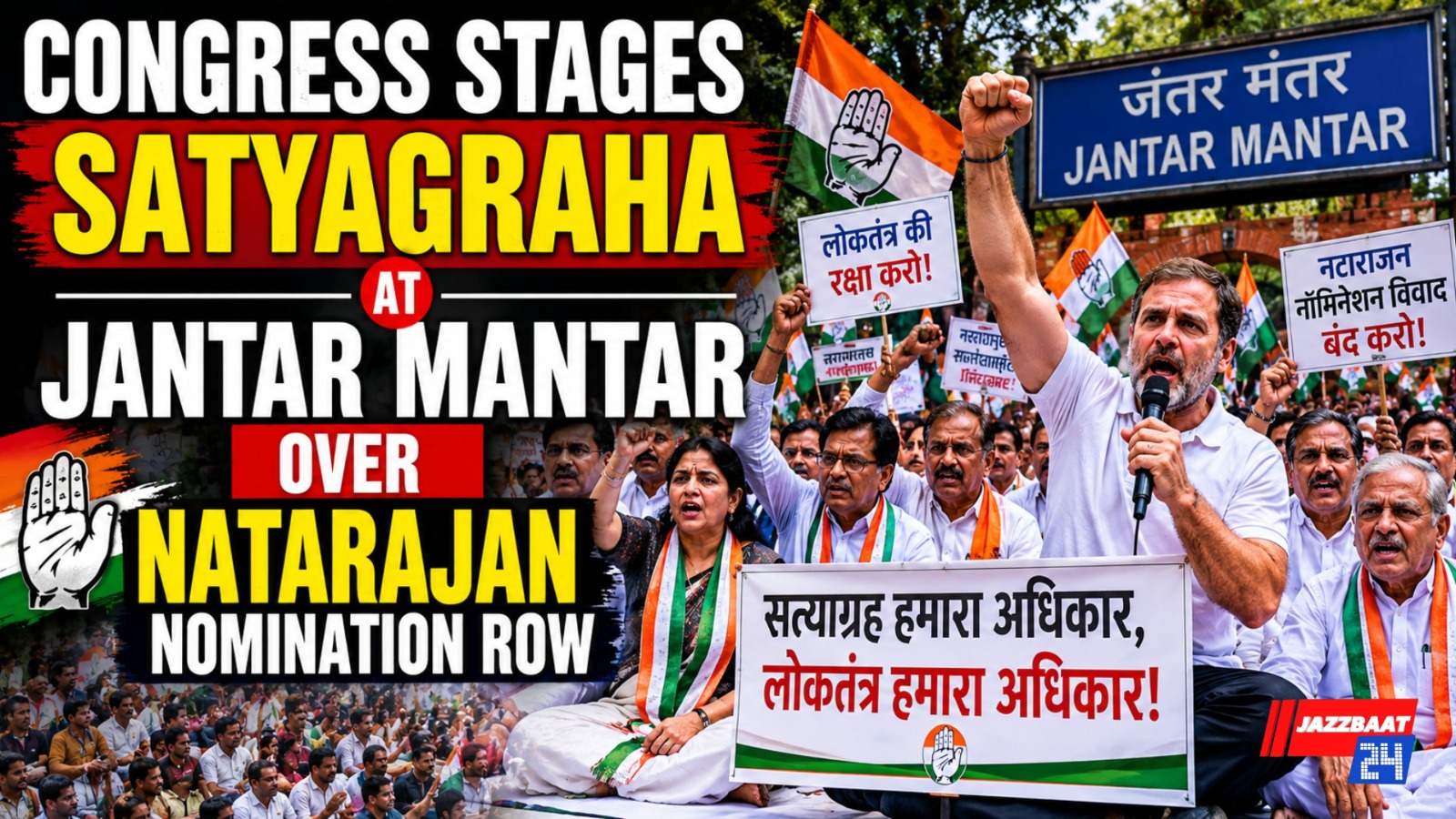
The Congress on Friday organized a “Satyagraha” protest at Delhi’s Jantar Mantar against the Election Commission of India (ECI), alleging that the rejection of senior leader Meenakshi Natarajan’s Rajya Sabha nomination from Madhya Pradesh was politically motivated and a threat to democratic processes. The demonstration brought together several senior party leaders and workers who demanded immediate action to address what they described as an unjust decision.
The controversy began after Natarajan’s nomination papers for the June 18 Rajya Sabha elections were rejected during scrutiny. The Returning Officer accepted objections raised by the BJP, which alleged that she had failed to disclose details related to a legal matter in Telangana in her election affidavit. Election officials stated that she was given an opportunity to provide additional information but did not do so, leading to the rejection of her nomination.
Congress leaders strongly disputed the decision, arguing that there was no criminal case pending against Natarajan. According to the party, the matter in Telangana relates only to a private complaint and a court notice, while no court has taken cognisance of the complaint. Senior Congress leader Abhishek Manu Singhvi said that under established legal principles, a criminal case comes into existence only after a court takes cognisance, making the rejection legally unsustainable.
Addressing supporters during the protest, Congress leaders accused the ECI of failing to protect the fairness of the electoral process. They alleged that the rejection effectively handed all three Rajya Sabha seats in Madhya Pradesh to the BJP without a contest. The party has repeatedly described the decision as “blatantly unlawful” and has vowed to continue both legal and political challenges against it.
The Congress has already met Election Commission officials and submitted representations seeking a reversal of the Returning Officer’s order. Simultaneously, Natarajan approached the Supreme Court challenging the rejection. However, the apex court observed on Friday that the appropriate remedy in such cases is to approach the Election Commission through the established election dispute mechanism. The court did not grant any immediate relief.
Natarajan herself has maintained that she did not conceal any information and argued that the affidavit provisions cited by the BJP were not applicable to her case. She described the controversy as an attempt to deny the opposition a fair opportunity in the Rajya Sabha election.
With the BJP now set to secure all three Rajya Sabha seats from Madhya Pradesh, the dispute has become a major flashpoint between the ruling party and the Congress, adding to the growing political confrontation ahead of future electoral contests.