

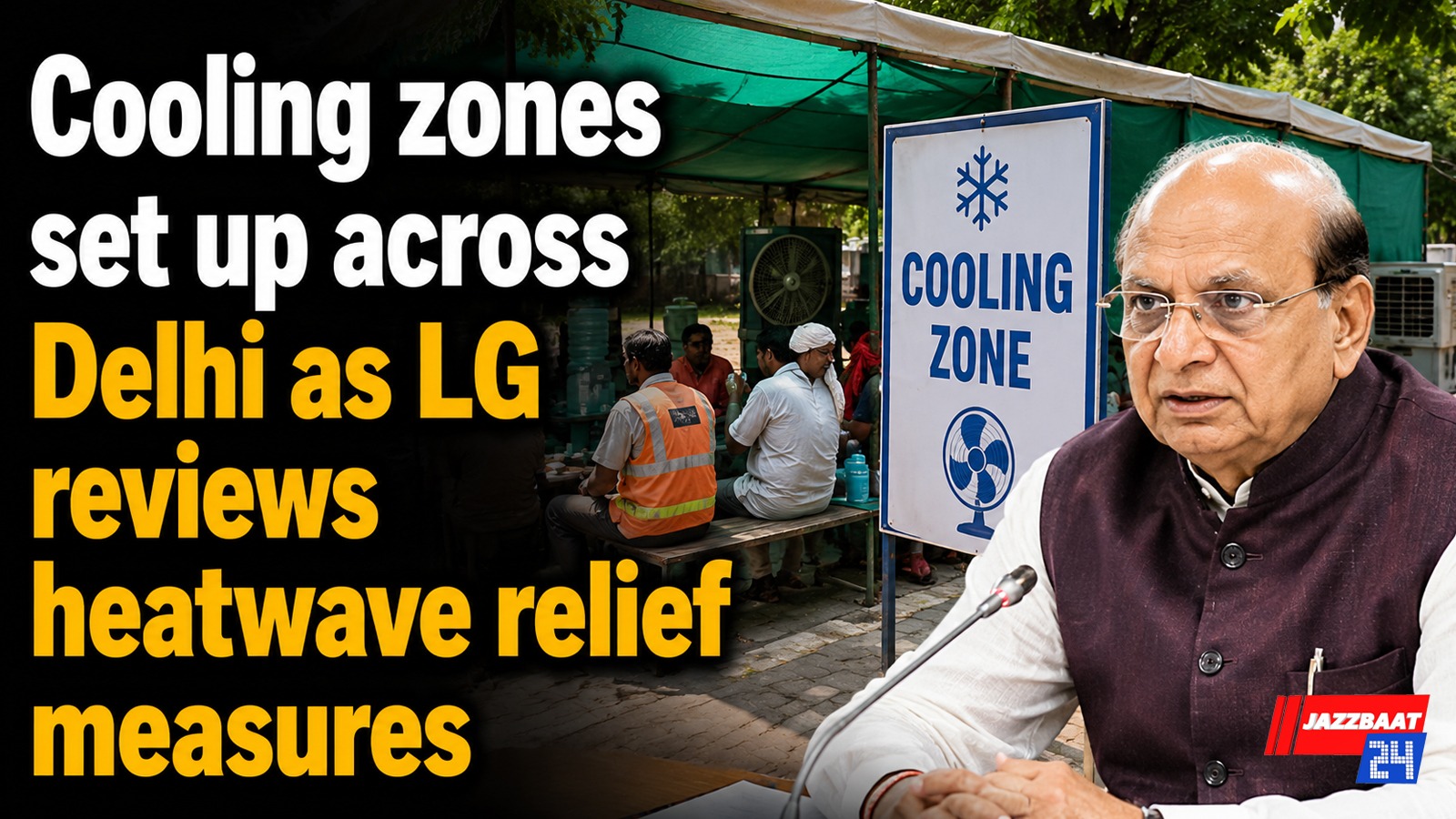
The Delhi Lieutenant Governor has reviewed ongoing heatwave relief operations in the national capital as temperatures continue to soar, prompting authorities to step up emergency preparedness across the city.
Officials said the Lieutenant Governor assessed the arrangements with senior administrative officers and directed agencies to ensure smooth implementation of heat action plans, particularly for vulnerable groups such as daily wage workers, the elderly, and homeless populations.
As part of the measures, dedicated cooling zones have been set up across all eight districts of Delhi. These temporary relief spaces include shaded rest areas, drinking water facilities, and cooling arrangements to help people cope with extreme heat conditions during peak daytime hours.
Health and disaster management officials have also been instructed to maintain adequate medical support at hospitals and heatstroke treatment centres. Ambulance services are being kept on alert, while public advisories are being issued to encourage residents to avoid outdoor activity during peak afternoon hours, stay hydrated, and wear light clothing.
The Delhi government has activated its heat action plan, which includes coordination between municipal bodies, health departments, and disaster response teams. Authorities are also monitoring power and water supply to ensure there are no disruptions during the ongoing heatwave period.
Officials said special attention is being given to construction sites, traffic junctions, and densely populated areas where people are more exposed to direct sunlight. Water tankers and temporary shelters have been deployed in several locations to provide immediate relief.
Meteorological updates suggest that the heatwave conditions may persist for the coming days, with temperatures remaining above seasonal averages. This has prompted the administration to maintain heightened readiness and continue public awareness campaigns through local announcements and digital platforms.
The review by the Lieutenant Governor comes amid growing concern over rising heat-related illnesses in urban areas during peak summer months. Authorities have urged citizens to follow safety guidelines and report any cases of heat exhaustion or dehydration promptly.
With relief measures now expanded across districts, officials hope the cooling zones and support systems will help reduce the impact of extreme weather on the city’s most vulnerable residents.