

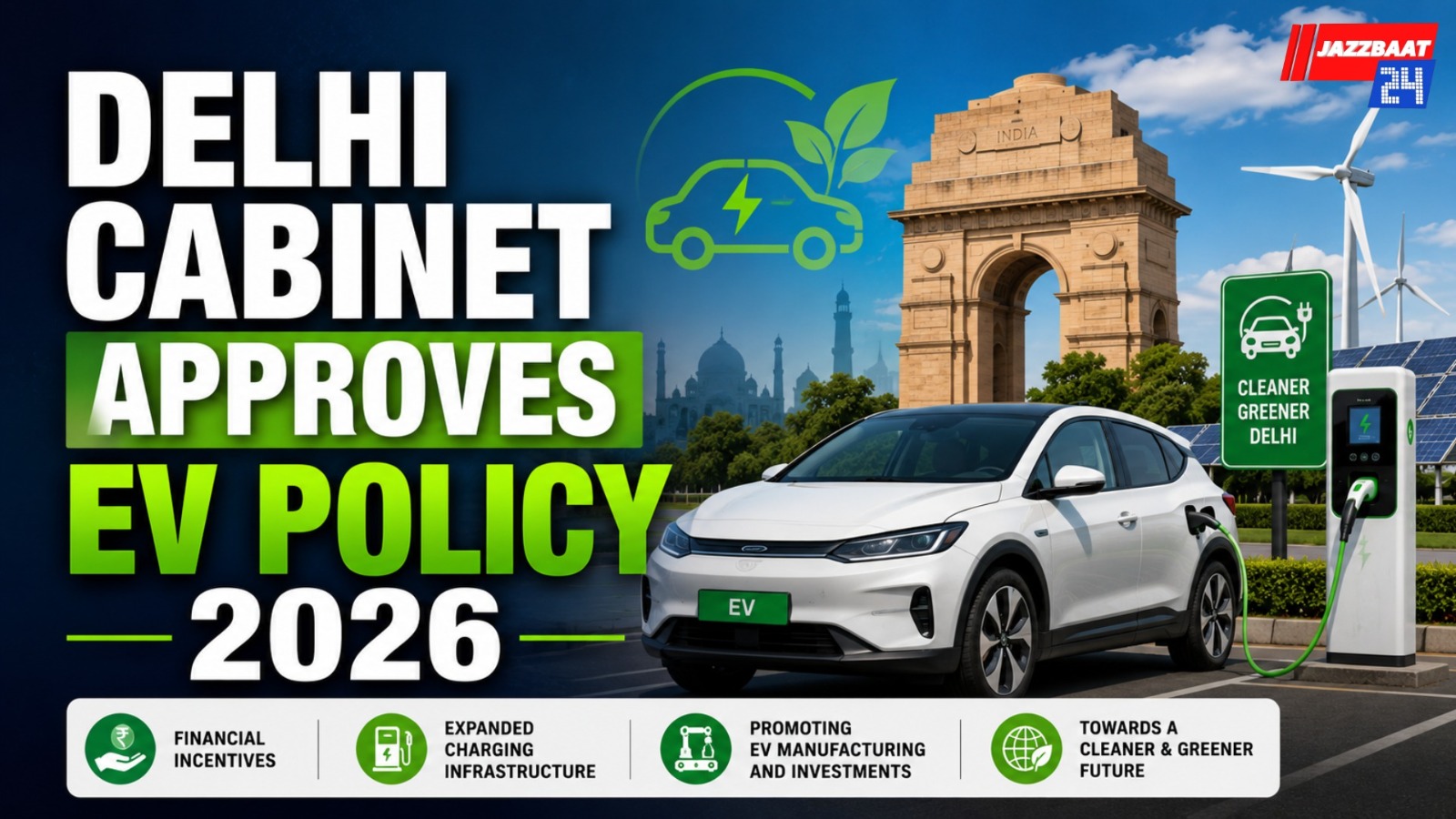
Tax Waivers, Subsidies and EV-Only Push Explained
The Delhi Cabinet, headed by Chief Minister Rekha Gupta, has approved the new Delhi Electric Vehicle (EV) Policy 2026, aimed at accelerating the transition to clean mobility and reducing vehicular pollution in the national capital. The policy will come into effect from July 1, 2026, and remain in force until March 31, 2030. The government estimates that the policy could attract investments worth nearly ₹15,000 crore over the next four years.
Key Highlights of the Policy
100% Tax Waiver for Electric Cars Electric cars with an ex-showroom price of up to ₹30 lakh will receive a complete exemption from road tax and registration fees. However, EVs priced above ₹30 lakh will not qualify for these benefits. The government has also dropped the proposal to extend incentives to hybrid vehicles, choosing to focus entirely on battery-powered electric vehicles.
Purchase Subsidies and Incentives The policy offers financial incentives for buyers of electric two-wheelers, three-wheelers and commercial vehicles. Subsidies of up to ₹50,000 will be available for certain categories of EVs, while owners scrapping old vehicles and switching to electric models can receive incentives of up to ₹1 lakh.
Phase-Out of Petrol Vehicles The new policy lays down an ambitious roadmap for electrification:
From January 1, 2027, only electric passenger and goods three-wheelers will be registered in Delhi.
From April 1, 2028, only electric two-wheelers will be eligible for new registration in the city.
Massive Charging Infrastructure Expansion Delhi plans to install more than 30,000 public charging points and significantly expand battery-swapping facilities to support the growing EV ecosystem. A single-window clearance system will be introduced to speed up the installation of charging stations.
Why the Policy Matters
Transport contributes nearly a quarter of Delhi's air pollution, and the government hopes the new policy will help electrify at least 30% of the city's vehicle fleet by 2030. Officials say the policy is designed to make electric vehicles more affordable, reduce dependence on fossil fuels and improve air quality in one of the world's most polluted capitals.
The Delhi EV Policy 2026 marks one of the most aggressive clean mobility initiatives undertaken by any Indian state, combining tax waivers, purchase incentives and strict timelines to push the capital towards an all-electric future.