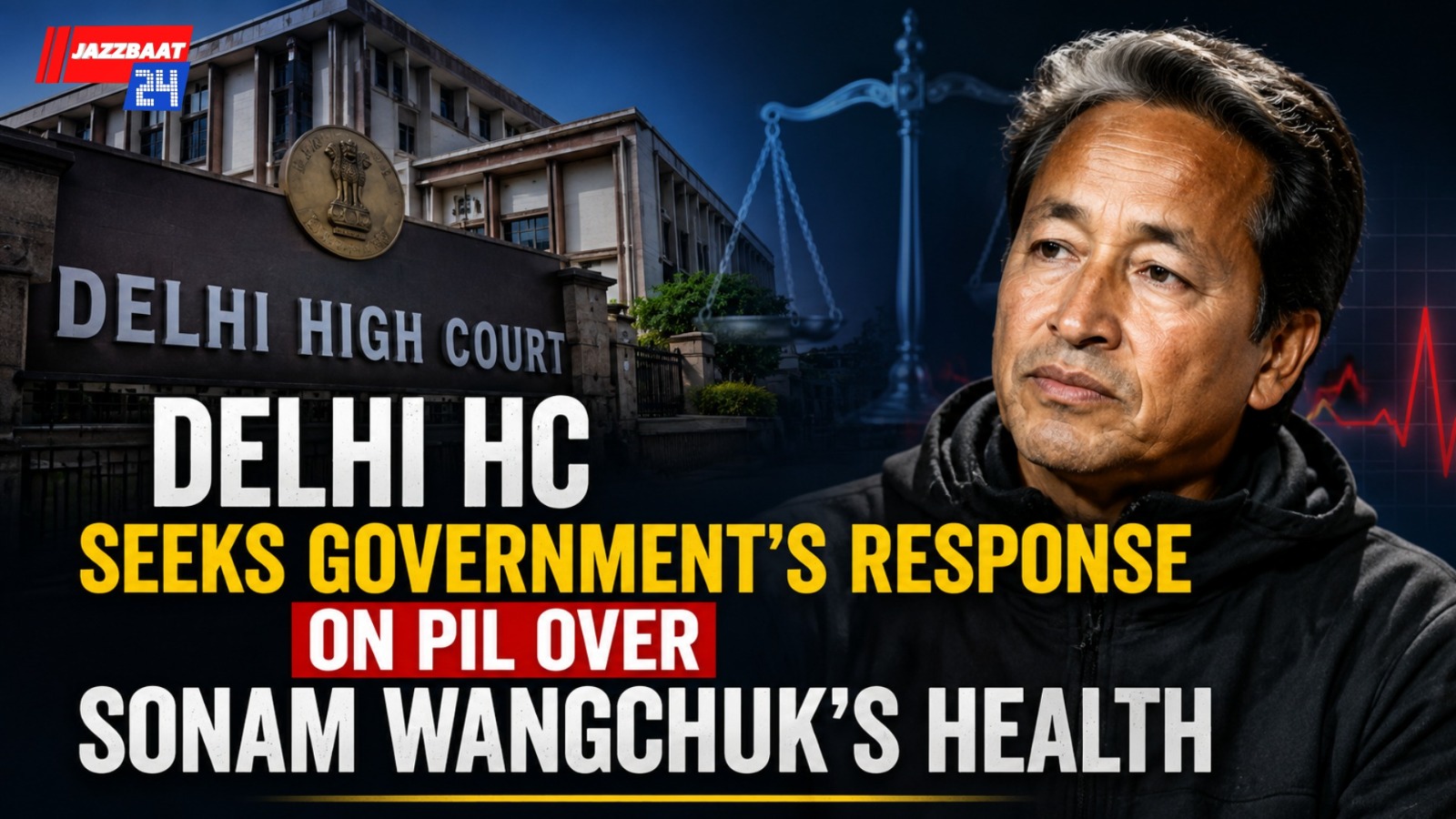
The Delhi High Court on Wednesday sought responses from the Central Government and the Delhi Government on a Public Interest Litigation (PIL) seeking urgent medical intervention for climate activist Sonam Wangchuk, who has been on an indefinite hunger strike at Jantar Mantar. The court's intervention came amid growing concerns over Wangchuk's rapidly deteriorating health.
The PIL, filed by advocate Rakesh Kumar Saini, urges authorities to immediately shift Wangchuk to a government hospital and ensure life-saving medical treatment. The petition also seeks appropriate medical measures, including intervention if required, arguing that his prolonged fast has placed his life at serious risk. According to the plea, Wangchuk has reportedly lost around 8.5 kilograms since beginning his hunger strike, and his condition is becoming increasingly critical.
Hearing the matter, the Delhi High Court issued notices to both the Centre and the Delhi Government, directing them to file their responses. The court acknowledged the urgency of the matter and scheduled the case for further hearing on Thursday.
Sonam Wangchuk began his indefinite hunger strike on June 28 to press for constitutional safeguards and environmental protections for Ladakh. His protest has drawn widespread support from civil society groups, environmental activists, political leaders and several public figures, who have expressed concern over both his health and the issues he has raised.
The PIL argues that while peaceful protest is a constitutional right, the State also has a responsibility to protect the life and health of a citizen whose condition has become life-threatening. It requests the court to ensure that authorities act immediately to prevent any irreversible medical emergency while respecting legal and constitutional principles.
As the legal proceedings continue, attention remains focused on both Wangchuk's health and the government's response to the concerns raised through the PIL. The outcome of the case is expected to have significant implications for the handling of prolonged hunger strikes and the balance between an individual's right to protest and the State's duty to preserve life.