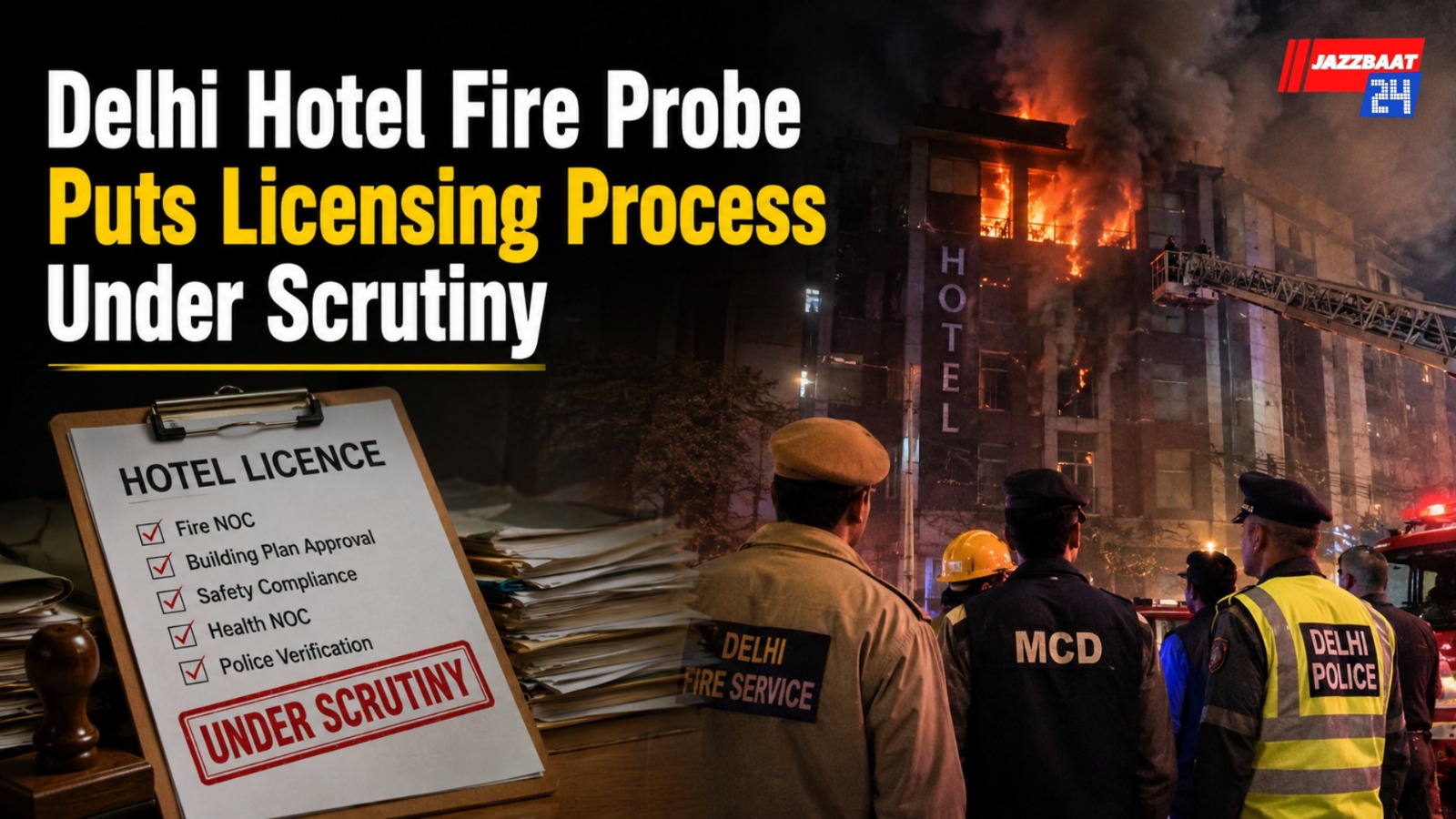
The investigation into the devastating fire at a hotel-cum-bed-and-breakfast establishment in Delhi’s Malviya Nagar has uncovered fresh details about the property's operations, with police now closely examining possible irregularities in licensing, management practices, and fire safety compliance. The June 3 blaze claimed 21 lives and is among the deadliest hotel fires in the national capital in recent years.
According to investigators, key revelations emerged during the interrogation of hotel owner Lavkesh Bajaj and accountant Jai Mishra, both of whom have been arrested in connection with the case. Mishra reportedly told police that he had provided his personal documents to obtain the bed-and-breakfast licence at Bajaj’s request, while the owner himself handled the application process. This disclosure has raised serious questions about how the licence was issued in the name of an employee rather than the person allegedly controlling the property and business.
Police are now examining whether there were procedural lapses or possible irregularities in the approval process. Investigators are also attempting to reconstruct the hotel's licensing history by gathering records from government departments and digital databases after many documents were reportedly destroyed in the fire.
The probe has further revealed that Mishra played a far greater role than that of a conventional accountant. According to police sources, he supervised daily hotel operations, managed staff schedules, maintained guest records, oversaw administrative functions, and handled compliance-related documentation. Investigators believe he may have been central to the hotel's functioning and decision-making process.
Authorities are also investigating allegations that the establishment was operating far beyond its permitted capacity. Preliminary findings suggest that while permission may have been granted for only six rooms, the property was allegedly functioning with around 25 to 28 rooms. Officials have also identified several safety concerns, including a blocked roof exit, inadequate ventilation, locked access points, and the use of cooking heaters inside guest rooms. Investigators noted that fire extinguishers found on the premises appeared unused despite the scale of the emergency.
The inquiry has widened beyond the fire itself to determine whether negligence, unauthorized construction, and licensing violations contributed to the high death toll. Police are continuing to question hotel employees and review operational records as they seek to establish accountability. The findings of the investigation could have broader implications for the regulation and safety oversight of guesthouses and small hotels across Delhi.