

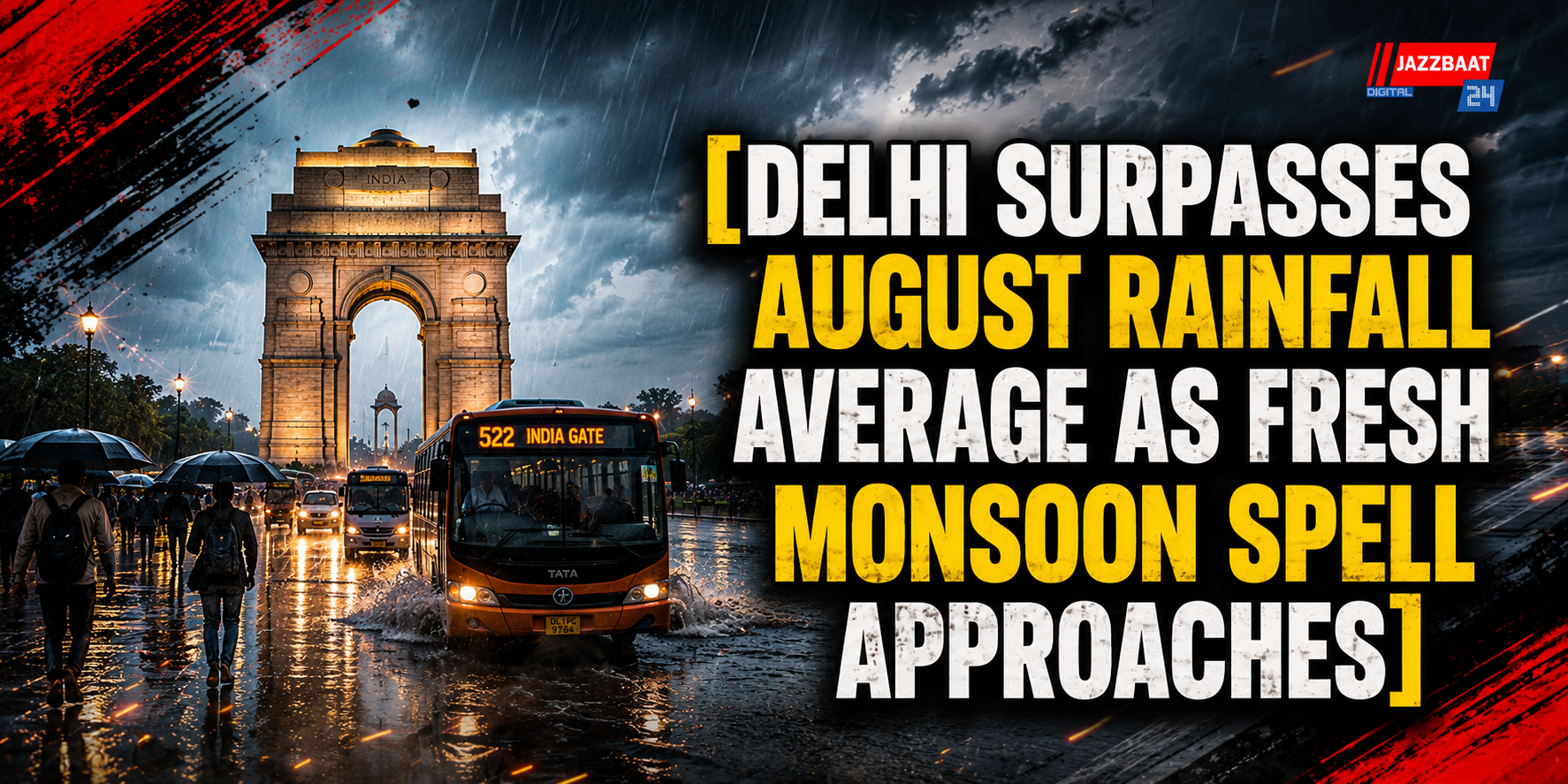
Delhi has already received more rainfall than its normal August monthly average within the first eight days of the month, as an active monsoon pattern brings more rain across several parts of north India.
The national capital recorded 98.7 mm of rainfall in the 24 hours ending Saturday morning, making it the wettest August day in Delhi in two years. The city’s rainfall was the highest recorded for a single August day since August 1, 2024, when 107.6 mm was recorded.
The heavy showers have added to the capital’s monthly rainfall total and pushed it beyond the normal August average much earlier than usual. The India Meteorological Department (IMD) has indicated that more rain is possible in Delhi in the coming days, with thunderstorms and showers likely at times.
The latest weather pattern is not limited to Delhi. The IMD has forecast heavy to very heavy rainfall in several parts of the country during the coming days, particularly across the Western Himalayan region, eastern Rajasthan, Madhya Pradesh, Chhattisgarh, Kerala and parts of Karnataka.
Jammu and Kashmir is also expected to experience another spell of monsoon-related rainfall. Weather conditions across the Western Himalayas are being closely watched because intense rain in mountainous areas can increase the risk of flash floods, landslides and disruption to roads.
The renewed rainfall activity comes after a period of strong monsoon conditions across several parts of northern India. The interaction between moisture-laden winds and weather systems over north India is expected to keep conditions unsettled in the region.
For Delhi residents, repeated spells of rain could bring temporary relief from high temperatures but may also cause waterlogging and traffic disruptions in vulnerable parts of the city. Commuters have been advised to remain alert during periods of intense rainfall and thunderstorms.
The IMD has also warned of heavy rain in parts of the Western Himalayas, where steep terrain makes the impact of intense rainfall particularly significant. Authorities in vulnerable areas are expected to monitor rivers, streams and landslide-prone zones as the fresh spell develops.
With more rainfall forecast in the coming days, weather officials are urging people to follow local advisories and exercise caution during heavy showers.
The latest developments underline the uneven nature of this year's monsoon, with some regions receiving intense rainfall over short periods while others continue to experience relatively weaker spells. For Delhi and the northern hills, however, the immediate forecast points towards a wetter stretch of weather ahead.