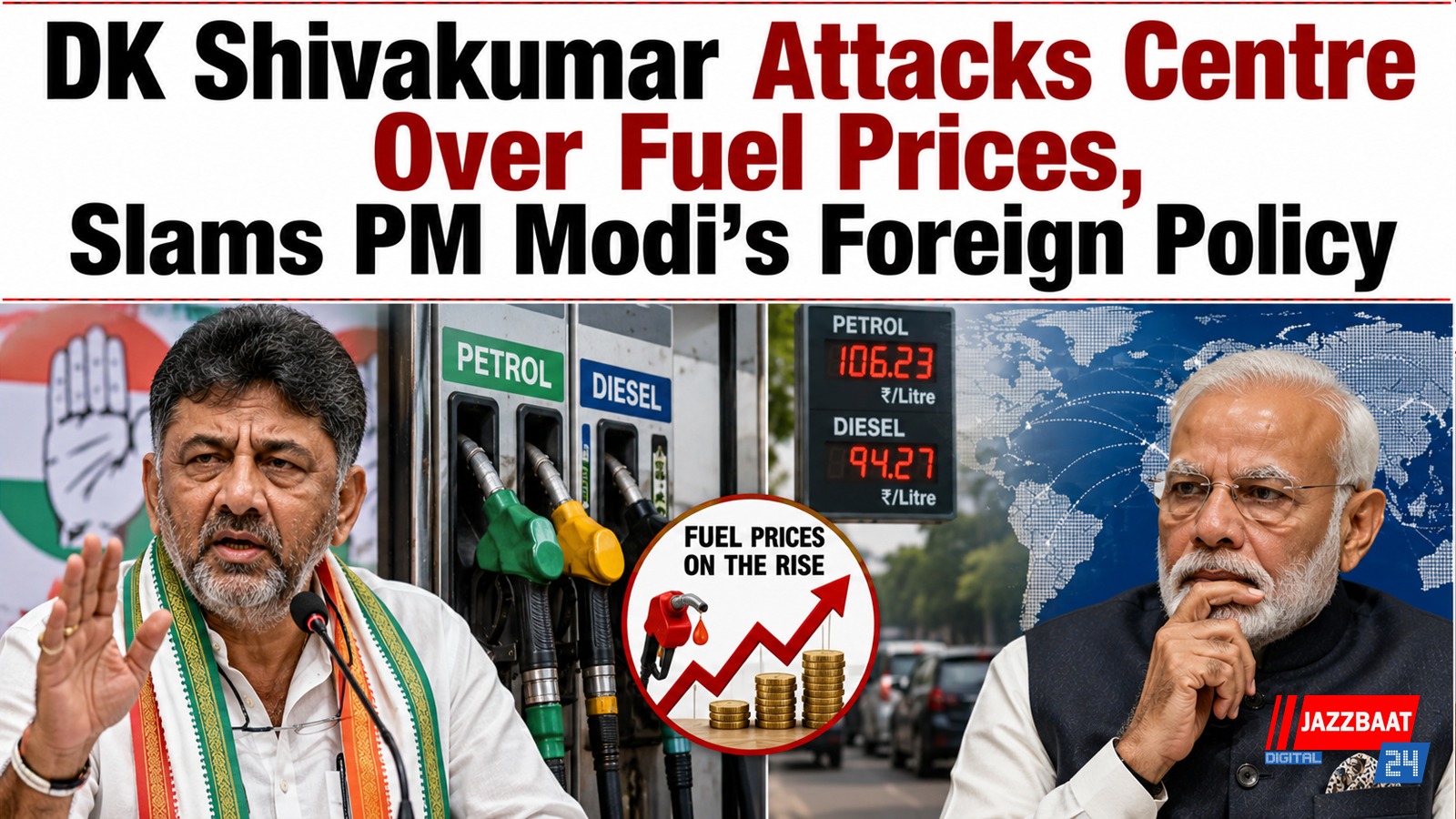
Karnataka Deputy Chief Minister DK Shivakumar on Friday launched a sharp political attack on the Centre over the recent fuel price hike, alleging that Prime Minister Narendra Modi has “failed in international relationships” and is unable to manage global pressures affecting India’s economy.
Reacting to the increase in petrol and diesel prices, Shivakumar said the common people were bearing the burden of what he described as “policy failures” at both domestic and international levels. He argued that India’s diplomatic standing had not been effectively leveraged to protect the country from global energy shocks, particularly amid ongoing geopolitical tensions.
“PM Modi has failed in international relationships,” Shivakumar said, adding that stronger diplomatic engagement could have helped India secure better energy pricing or cushioning mechanisms during global crises. He claimed that instead, citizens were facing rising inflation and reduced purchasing power.
The Congress leader further said that fuel price hikes have a direct impact on transport costs, food prices, and overall inflation, ultimately affecting every household. He urged the Centre to immediately reconsider fuel taxation policies and provide relief to the middle class and farmers.
Shivakumar also alleged that repeated price increases reflected “economic mismanagement” and lack of long-term planning in the energy sector. He said that while global crude oil fluctuations are inevitable, the government has the responsibility to shield vulnerable sections of society from sudden price shocks.
The remarks come amid renewed political confrontation between the opposition and the ruling party over inflation and fuel pricing. Several opposition leaders have recently intensified their criticism, linking domestic price rises to global uncertainty and government policy choices.
The Centre, however, has consistently maintained that fuel prices are influenced by international crude oil rates, currency fluctuations, and taxation structures set by both central and state governments. Officials also argue that India has diversified its energy imports and strengthened supply chains to reduce dependency risks.
Shivakumar’s comments add to the growing political debate over inflation, global diplomacy, and economic governance, with fuel prices once again becoming a major point of contention in national politics.