
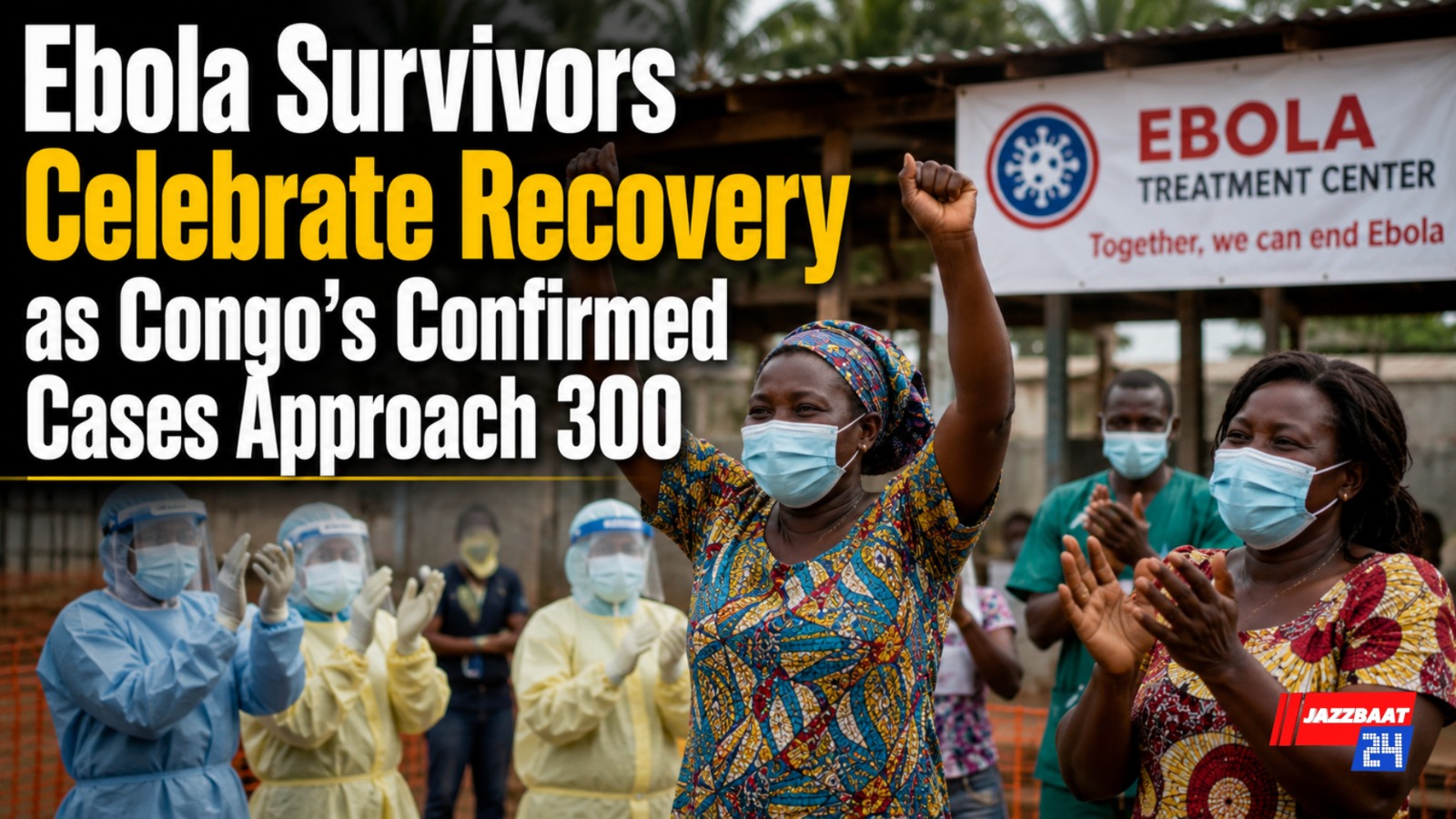
As the Democratic Republic of the Congo continues its battle against a growing Ebola outbreak, survivors are sharing stories of resilience and recovery, describing the moment they were declared virus-free as an “indescribable joy.” Their experiences have become a source of hope for communities grappling with fear and uncertainty as the number of confirmed cases nears 300.
Health officials report that the outbreak has continued to spread in several affected regions, prompting an intensified response from national authorities and international health agencies. Medical teams are working to identify new infections, trace contacts, and provide treatment to patients in an effort to contain the deadly virus before it reaches more densely populated areas.
For survivors, leaving treatment centers after weeks of isolation and medical care has been an emotional experience. Many have spoken about the physical and psychological challenges they faced during treatment, including separation from family members and the uncertainty surrounding their condition. Despite these hardships, survivors say the support of healthcare workers and the availability of specialized treatment played a crucial role in their recovery.
Doctors involved in the response have highlighted improvements in Ebola treatment compared to previous outbreaks. Advances in medical care, vaccines, and early detection have significantly increased survival rates, allowing more patients to recover and return to their communities. Health experts say these developments demonstrate the importance of rapid diagnosis and access to treatment.
However, challenges remain. Public health officials continue to face difficulties in reaching remote areas, combating misinformation, and ensuring that individuals who may have been exposed to the virus are monitored. Community engagement remains a critical part of the response, as authorities work to build trust and encourage people to seek medical help at the earliest signs of illness.
The outbreak has also placed pressure on local healthcare systems, requiring additional resources, personnel, and logistical support. International organizations, including the , are assisting the Congolese government with surveillance, vaccination campaigns, and emergency medical operations.
Despite the rising case count, health officials emphasize that recovery is possible and that survivors play an important role in raising awareness about the disease. Many former patients have joined community outreach efforts, sharing their experiences to encourage early treatment and reduce stigma associated with the illness.
As confirmed Ebola cases approach the 300 mark, authorities remain focused on containing the outbreak while celebrating every recovery as a reminder that the fight against the disease can be won. Survivors’ stories continue to offer hope to affected communities and underscore the importance of sustained public health efforts in the months ahead.