
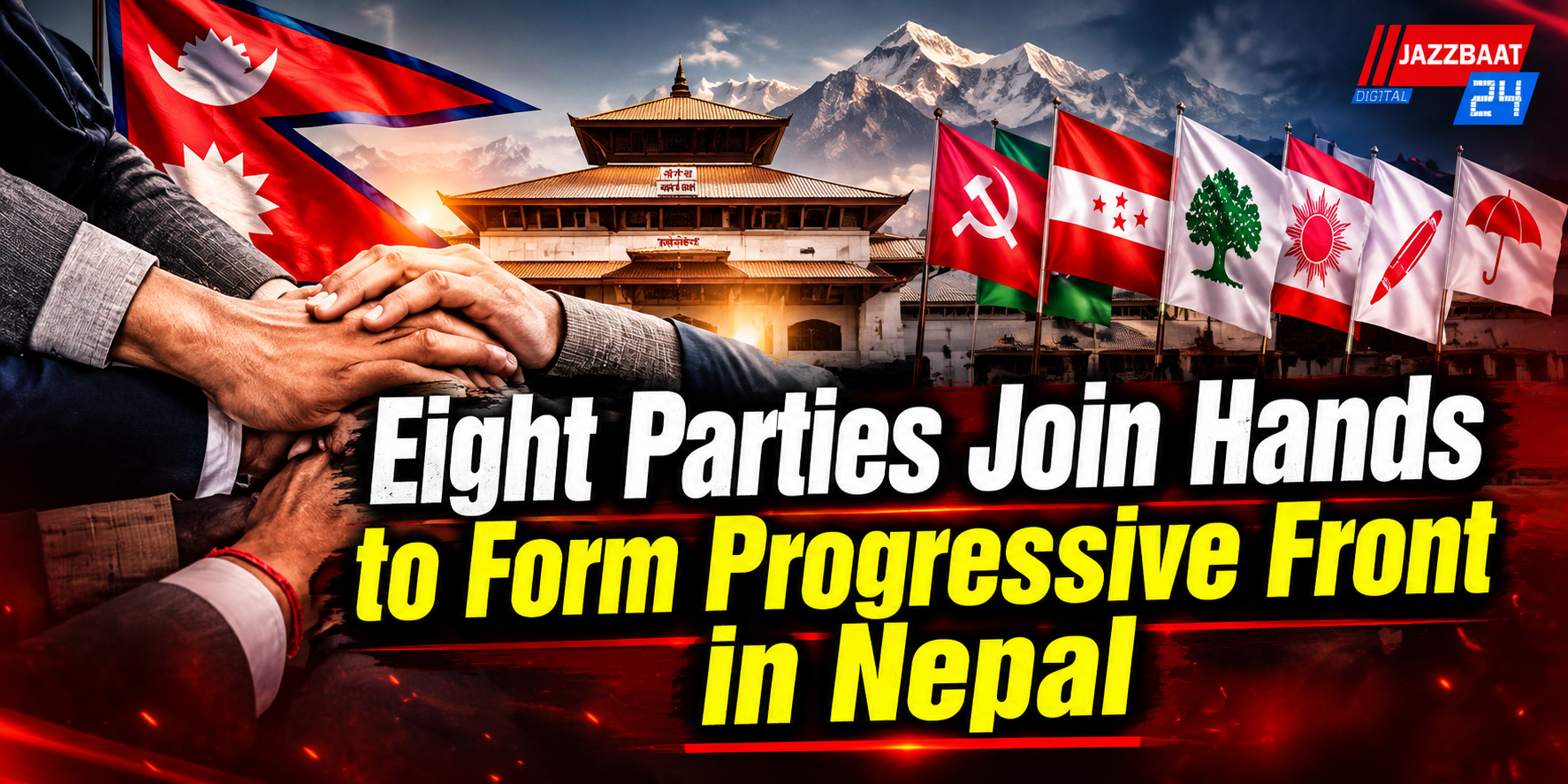
Eight political parties in Nepal have come together to form a new alliance called the Progressive Front, seeking to build a common political platform around constitutional reform, federalism, social justice and inclusive democracy.
The alliance was announced in Kathmandu on Saturday, August 8, with the participating parties agreeing to work together on shared political issues and agendas. The move comes at a time when Nepal's political landscape remains fragmented, with smaller parties looking to strengthen their influence and establish a broader alternative to the country's major political forces.
The parties involved include the Janata Samajbadi Party Nepal, Janamat Party, Aam Janata Party, Pragatisheel Loktantrik Party, Nagarik Unmukti Party Nepal, Nepal Sanghiya Samajbadi Party, Bahujan Ekta Party Nepal and Khambuwan Rashtriya Morcha.
A central focus of the new front is constitutional amendment. The alliance has also called for strengthening Nepal's federal system, expanding social justice and ensuring greater political representation for communities that it believes remain underrepresented in the country's political institutions.
The parties have said they want to work towards a just and inclusive society without discrimination. They have also stressed the need to strengthen democratic and federal governance and ensure equal representation of different communities in Parliament.
The formation of the Progressive Front is particularly significant for Madhesh-based political groups. Several of the parties involved have historically focused on the political rights and representation of Madhesi and other marginalised communities. Their decision to contest elections together could give them greater bargaining power and help consolidate votes that have traditionally been divided among several smaller parties.
According to the alliance's concept paper, its leadership will be decided through consensus. If consensus cannot be reached, a rotational leadership arrangement could be adopted. Major decisions are also expected to be taken unanimously.
The new alliance is expected to prepare for future electoral contests by coordinating candidates and campaigning around common issues. The parties hope that a united platform will help them regain political relevance and challenge the dominance of larger national parties.
The Progressive Front's emergence adds another layer to Nepal's already complex political landscape. Whether the alliance can maintain unity among eight parties with different organisational structures and political backgrounds will be closely watched.
For now, the parties have presented the front as an effort to provide a new political direction focused on inclusion, federalism, social justice and democratic reform.