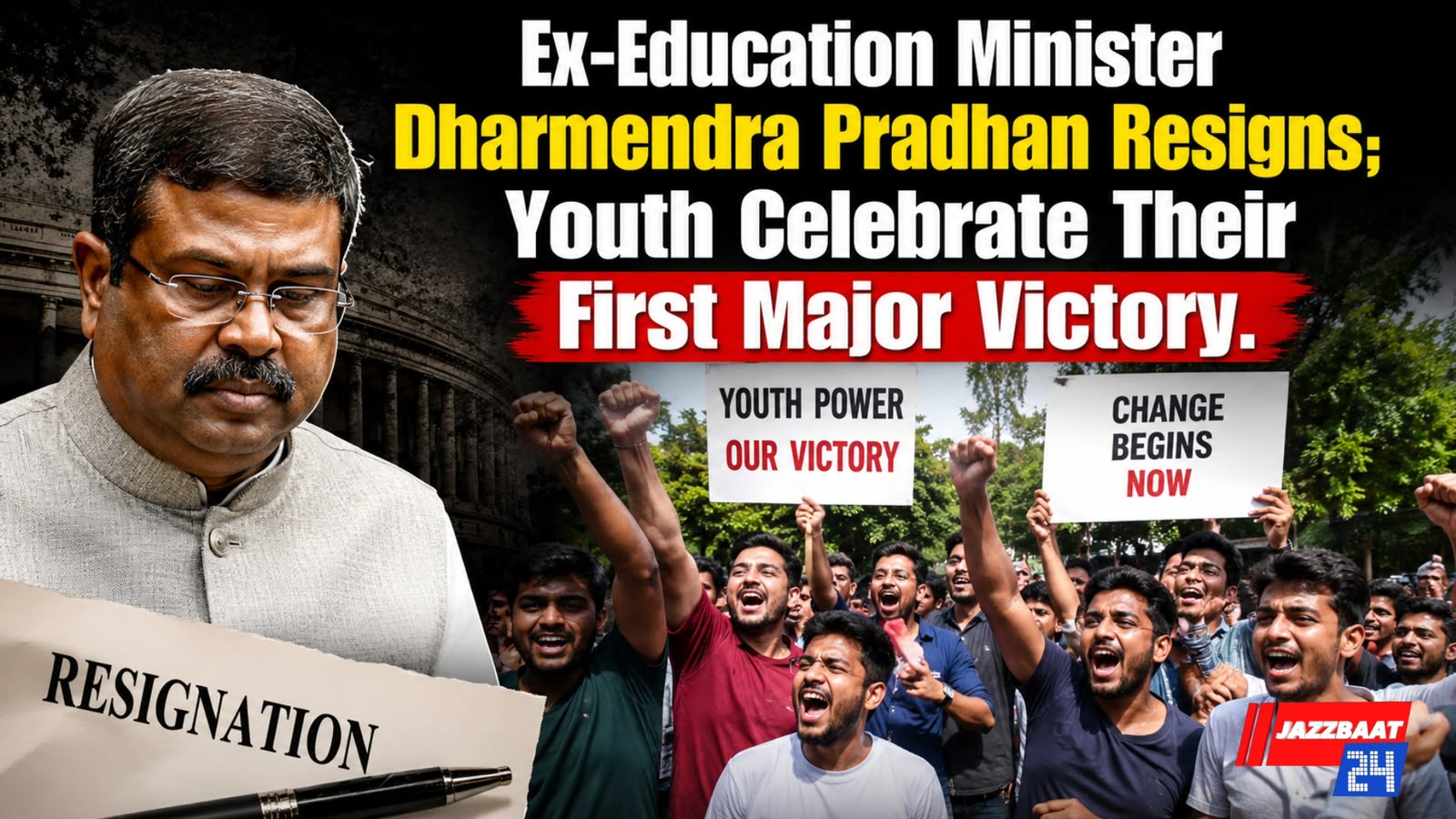
Union Education Minister Dharmendra Pradhan resigned from his post on Saturday following weeks of nationwide student-led protests over alleged examination paper leaks and demands for accountability in India's education system. His resignation marks one of the most significant political developments in recent months and has been widely described by protesters as their "first victory."
The protests began after allegations of irregularities and paper leaks in major competitive examinations triggered widespread anger among students across the country. What started as demonstrations by a small group of young people gradually evolved into a nationwide movement demanding transparency, reforms in the examination process, and the resignation of the Education Minister. Protesters argued that repeated controversies had shaken public confidence in the country's recruitment and entrance examination system.
Following the resignation announcement, celebrations broke out at Delhi's Jantar Mantar, which had become the centre of the agitation. Students hugged one another, waved flags, chanted slogans, and declared that their voices had finally been heard. Many described the resignation as proof that peaceful public protests could bring accountability from those in power. While celebrating the development, several student leaders also stressed that this was only the beginning and that they would continue to monitor the government's promises on education reforms.
The protest movement, led by youth groups including the Cockroach Janata Party (CJP), announced the withdrawal of demonstrations after the government accepted key demands. Reports said the government also agreed to initiate reforms in the examination system, withdraw legal action against many protesters, and address concerns raised during the agitation. Protest leaders appealed to supporters to end the protests peacefully while remaining vigilant about the implementation of promised reforms.
Opposition leaders hailed Pradhan's resignation as a victory for students and young people who had spent weeks protesting on the streets. They said the development reflected the growing influence of India's youth in shaping public policy and demanded broader institutional reforms to prevent future examination controversies. Government representatives have not yet announced Pradhan's successor, but attention is now focused on who will take charge of the Education Ministry and how quickly reforms will be implemented.
For many young Indians, the resignation represents more than a political change. It has become a symbol of collective action and democratic participation. Although the protests have ended, students say their larger fight for a transparent, fair, and accountable education system is far from over. They believe this victory is only the first step toward restoring trust in India's examination and recruitment processes.