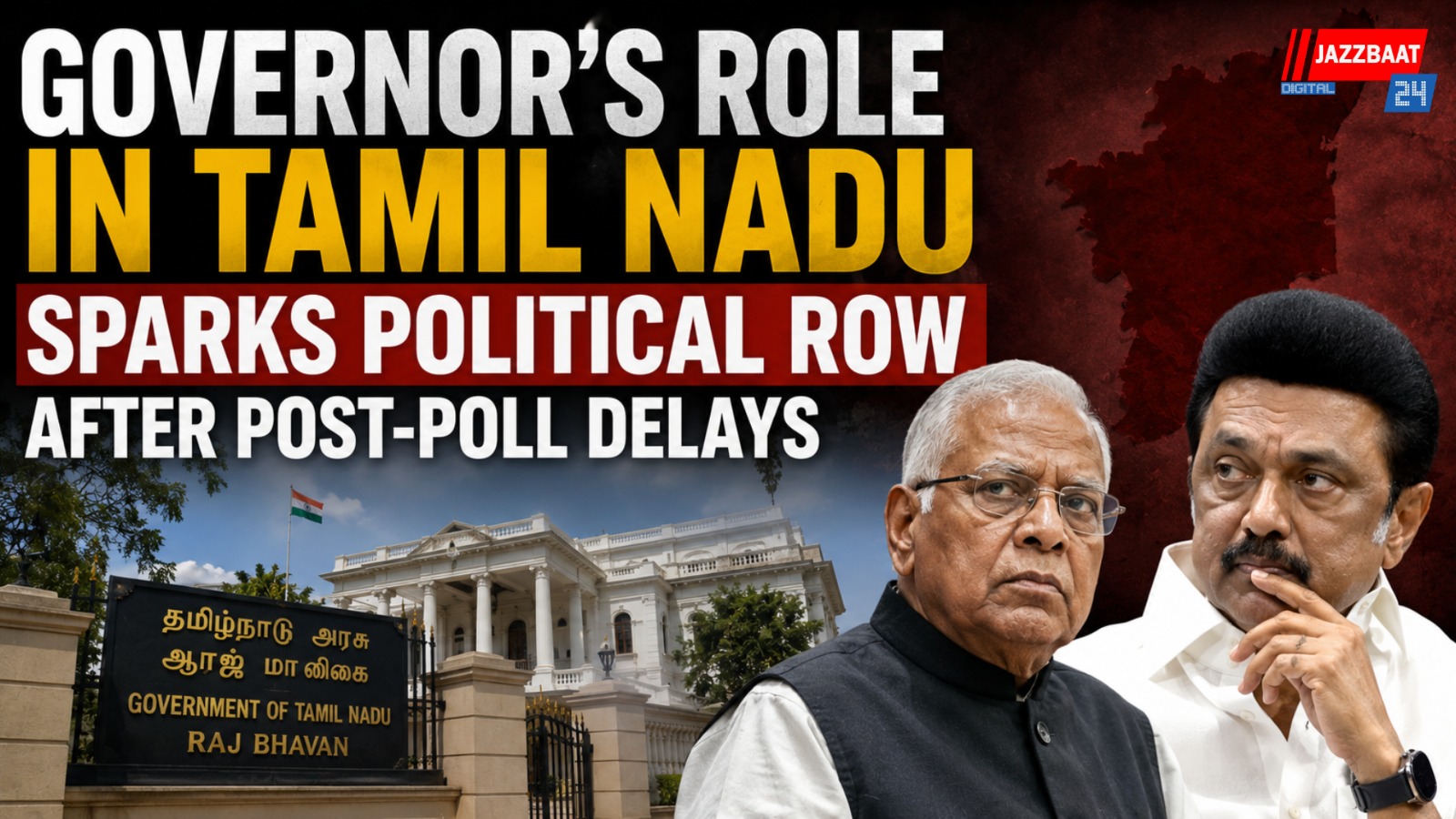
Chennai: A fresh political controversy has erupted in Tamil Nadu over delays in government formation discussions following the recent elections, with senior advocate and politician Kapil Sibal accusing the state Governor of acting in a manner that allegedly benefits the Bharatiya Janata Party (BJP).
Speaking on the ongoing situation, Sibal claimed that the Governor is “buying time” and creating uncertainty in the post-election process. He suggested that the delay in inviting or facilitating the formation of a new government is not a routine administrative matter but part of a larger political strategy. According to him, such actions weaken democratic norms and raise questions about constitutional propriety.
The remarks come amid heightened political activity in the state after the elections, where negotiations, alliances, and post-poll positioning are still being closely watched. While no official confirmation has been made regarding the final shape of government formation involving Tamilaga Vettri Kazhagam (TVK) and its leadership, political discussions remain active across party lines.
Sibal further alleged that the Governor’s actions appear to be indirectly aligned with the BJP’s broader political interests in the state. He argued that delays in decision-making processes after elections can create confusion among elected representatives and the public, especially when a clear electoral mandate is expected to be respected without unnecessary intervention.
On the other hand, supporters of the Governor’s office have maintained that all constitutional procedures are being followed and that any decisions are taken based on due legal and administrative process. They argue that allegations of political bias are speculative unless backed by concrete evidence.
Meanwhile, the political atmosphere in Tamil Nadu remains tense, with opposition parties closely monitoring developments. Discussions around coalition possibilities, leadership roles, and legislative numbers are reportedly continuing behind the scenes, although no final clarity has emerged publicly.
Analysts note that post-election transitions in multi-party contests often involve delays due to negotiations and verification of mandates. However, they also point out that such phases require transparency to avoid political distrust.
As the situation unfolds, all eyes remain on the Governor’s next move and whether a formal step toward government formation will be taken soon. Political parties continue to trade charges, while awaiting clarity on the final administrative direction in the state.