
The proposed Great Nicobar Island Development Project has once again become the center of a heated political and environmental debate, with senior Congress leaders alleging that the mega infrastructure plan could cause irreversible ecological damage while primarily benefiting private commercial interests.
On World Environment Day, Congress leader Rahul Gandhi launched a fresh attack on the project after visiting Great Nicobar Island and scuba diving near its coral reefs. Gandhi claimed that the Centre's justification of the project on strategic and national security grounds was misleading and alleged that the real objective was to facilitate large-scale commercial development, including hotels and casinos. He further alleged that the project was being designed to benefit "one businessman" at the expense of the island's fragile ecosystem and indigenous communities.
The controversy intensified after Congress general secretary Jairam Ramesh described the project as an "ecological disaster" and urged citizens to support the party's "Green Over Greed" campaign. Ramesh argued that environmental and forest clearances were granted on questionable grounds and accused the government of retroactively framing the project as strategically important.
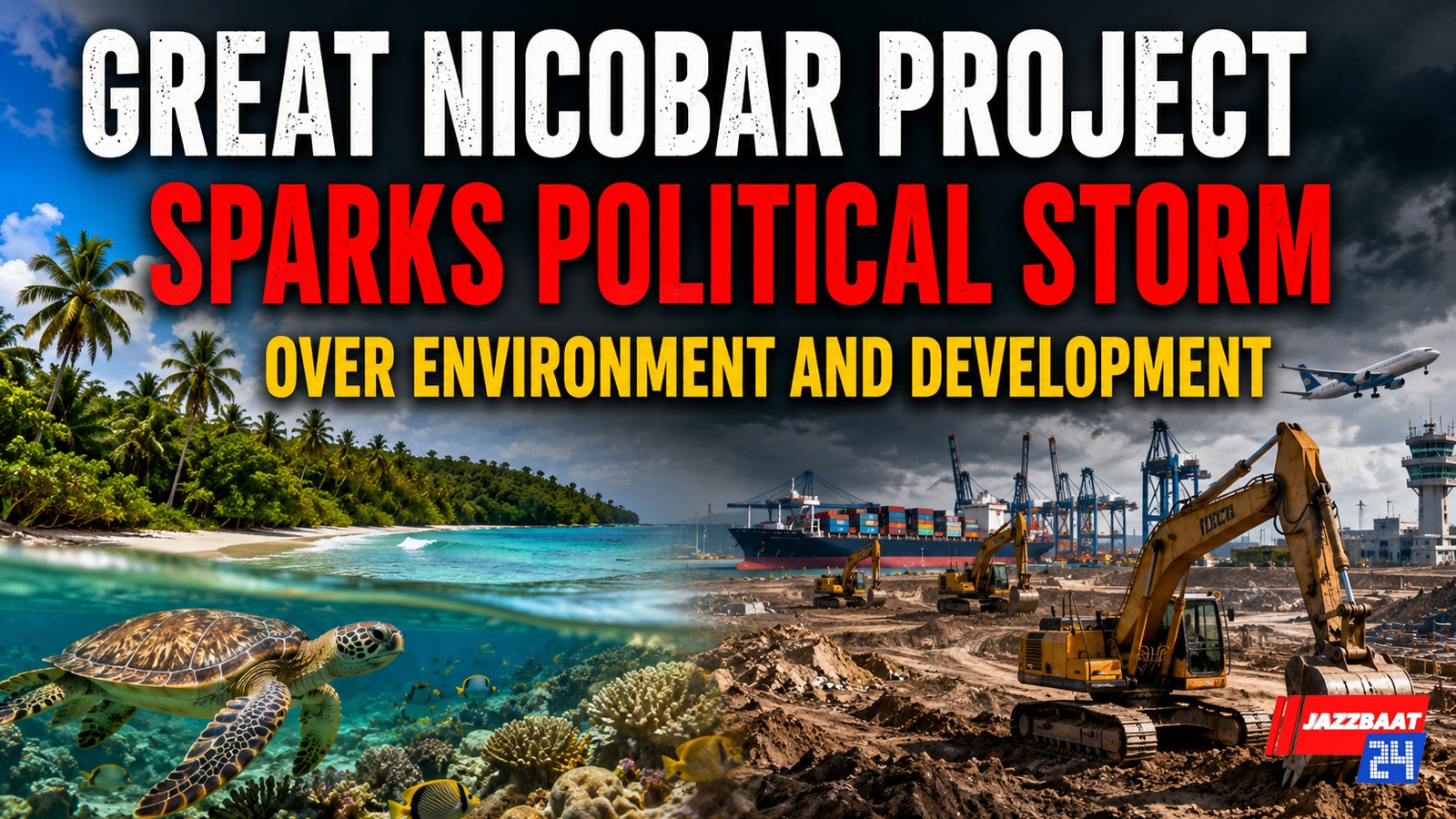
The Great Nicobar Project, estimated at around ₹81,000 crore, aims to transform the remote island into a major economic and strategic hub. The proposal includes an international transshipment port at Galathea Bay, a dual-use airport, power infrastructure, townships, tourism facilities, and industrial zones. Supporters argue that the project would strengthen India's presence near the strategically crucial Strait of Malacca and reduce dependence on foreign transshipment ports.
However, environmentalists and opposition leaders warn that the development could severely impact one of India's most biodiverse regions. Concerns include large-scale forest diversion, potential damage to coral reefs, threats to endangered species such as leatherback sea turtles, and possible disruption to the lives of indigenous Shompen and Nicobarese communities. Scientists and activists have also highlighted the island's seismic vulnerability, recalling the devastating impact of the 2004 tsunami in the region.
The ruling BJP has strongly rejected the allegations. Party leaders maintain that the vision for developing Great Nicobar predates the current government and insist the project is vital for national security, maritime trade, and long-term economic growth. They also point out that the project has received environmental clearances and scrutiny from relevant authorities.
As the debate intensifies, the Great Nicobar Project has emerged as a larger contest between competing visions of development one emphasizing strategic infrastructure and economic expansion, and the other warning that ecological preservation and indigenous rights cannot be sacrificed in the name of growth.