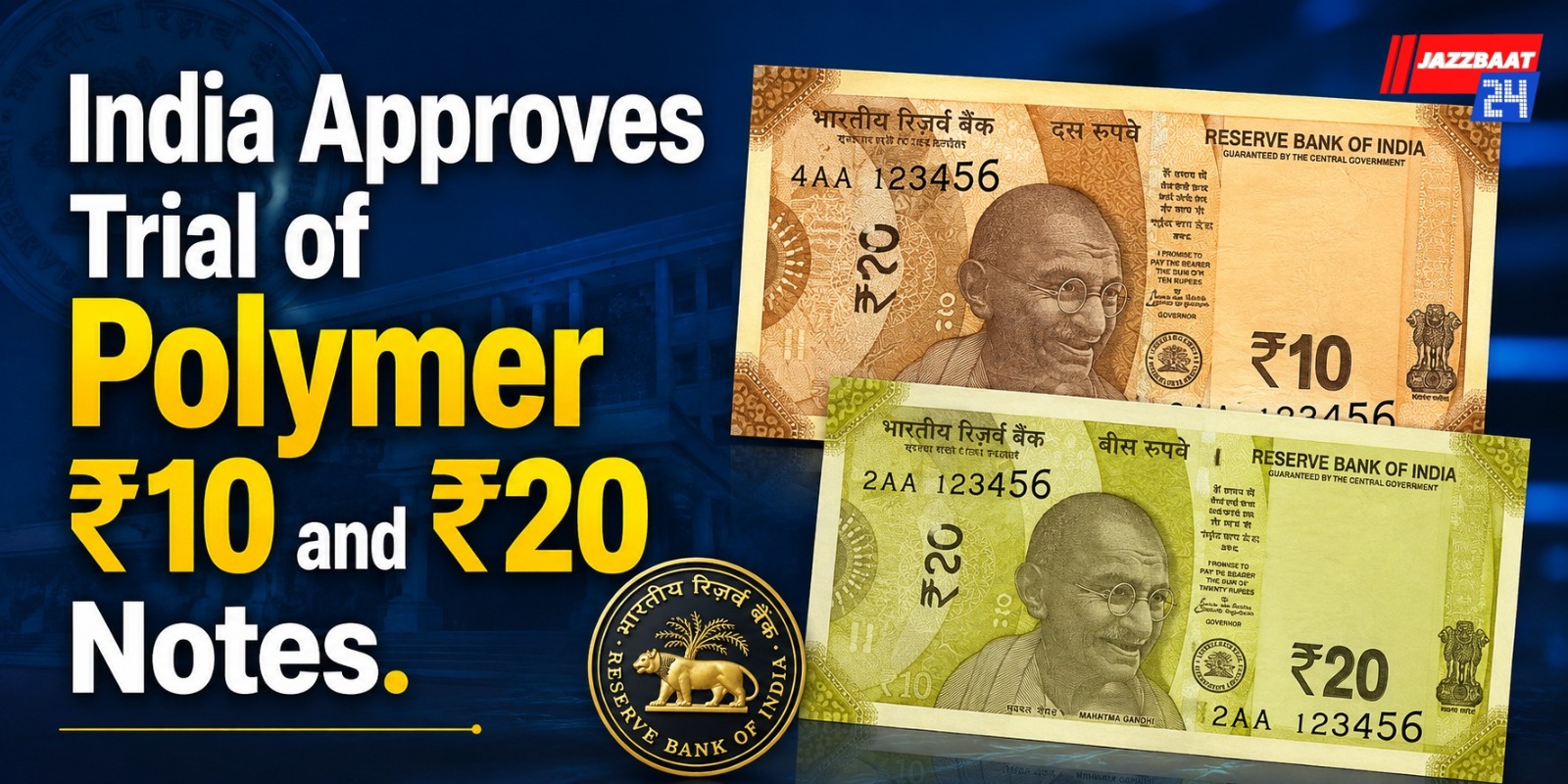
The central government has approved the introduction of one billion polymer banknotes each in the ₹10 and ₹20 denominations for field trials, Finance Minister Nirmala Sitharaman informed Parliament on Tuesday.
The proposal was put forward by the Reserve Bank of India (RBI), following a recommendation from its Central Board. The government has approved the plan under Section 25 of the Reserve Bank of India Act, 1934. The move marks a significant step towards testing polymer-based currency in India, particularly for lower denominations that generally experience heavy circulation and wear.
According to the government, the RBI has proposed issuing one billion pieces of polymer notes in each denomination. If the field trials are successful, the polymer notes could eventually be issued regularly alongside existing paper-based currency.
Polymer banknotes are made from a specialised plastic-like substrate rather than traditional cotton-based paper. They are generally more resistant to moisture, dirt and physical wear and can remain in circulation for longer periods. Polymer currency can also incorporate security features designed to make counterfeiting more difficult.
However, the government has not yet announced when the new notes will actually reach the public. Sitharaman said the procurement process is currently at an initial stage, making it too early to determine a definite timeline for their introduction or the total expenditure involved.
Importantly, the proposed polymer notes will not immediately replace the existing ₹10 and ₹20 paper notes. The RBI has indicated that polymer and paper-substrate banknotes are expected to circulate together during the trial and potentially thereafter.
India has considered polymer currency for more than a decade. Earlier field-trial proposals involved one billion ₹10 polymer notes, with the RBI identifying cities with different geographical and climatic conditions to assess how the notes performed in real-world use.
The latest approval therefore represents a renewed push to test the technology on a larger scale and across two commonly used denominations. The outcome of the trials will help authorities determine whether polymer currency is suitable for wider circulation in India.
For now, the move is only a field trial approval, not a decision to withdraw or replace existing ₹10 and ₹20 notes.