
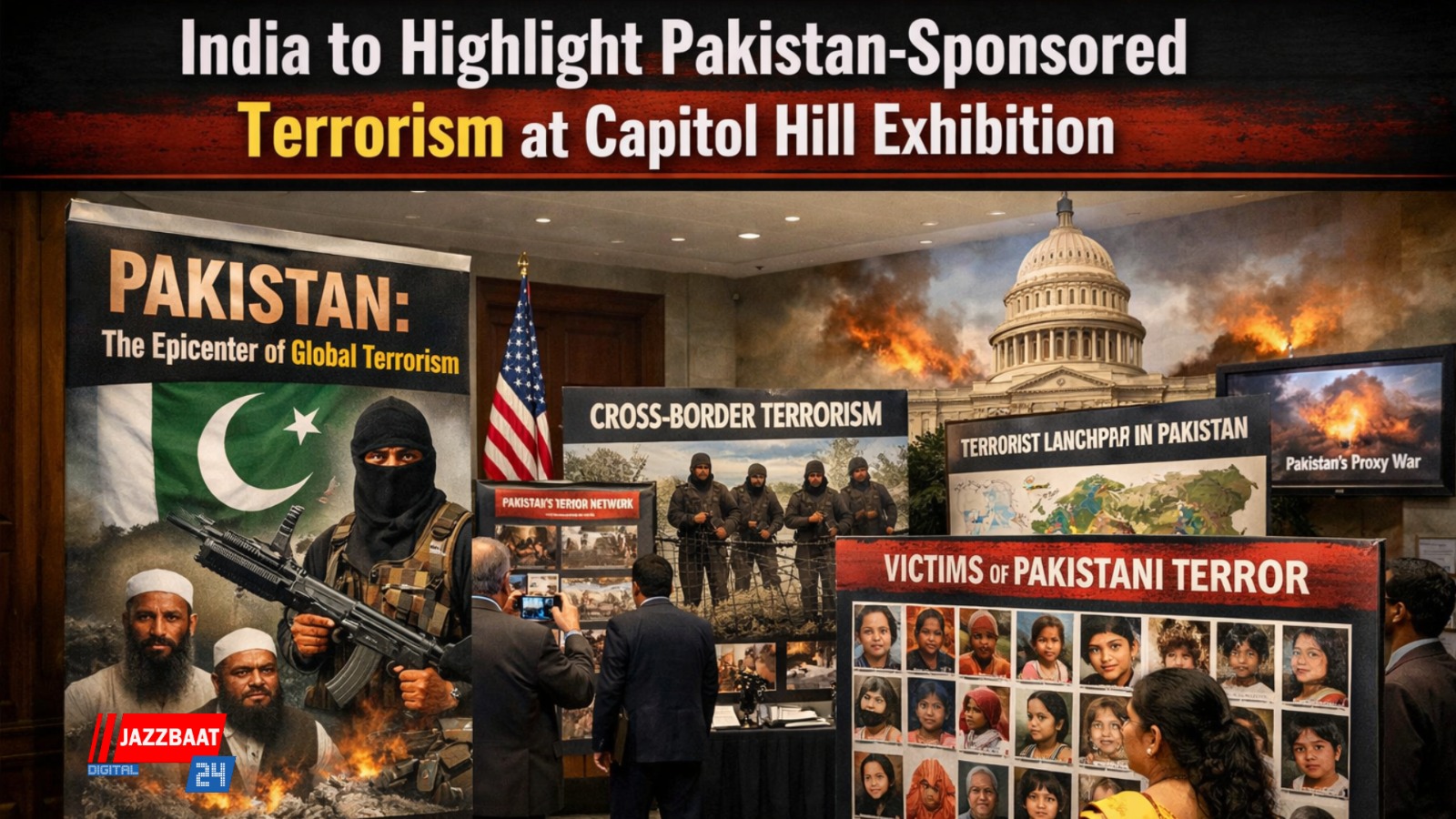
Washington: India is set to highlight what it describes as Pakistan-sponsored cross-border terrorism at a special exhibition in Washington DC, scheduled to be held near Capitol Hill, as part of its global outreach against terrorism.
According to official and media reports, the exhibition will be organised by the Indian Embassy in the United States and will focus on the “human cost of terrorism” caused by multiple attacks attributed to Pakistan-based terror groups. The event is expected to begin next week and will also mark the first anniversary of the Pahalgam terror attack.
The display will reportedly showcase detailed accounts of victims of major terror incidents in India, including the Pahalgam attack in Jammu and Kashmir in which 26 civilians were killed. The attack had triggered widespread condemnation and was later linked to The Resistance Front, a group India describes as a proxy of Pakistan-based Lashkar-e-Taiba.
Officials said the exhibition will also present evidence and visuals related to other major terror strikes in India over the years, with a focus on groups India alleges operate from across the border in Pakistan. The aim, according to sources, is to underline what New Delhi calls a consistent pattern of state-backed or state-enabled terrorism affecting not only India but also global peace and security.
The venue near Capitol Hill has been chosen to maximise visibility among policymakers, diplomats, and international think tanks in Washington. India has in recent years stepped up its diplomatic outreach on counter-terrorism, frequently raising concerns in global forums about attacks originating from Pakistan-linked networks.
Officials familiar with the initiative said the exhibition will include survivor narratives, documentation of past attacks, and material highlighting India’s counter-terror operations. It is also expected to stress the need for stronger international cooperation to combat terrorism financing and cross-border militant infrastructure.
The initiative comes amid continuing tensions between India and Pakistan over security issues in Jammu and Kashmir, and follows a series of diplomatic engagements by Indian missions abroad to highlight its position on terrorism.
By taking the exhibition to a prominent international platform, India aims to reinforce its message of “zero tolerance” towards terrorism and seek broader global support against what it describes as persistent cross-border militant threats.