In a charged moment for Indian parliamentary politics, Congress leader Priyanka Gandhi Vadra declared the defeat of the Centre’s controversial delimitation-linked constitutional amendment bill as a “very, very big win for democracy.” Her words were not merely celebratory, they reflected a deeper ideological clash over representation, federal balance, and political intent that has now come to define the national discourse.
At the heart of the storm lies the failed Constitution (131st Amendment) Bill, 2026, which sought to expand parliamentary seats and enable a fresh delimitation exercise. The bill fell short of the required two-thirds majority in the Lok Sabha, with the ruling Bharatiya Janata Party-led government unable to secure enough support.
For the opposition, this was more than a legislative setback for the government, it was a symbolic victory against what they described as an attempt to reshape India’s democratic architecture. Priyanka Gandhi alleged that the move was a “conspiracy” aimed at altering the federal structure and consolidating long-term political power.
The controversy stems largely from the government’s decision to link delimitation, the redrawing of parliamentary constituencies, with the implementation of women’s reservation. While there is broad political consensus on the need for 33% reservation for women in legislatures, opposition parties argued that tying it to delimitation based on outdated census data raises serious concerns.
Critics fear that such a move could disproportionately benefit states with higher population growth, potentially altering the balance of power between northern and southern states. This has triggered anxieties about federal equity, with several regional leaders warning that delimitation must be approached cautiously and transparently.
Priyanka Gandhi’s critique goes further. She accused the government of using women’s empowerment as a political “decoy” to push through a more contentious agenda. According to her, the real issue was not women’s representation, which the opposition claims to support, but the timing and method of its implementation.
On the other side, Prime Minister Narendra Modi and BJP leaders have sharply criticised the opposition, accusing them of obstructing a historic step towards gender equality. The government has maintained that delimitation is a necessary precursor to ensuring fair and proportional representation, including for women.
This standoff reveals a deeper paradox in Indian politics: consensus on goals, but conflict over execution. Both sides claim to defend democracy, one by resisting structural changes perceived as politically motivated, the other by advocating reforms framed as progressive and inclusive.
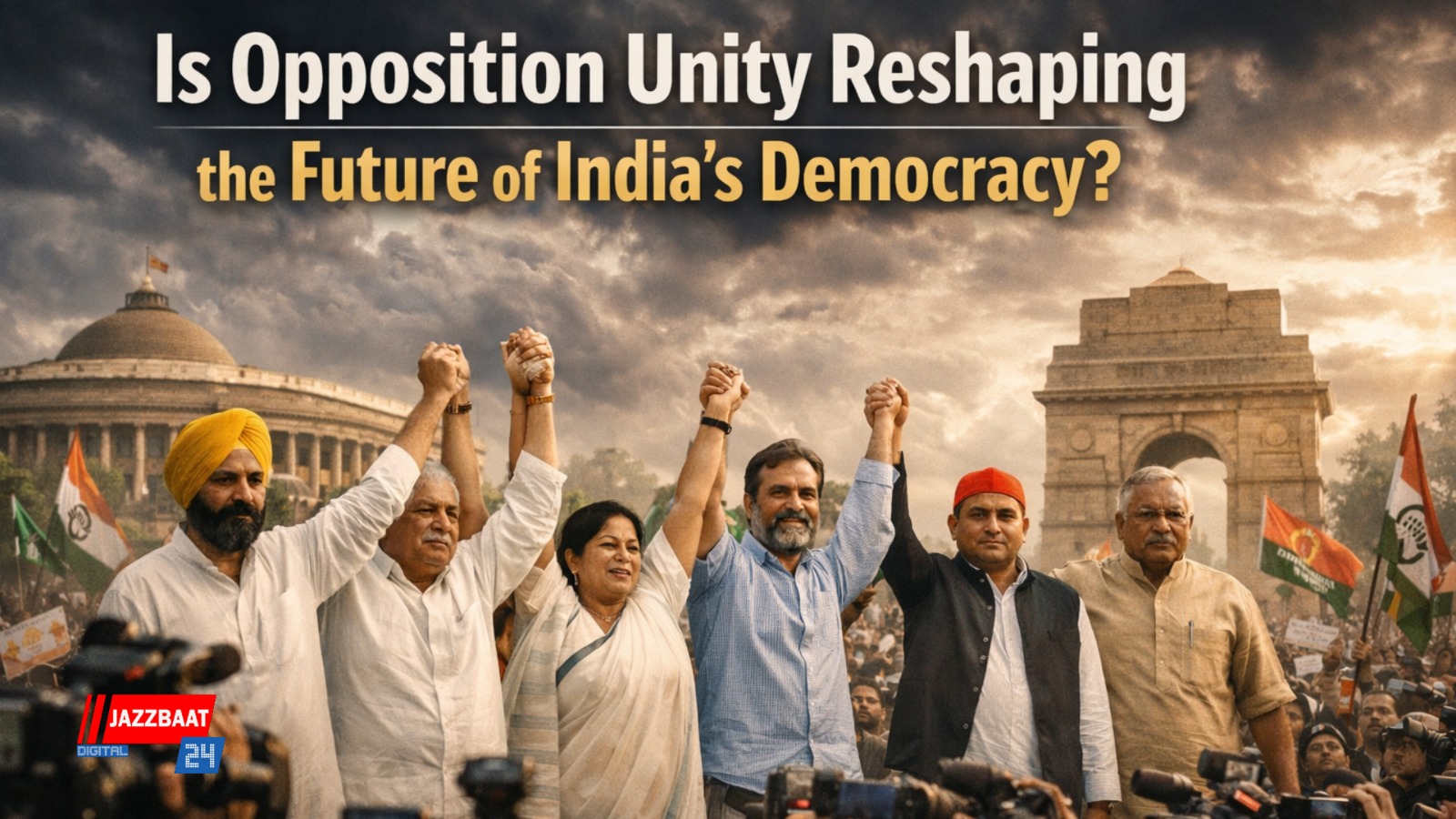
Interestingly, the episode has also highlighted the growing importance of opposition unity. Leaders across parties came together to block the bill, signalling a coordinated pushback against the ruling party’s legislative agenda. This unity, often fragile in Indian politics, appears to have found renewed purpose in the face of what they perceive as institutional overreach.
Yet, the story is far from over. Delimitation remains an inevitable constitutional exercise, especially after the next census. The current deadlock merely postpones a debate that will resurface with greater intensity in the coming years.
For now, however, the opposition is framing this moment as a decisive assertion of democratic checks and balances. Whether it is truly a “big win for democracy,” as Priyanka Gandhi claims, or a missed opportunity for reform, as the BJP argues, depends largely on one’s political lens.
What is undeniable is this! India’s democracy, vibrant and contentious, continues to evolve through precisely such battles, where numbers in Parliament reflect not just votes, but visions of the nation’s future.