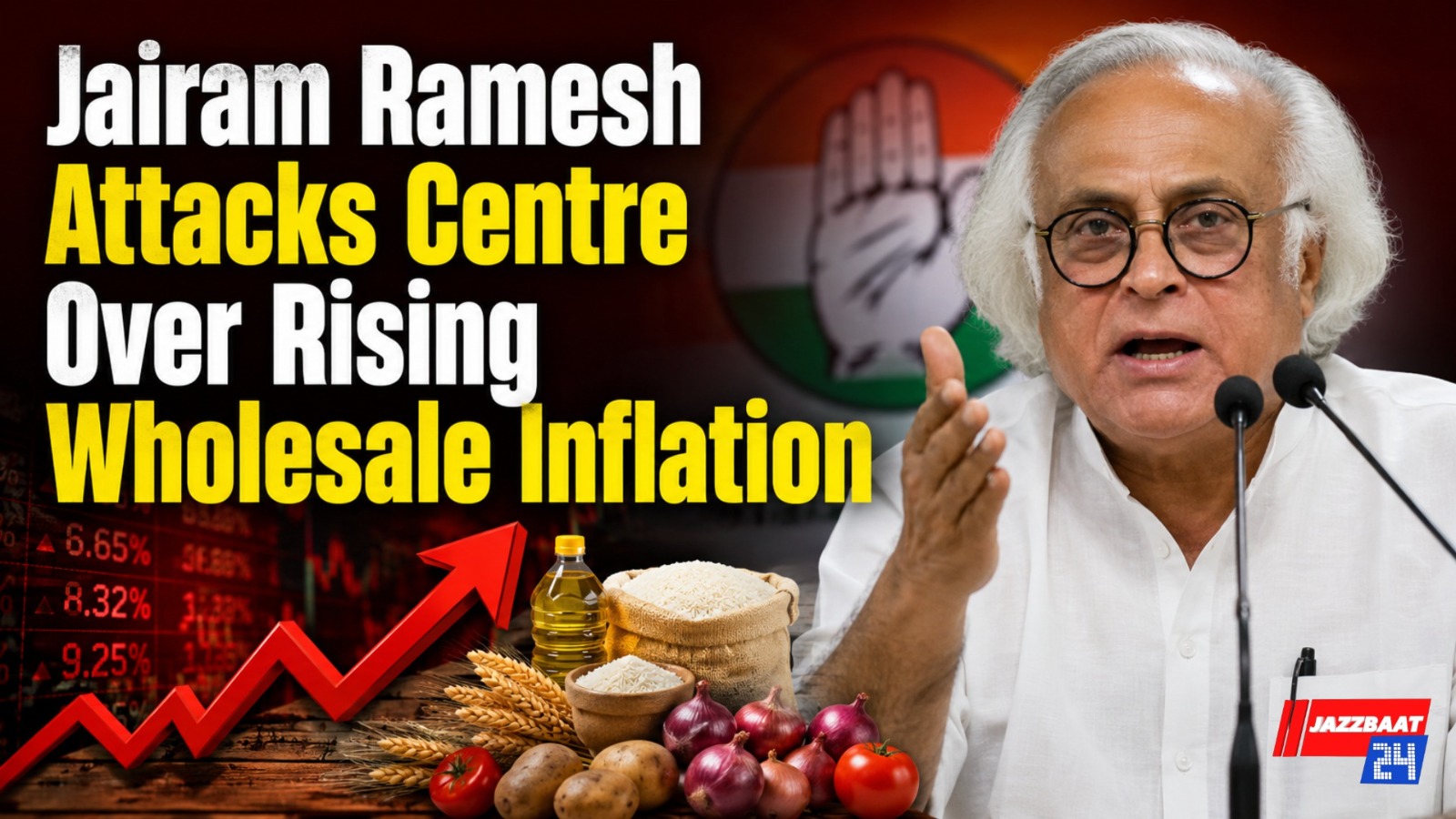
The Congress on Wednesday intensified its attack on the Narendra Modi-led government after India's wholesale inflation climbed sharply, with senior Congress leader Jairam Ramesh claiming that the country's key economic indicators were now on "red alert." His remarks came in response to the latest government data showing wholesale price inflation (WPI) at 9.87% in June 2026, the highest level in nearly four years under the revised WPI series and significantly higher than market expectations.
Taking to social media, Jairam Ramesh alleged that the Modi government's economic policies had pushed the country towards a difficult economic situation. He argued that rising inflation, slowing agricultural activity, and increasing pressure on industries reflected deeper structural problems in the economy. According to the Congress leader, instead of addressing these challenges, the government was focusing on creating headlines to divert public attention from pressing economic concerns.
Ramesh highlighted that fuel and electricity prices recorded a massive 27.41% year-on-year increase, adding to production costs across industries. He also pointed to lower agricultural sowing this season, claiming that farmers were facing the dual challenge of adverse weather conditions and rising input costs. According to him, the burden of inflation was falling on both consumers and producers, making it increasingly difficult for ordinary families and businesses to manage expenses.
Official data released by the Ministry of Commerce and Industry showed that the increase in wholesale inflation was driven mainly by higher prices of primary articles, food items, fuel and power, while manufactured products also continued to record elevated price levels. The Wholesale Price Index stood at 110.2 in June, compared with 109.9 in May, reflecting sustained inflationary pressure across major sectors of the economy.
Economists note that wholesale inflation represents the prices businesses pay for goods before they reach consumers. Although it does not directly translate into retail inflation, persistent increases in WPI often raise production costs, which may eventually be passed on to consumers through higher retail prices if businesses are unable to absorb the additional expenses. Recent retail inflation has also moved above the Reserve Bank of India's medium-term target, adding to concerns about future monetary policy decisions.
The government has not officially responded to Jairam Ramesh's latest criticism. However, policymakers continue to monitor inflation trends closely as global energy prices, geopolitical tensions in West Asia, and weather-related uncertainties remain major factors influencing India's inflation outlook. Analysts believe the coming months will be crucial in determining whether wholesale inflation moderates or continues to put pressure on businesses, consumers, and the broader economy.