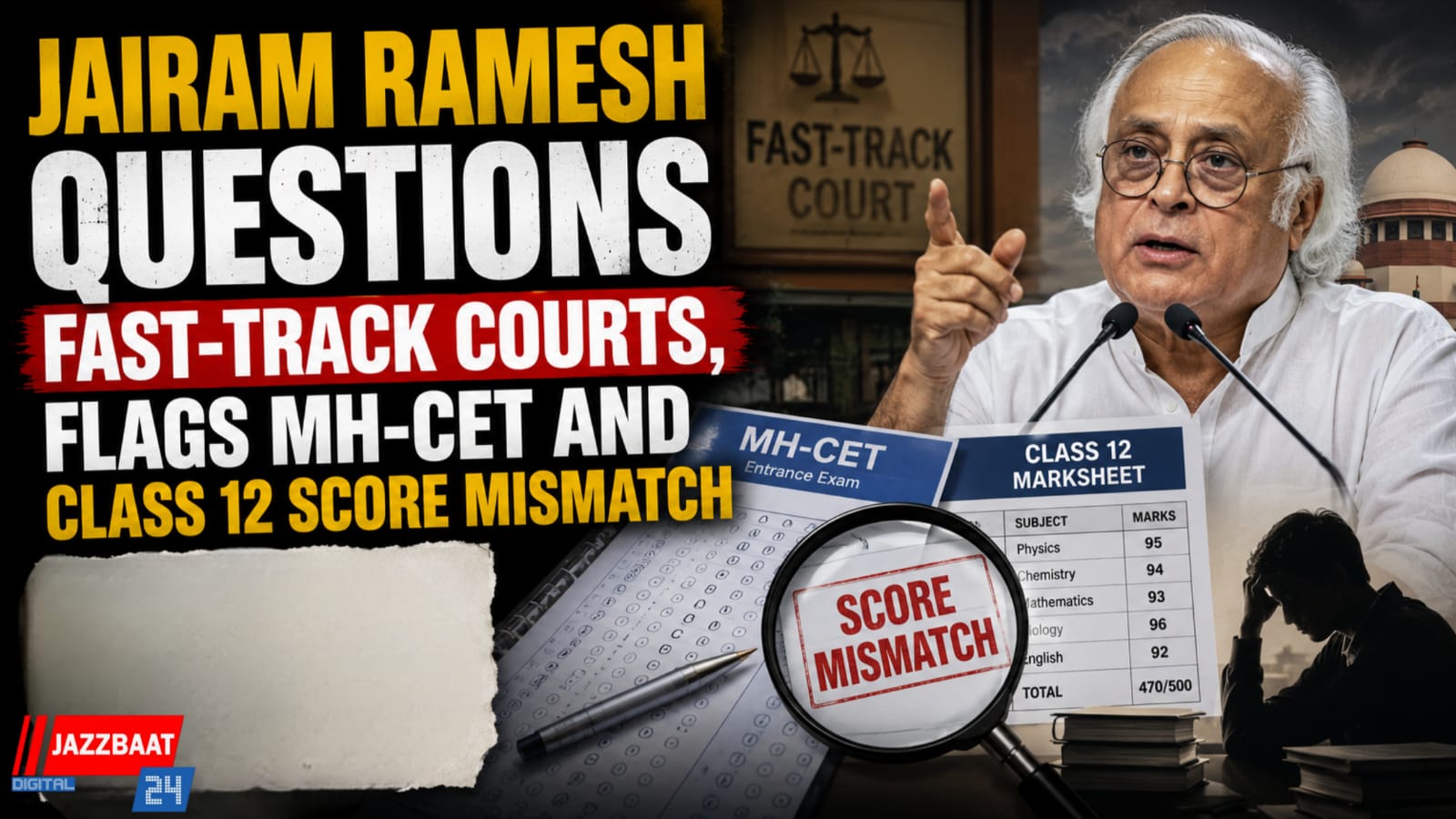
Congress leader Jairam Ramesh on Thursday criticised the Centre's proposal to establish fast-track courts for paper leak cases, saying that such courts alone cannot solve the country's examination crisis. He argued that the real issues lie in preventing leaks, ensuring transparent investigations, and holding those responsible accountable, rather than relying solely on speedy trials.
Ramesh also raised concerns over the Maharashtra Common Entrance Test (MH-CET), alleging that there were unusual discrepancies between the Class 12 board examination marks of some students and their exceptionally high MH-CET scores. According to him, several candidates with relatively low Class 12 marks reportedly secured near-perfect percentiles in the engineering entrance examination, warranting an independent investigation.
Referring to these alleged inconsistencies, the Congress leader said that simply creating fast-track courts would not restore confidence among students. He maintained that authorities must first identify whether there were irregularities in the examination process and ensure that any wrongdoing is thoroughly investigated before prosecution begins.
The Maharashtra State CET Cell has denied allegations of manipulation in the examination process. Officials have stated that the allotment of examination centres is fully computerised and random, making external interference impossible. The CET Cell has, however, filed a police complaint over a viral audio clip that allegedly offered a "special" examination centre in exchange for money and has launched an investigation into the matter.
The remarks come amid an intense political debate over paper leaks and examination reforms. The Centre has defended its proposal for fast-track courts, saying they are intended to ensure swift justice in cases involving examination fraud. Meanwhile, the Opposition continues to demand stronger preventive measures, greater transparency in investigations, and reforms to safeguard the integrity of public examinations.