
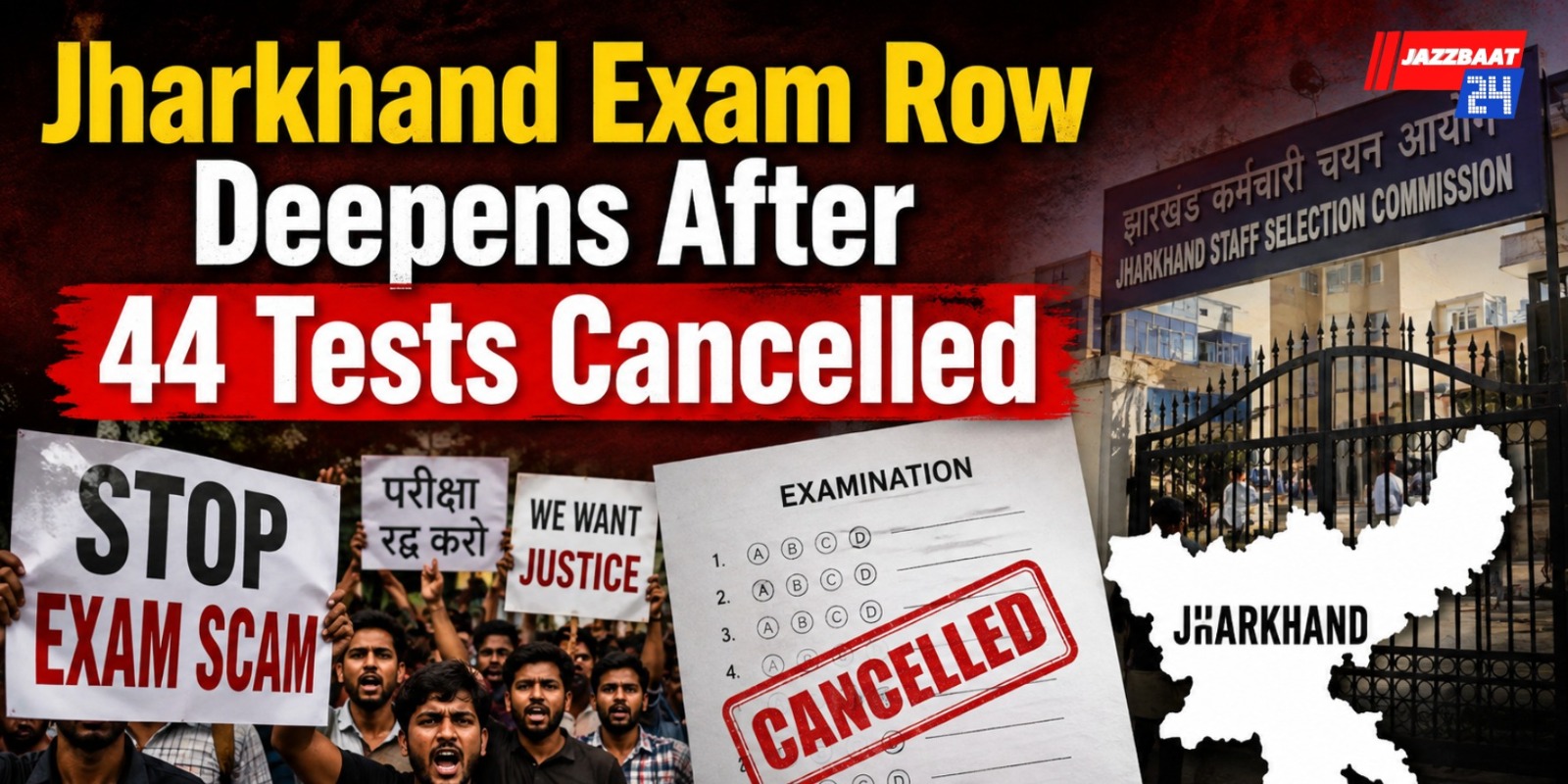
Ranchi: The controversy over recruitment examinations in Jharkhand has entered a new phase after the state government cancelled 44 exams amid weeks of student protests over alleged irregularities. While the decision has been welcomed by many protesters as a major victory, questions remain over the government's proposed judicial inquiry and what happens next.
The cancelled examinations include tests conducted by the Jharkhand Public Service Commission (JPSC), Jharkhand Staff Selection Commission (JSSC) and outsourced agency TSR Data Processing Pvt Ltd (TDPL) since 2014. The list covers recruitment for several posts, including assistant professors, drug inspectors, engineers, civil judges, prosecutors and forest officials.
The government has announced a series of measures alongside the cancellations. It plans to request the High Court to establish a fast-track court for cases related to irregularities in JPSC and JSSC examinations. Internal vigilance cells are also proposed for both commissions, while an examination reforms committee headed by senior IAS officer Amitabh Kaushal has been asked to recommend changes within two months.
Chief Minister Hemant Soren has also ordered a comprehensive investigation into alleged irregularities in recruitment examinations conducted from 2014 onwards. A separate inquiry into alleged irregularities in JPSC Civil Services examinations will be supervised by a retired judge. Existing investigations by the CID and SIT are also continuing.
However, the government's announcement has not completely ended the agitation. Student leaders have said they want clarity on several unresolved demands, including the scope of the inquiry and their demand for a CBI investigation. Protesters have indicated that they could continue their agitation if all their demands are not addressed.
At the same time, the cancellation has triggered a fresh protest from around 2,000 candidates who secured government jobs after clearing the JSSC-CGL examination. They argue that cancelling the entire recruitment process could punish candidates who were not involved in any alleged wrongdoing. Some have pointed to previous court proceedings and said they will explore legal options to protect their appointments.
The government now faces a difficult balancing act: addressing allegations of examination malpractice while protecting candidates who claim they were selected through a legitimate process. For the protesting students, the next step will depend largely on how clearly the government defines the proposed inquiry and responds to their remaining demands.
With one protest movement easing after the cancellation of the exams and another emerging among selected candidates, Jharkhand's recruitment controversy is far from over.