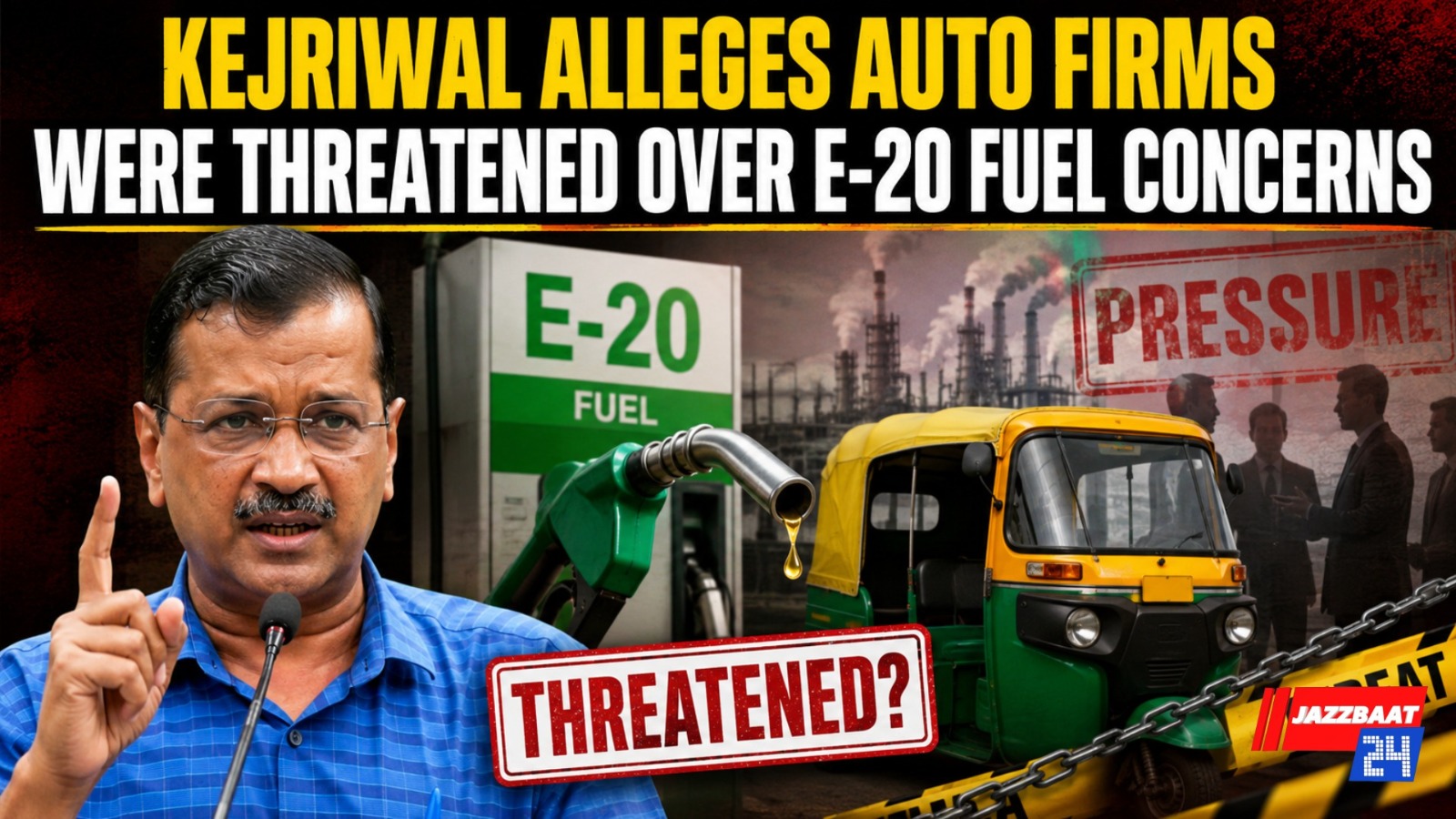
Aam Aadmi Party (AAP) national convenor Arvind Kejriwal has alleged that automobile manufacturers are reluctant to openly oppose the Centre's E-20 petrol rollout because they fear retaliation from the government. Addressing party workers at a public event, Kejriwal claimed companies have privately expressed concerns over the policy but are unwilling to speak publicly.
Quoting what he described as conversations with industry representatives, Kejriwal said companies believe they could face serious consequences if they criticise the Centre's ethanol-blended fuel programme. "They tell us that if we speak against E-20 petrol, our plant will be shut down, the Enforcement Directorate (ED) will conduct raids, and various government agencies will target us," he alleged.
The AAP leader questioned the implementation of E-20 fuel, arguing that several existing vehicles on Indian roads are not fully compatible with 20% ethanol-blended petrol. He claimed that using such fuel in incompatible vehicles could affect engine performance, fuel efficiency and maintenance costs, adding that consumers should not be forced to bear the burden of policy decisions without adequate preparation.
Kejriwal urged the Centre to engage transparently with automobile manufacturers, fuel experts and consumers before expanding the use of E-20 petrol across the country. He said any major fuel transition should be backed by scientific studies, proper infrastructure and clear communication to avoid inconvenience to vehicle owners.
The BJP has rejected similar allegations in the past, maintaining that India's ethanol blending programme is aimed at reducing dependence on imported crude oil, cutting carbon emissions and supporting farmers by increasing demand for ethanol produced from agricultural feedstock. The government has repeatedly stated that automobile manufacturers have been working to make vehicles compatible with higher ethanol blends and that the transition is being carried out in phases.
India has been steadily increasing ethanol blending in petrol as part of its clean energy strategy, with the long-term objective of achieving wider adoption of E-20 fuel. Automobile companies have also introduced several E20-compatible vehicle models in line with government guidelines.
Kejriwal's remarks have added a political dimension to the ongoing debate over the ethanol blending programme, with the AAP demanding greater transparency and consumer safeguards, while the Centre continues to defend the policy as an important step towards energy security, lower emissions and reduced fuel imports. The controversy is expected to intensify as political parties continue to debate the economic and environmental implications of the E-20 rollout.