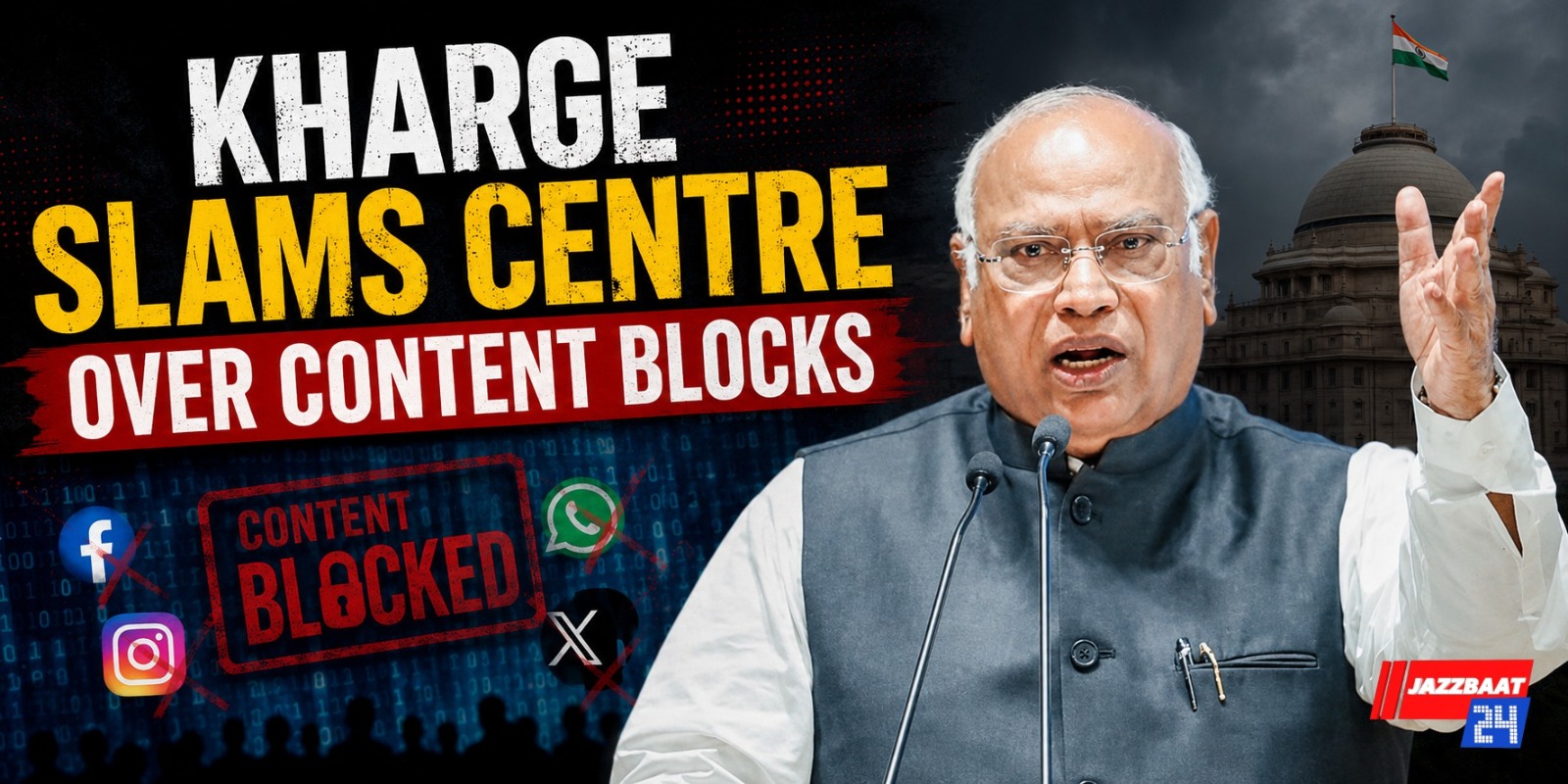
New Delhi: Congress president Mallikarjun Kharge has accused the Centre of launching a “brazen” and “calculated” attack on freedom of speech, claiming that the government issued around 1.95 lakh content-blocking orders to social media platforms between March and July 2026.
Kharge alleged that the scale of the blocking orders reflected a growing attempt to control online expression and silence criticism. His remarks came after reports highlighted a sharp rise in government directions to social media companies through mechanisms used to seek removal or restriction of online content.
According to the figures cited by Kharge, the Centre's orders during the five-month period amounted to roughly 1,300 blocking directions every day, prompting concerns among opposition leaders and digital-rights advocates over the transparency and scope of government intervention on social media.
The Congress chief argued that such extensive use of blocking powers could have a chilling effect on journalists, students, activists and ordinary citizens who criticise government policies. He accused the Narendra Modi government of weakening democratic freedoms and said the right to free expression must be protected.
The issue has gained renewed attention following the government's increased use of the Sahyog portal, through which government agencies can send requests to intermediaries for action against online content. Reports have indicated that a considerable number of blocking directions were issued during periods of heightened online activity, including protests.
The government, however, has maintained that content-blocking measures are used to address unlawful material and protect public order, national security and other legally recognised interests. Blocking powers under Section 69A of the Information Technology Act are subject to specified legal grounds and procedural safeguards.
The controversy comes amid broader changes to India's digital regulatory framework. The government has been tightening timelines and procedures for social media platforms to act on content flagged by authorities, arguing that faster intervention is necessary to tackle unlawful and harmful online material.
Opposition parties and digital-rights groups have questioned whether the expanding system provides adequate transparency, judicial oversight and opportunities for affected users to challenge takedown decisions.
Kharge's allegations have therefore added a fresh political dimension to the debate over India's social-media regulation. While the government says stronger enforcement is necessary to curb unlawful online content, the Congress argues that excessive blocking could undermine constitutional protections for freedom of speech and expression.
The debate is likely to intensify as the Centre continues to expand its digital-regulation framework and social media platforms face increasing government directions to remove or restrict online content.