
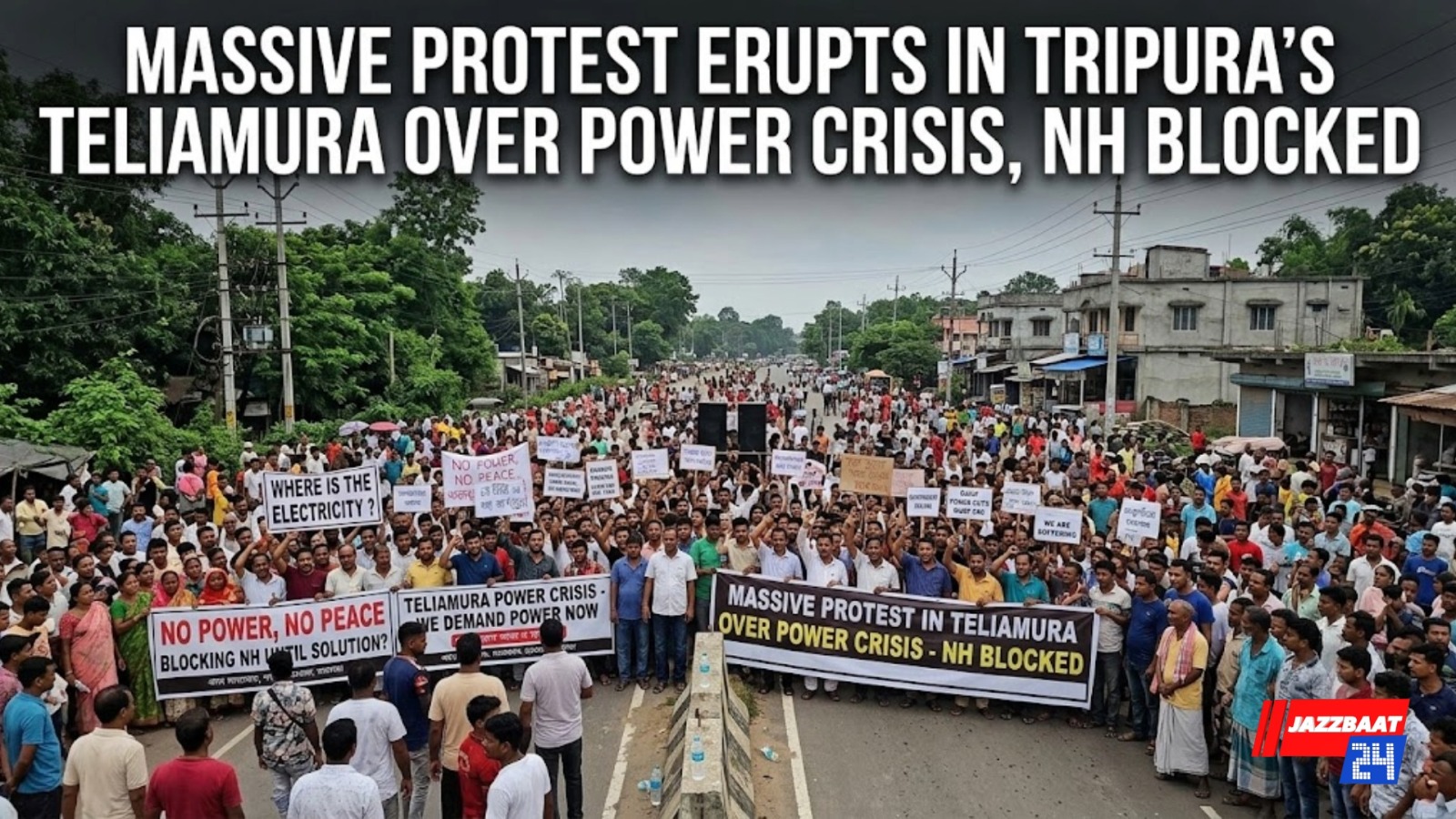
Hundreds of angry residents in Tripura's Teliamura staged a massive protest on Monday over a prolonged electricity crisis, blocking the National Highway and bringing traffic to a standstill. The agitation was triggered by a three-day disruption in the prepaid electricity recharge system, which reportedly became non-functional due to a server or "link" failure.
The protest began outside the Teliamura Electricity Division office, where consumers had gathered to recharge their prepaid meters and avoid disconnection of power supply. However, with the system still down and no immediate solution in sight, public frustration quickly escalated. Protesters accused the authorities of repeatedly assuring them that the issue would be resolved but failing to deliver any permanent fix.
As tensions mounted, demonstrators entered the electricity office premises and later moved onto the National Highway in front of the Teliamura Police Station. The blockade led to long queues of trucks, buses and private vehicles on both sides of the road, severely disrupting movement and causing inconvenience to thousands of commuters. Even heavy rainfall failed to disperse the protesters, who continued their sit-in demanding an immediate restoration of services.
The situation prompted the intervention of the district administration and police. Sub-Divisional Magistrate Apurba Krishna Chakraborty, Electricity Department DGM Nirmal Debnath and senior police officials rushed to the spot to hold discussions with the protesters. Reports also emerged alleging that police resorted to a baton charge in an attempt to clear the crowd, further fuelling public anger.
Addressing the media, DGM Nirmal Debnath said the department had decided to provide 30 to 50 emergency electricity units to consumers whose connections had already been disconnected or were at risk of being cut off. He added that the technical disruption stemmed from a fire at the electricity department's cloud server facility in Delhi and warned that restoring the system could take another two to three days.
The incident has highlighted growing public dissatisfaction over the state's electricity infrastructure and administrative response, with many residents demanding a permanent technological solution to prevent similar disruptions in the future.