

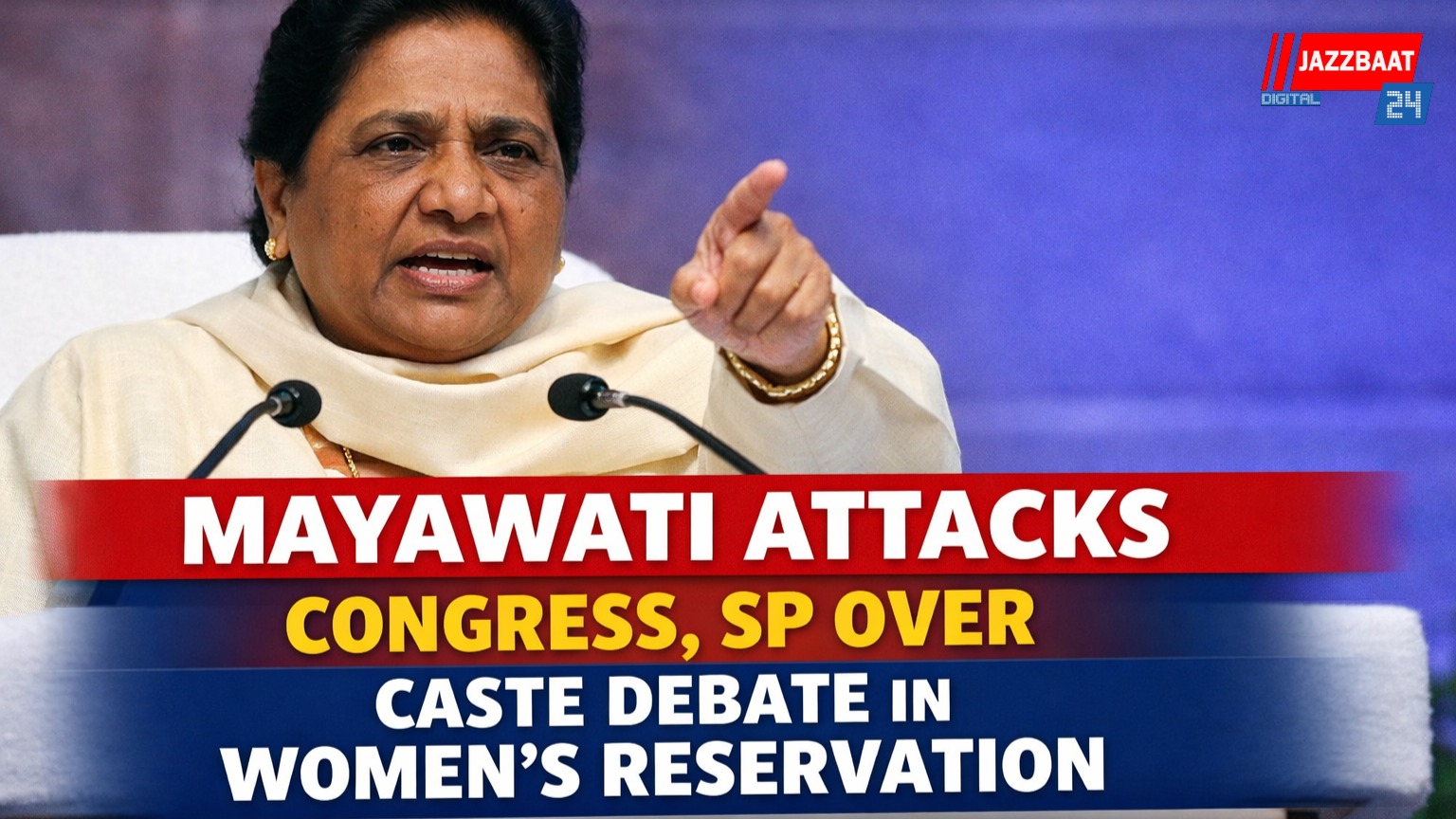
Bahujan Samaj Party (BSP) chief Mayawati has launched a sharp political attack on the Congress and the Samajwadi Party (SP) over their stance on caste-based provisions within the Women’s Reservation framework, accusing both parties of “double standards” and opportunistic politics.
In a strongly worded statement, Mayawati criticised the two opposition parties for raising the issue of caste-based sub-quotas for women particularly for Scheduled Castes (SC), Scheduled Tribes (ST), and Other Backward Classes (OBC) only now, despite allegedly ignoring these demands when they were in power. She likened their approach to that of a “chameleon,” accusing them of changing positions depending on political convenience.
The controversy comes amid ongoing national debate over the Women's Reservation Bill 2023, which proposes 33% reservation for women in Parliament and state assemblies. While several opposition leaders have demanded a caste-based census and sub-quotas within the bill, Mayawati questioned their intent, arguing that such concerns were neglected in the past.
Targeting the Congress, she alleged that the party had historically failed to protect the constitutional rights of marginalised communities and did not implement key recommendations like the Mandal Commission’s provisions for OBC reservation during its tenure. She further claimed that the Congress is now raising the caste question in women’s reservation for political gains rather than genuine social justice.
Mayawati also criticised the SP, accusing it of inconsistency in dealing with backward class issues during its time in power in Uttar Pradesh. She alleged that the party had previously failed to implement recommendations benefiting backward communities but is now advocating caste-based quotas within women’s reservation to attract votes.
Despite her criticism, the BSP chief reiterated her party’s long-standing demand for a separate sub-quota for SC, ST, and OBC women within the broader reservation framework. She warned that without such provisions, the benefits of the policy may not reach the most marginalised women. At the same time, she suggested that the current proposal should still be accepted “for the time being,” with scope for future सुधार.
Mayawati also urged OBC communities not to be influenced by political inducements and emphasised the need for long-term empowerment and self-reliance.
The remarks have added to the intensifying political debate over the implementation of women’s reservation, with parties divided on whether caste-based representation should be explicitly included. As discussions continue, the issue is emerging as a key fault line in national politics ahead of upcoming elections.