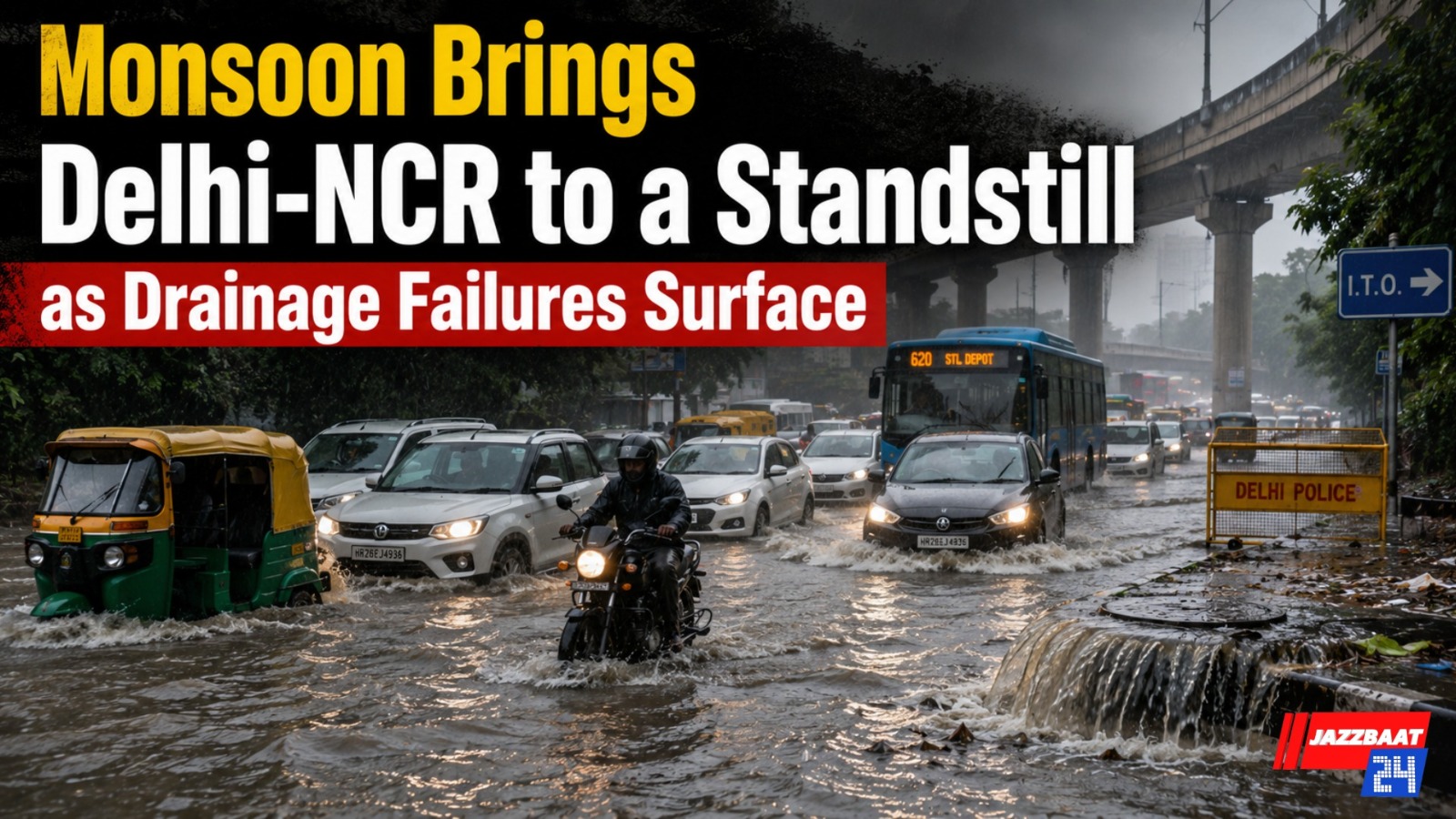
Heavy monsoon rains have once again exposed the poor state of drainage infrastructure across Delhi and the National Capital Region (NCR), leaving roads submerged, traffic paralysed and thousands of commuters stranded. Waterlogging was reported from several parts of Delhi, Gurugram, Noida, Ghaziabad and Faridabad after hours of intense rainfall, disrupting daily life and highlighting the region's recurring civic problems.
Major roads turned into virtual rivers as clogged drains failed to carry away rainwater. Vehicles were seen crawling through flooded streets, while several underpasses had to be closed due to rising water levels. Long traffic jams stretched for kilometres, forcing office-goers and schoolchildren to spend hours on the road. Public transport services were also affected, with buses delayed and local movement severely disrupted.
The latest spell of rain has once again raised questions about the preparedness of civic agencies. Despite annual pre-monsoon desilting drives and repeated assurances from authorities, residents continue to face the same problems every rainy season. Overflowing drains, blocked stormwater channels and unchecked urban development have combined to worsen flooding in many low-lying areas.
The situation in Delhi-NCR mirrors the challenges being faced across several other states. Kerala continues to battle deadly landslides, Maharashtra has witnessed building collapses and flood-like conditions, while parts of Assam, Bihar and Himachal Pradesh are also struggling with heavy rainfall and overflowing rivers. Across the country, the monsoon has disrupted transport, damaged infrastructure and claimed lives, bringing normal life to a halt in many regions.
Experts say that while climate change has increased the intensity of rainfall events, poor urban planning and inadequate drainage systems remain the biggest reasons behind repeated urban flooding. Encroachment of natural water bodies, shrinking wetlands and rapid concretisation have reduced the land's ability to absorb rainwater, making cities increasingly vulnerable.
Authorities have deployed pumps to remove water from flooded roads and advised people to avoid unnecessary travel during periods of heavy rain. Weather officials have also warned that more rainfall is expected in the coming days, keeping disaster management teams on alert.
As India aspires to become a global economic powerhouse, the annual monsoon continues to reveal deep cracks in urban infrastructure. Until drainage systems are modernised and cities are planned with climate resilience in mind, heavy rainfall will continue to bring Delhi-NCR and many other parts of the country to a standstill every monsoon season.