

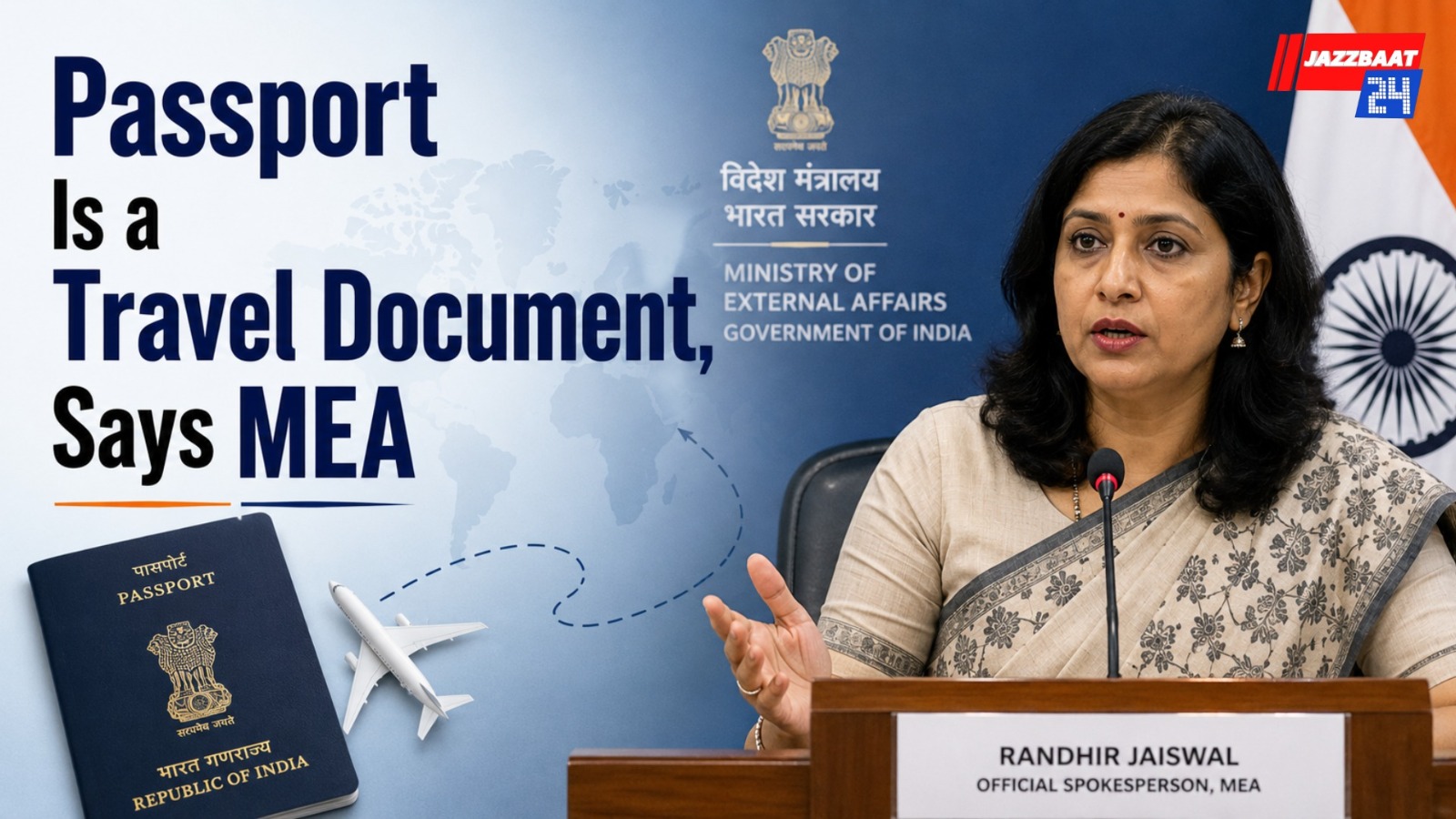
The Ministry of External Affairs (MEA) has clarified that an Indian passport is primarily a travel document and should not be treated as conclusive proof of Indian citizenship. The statement, made during the 14th Passport Seva Divas celebrations, has sparked widespread discussion over what legally constitutes proof of citizenship in India.
According to MEA officials, a passport is issued to facilitate international travel and to certify the holder's nationality while abroad. Although passports are issued only after extensive verification and are granted only to Indian citizens, their principal legal purpose is to function as a travel document rather than a standalone citizenship certificate. Officials stressed that the passport's role is distinct from documents or legal processes that establish citizenship under the Citizenship Act, 1955.
The clarification came as the government highlighted major improvements in passport services across the country. The MEA said India has significantly expanded passport infrastructure over the past decade, increasing Passport Seva Kendras and rolling out chip-based e-passports with biometric features to improve security, reduce fraud and enhance global acceptance. More than 14 million e-passports have already been issued since the programme's launch.
The announcement quickly triggered political reactions and public debate on social media. Several opposition leaders questioned the government's position, asking what documents should be considered definitive proof of citizenship if passports, Aadhaar cards and voter identity cards are not treated as conclusive evidence. Public figures also raised concerns about the implications of the clarification for citizenship verification and official documentation.
Legal experts note that Indian citizenship is determined under the Citizenship Act and related legal provisions, with eligibility based on factors such as birth, descent, registration, naturalisation or other statutory provisions. A passport is issued after authorities verify an applicant's eligibility, but the MEA emphasised that its primary legal function remains facilitating international travel rather than serving as an independent certificate of citizenship.
The clarification has renewed a broader discussion about documentation and citizenship in India, especially following recent debates surrounding voter verification and identity documents. While the government maintains that the passport remains one of the world's most trusted travel documents, it has reiterated that its legal purpose should not be confused with the statutory process of establishing Indian citizenship.