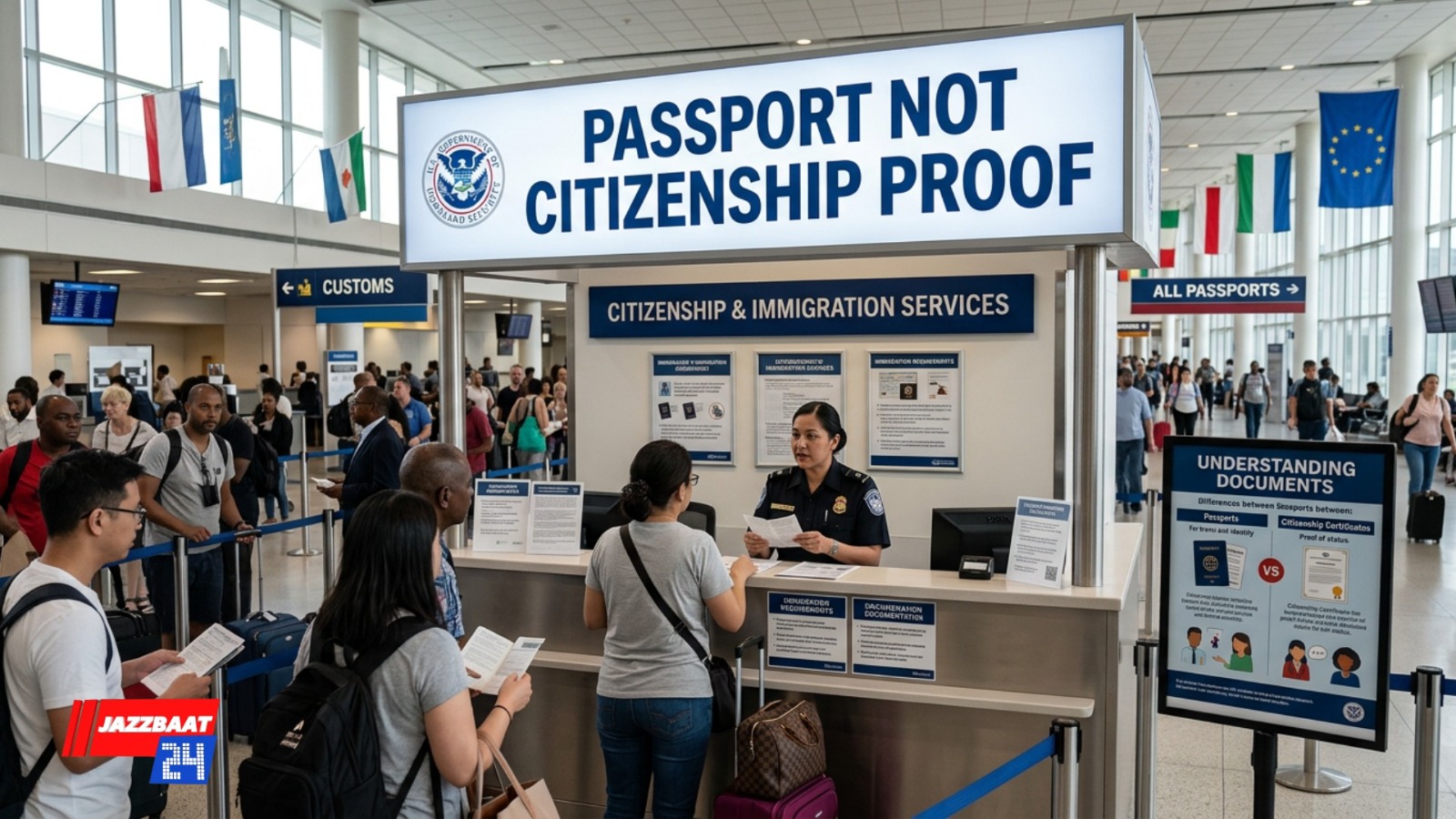
The Centre on Thursday clarified that an Indian passport has never been treated as conclusive proof of citizenship, saying the position is not new and has not been introduced by any recent government decision.
The clarification came after the Ministry of External Affairs said during a briefing that a passport is primarily a travel document and should not be considered definitive proof of citizenship. The remark triggered political debate, with Opposition leaders questioning what document would then establish citizenship.
Government sources cited Section 20 of the Passports Act, 1967, which allows the Centre to issue a passport or travel document even to a person who is not an Indian citizen if it considers it necessary in public interest. Officials said this provision itself shows that possession of a passport cannot automatically prove citizenship.
The government also referred to Bombay High Court rulings from 2013, which held that holding a passport alone does not establish Indian citizenship. Officials said citizenship is determined under the Citizenship Act, 1955, based on eligibility and supporting evidence, not merely by possession of one document.
The issue gained attention after political leaders, including Rajya Sabha MP Kapil Sibal, criticised the MEA’s statement and raised concerns over how citizens would prove their status if passports were not accepted as proof. BJP leaders, however, said the MEA had only repeated a settled legal position and had not announced any policy change.
Officials stressed that a passport remains an important identity and travel document, but it is not the final legal proof of nationality. The clarification is aimed at addressing confusion among citizens who commonly view passports as the strongest identity document.
The debate has also highlighted a larger question around documentation in India, where Aadhaar, PAN, voter ID and passports are often used for identification but may not individually prove citizenship in a legal dispute. The government maintained that citizenship-related questions must be decided according to law and proper records, not assumptions based on a single document.