
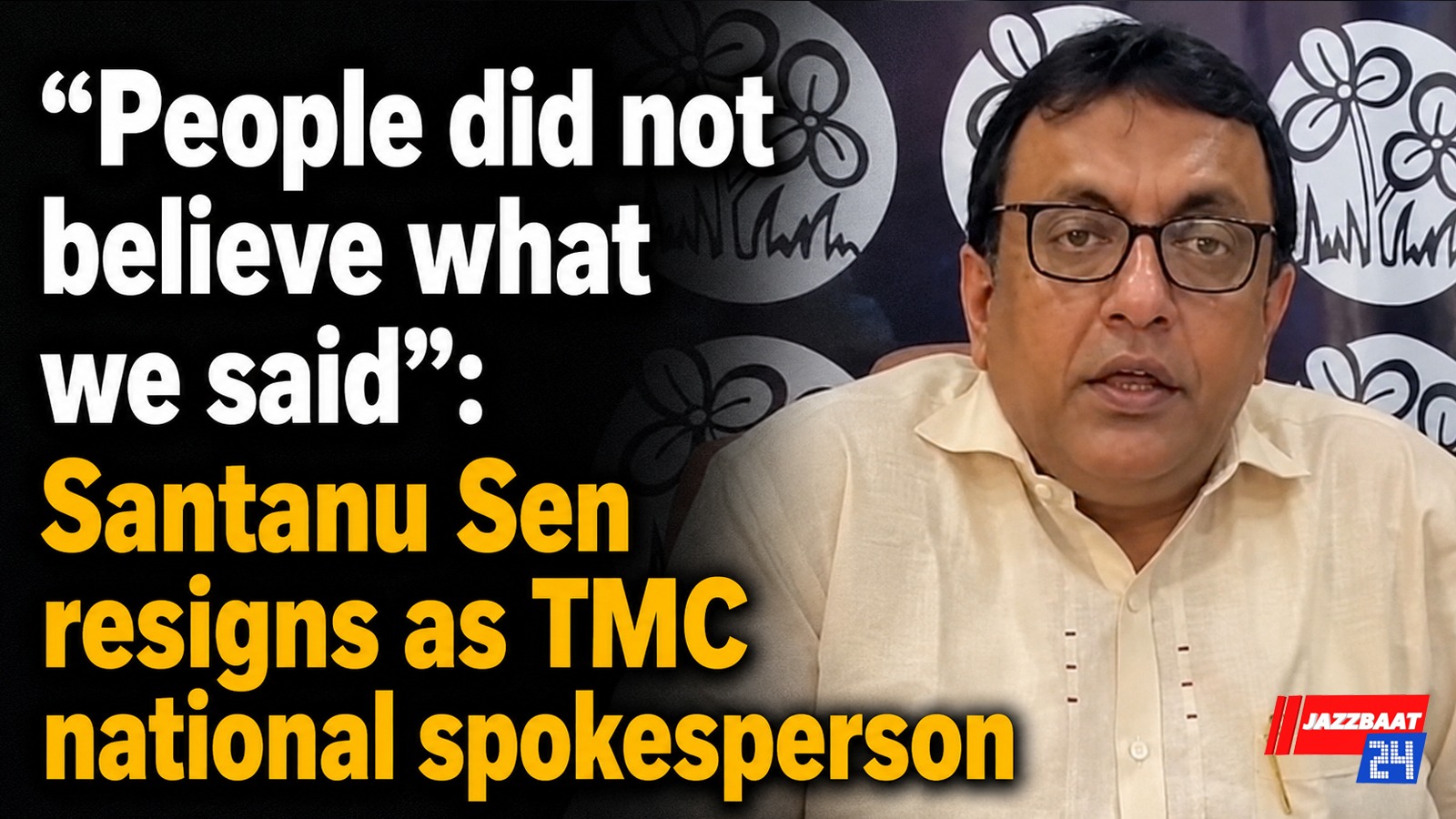
Senior Trinamool Congress leader and former Rajya Sabha MP Santanu Sen has resigned from his post as national spokesperson of the party, saying that internal communication gaps and a lack of public trust in party messaging influenced his decision.
Santanu Sen stepped down from his role as national spokesperson of the All India Trinamool Congress, marking a significant development within the party’s communication wing. In his resignation statement, Sen remarked that “people did not believe what we said,” indicating dissatisfaction over how the party’s message was being received and perceived outside organisational circles.
Sources familiar with the matter said Sen submitted his resignation recently, citing personal reasons as well as differences over communication strategy. While the party has not issued a detailed official response, senior leaders have acknowledged receiving his resignation and indicated that it will be processed in due course.
Sen, a doctor by profession and a known face in Bengal politics, has been associated with the TMC’s media and parliamentary presence for several years. He has often represented the party in television debates and public discussions, particularly on issues related to healthcare and governance.
His exit from the spokesperson role comes at a time when political communication has become increasingly crucial for all major parties, especially amid intense debates on governance, elections, and public perception. Party insiders suggest that internal restructuring of the media and communication team may already be underway, though no formal announcement has been made.
Political observers note that Sen’s resignation highlights broader challenges faced by political organisations in managing narrative control in a fast-changing media environment. With social media amplifying political messaging, parties are often under pressure to ensure consistent communication across platforms.
While it is not yet clear whether Sen will continue to hold other organisational responsibilities within the party, his departure from the spokesperson role is being seen as a notable change in the TMC’s public-facing structure.
The development has also triggered discussions in political circles about internal cohesion and message discipline within the party. However, leaders close to the leadership have downplayed any speculation of internal conflict, describing it as a routine organisational adjustment.
As of now, the party is expected to appoint new spokespersons or redistribute responsibilities among existing members to maintain its communication outreach.