
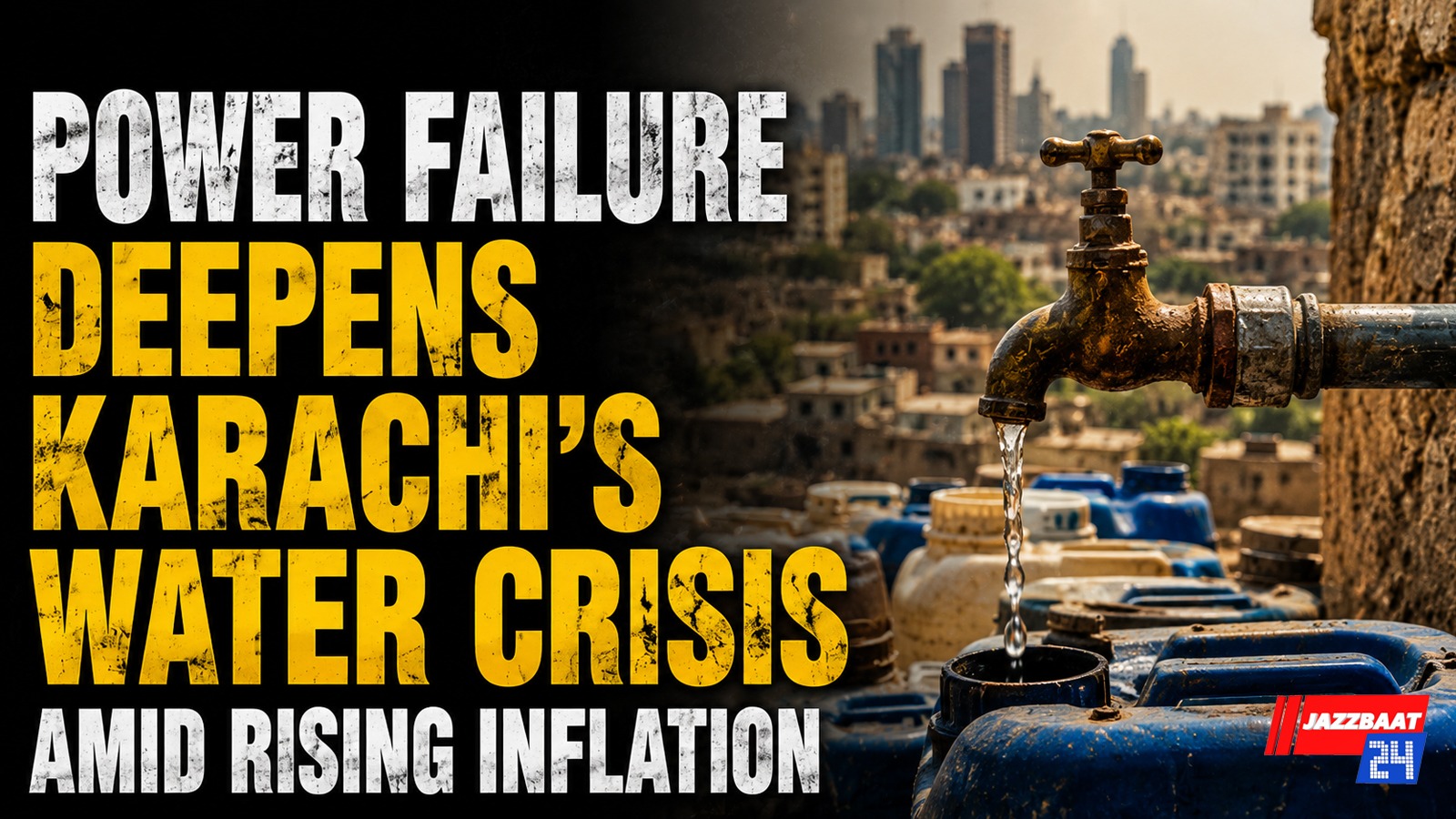
Pakistan’s financial capital, Karachi, is facing a worsening water crisis after a major power failure disrupted operations at a key pumping station, exposing the city’s aging infrastructure and governance challenges. The latest breakdown has left millions of residents grappling with severe water shortages at a time when households are already struggling with high inflation and rising living costs.
According to the Karachi Water and Sewerage Corporation (KWSC), a fault in a major power cable supplying electricity to the North East Karachi Pumping Station interrupted operations at the K-II Pumping Station, creating a shortfall of approximately 54 million gallons of water per day. The utility warned that the deficit could worsen if repairs are not completed quickly and permanently.
The latest disruption comes just days after another emergency shutdown at the Dhabeji Pumping Station affected water distribution across several parts of the city. Officials said repeated power failures, damaged pipelines, and technical faults have combined to cripple Karachi’s already strained water supply network.
Many residents have reported receiving little or no water for days, forcing families to rely on expensive private water tankers. The situation has become especially difficult for low- and middle-income households, which are already burdened by Pakistan’s prolonged inflationary pressures. For many families, obtaining basic necessities such as drinking water has become a daily struggle.
The crisis has also highlighted broader concerns about Karachi’s infrastructure. Experts have long warned that the city’s water, electricity, and transport systems are struggling to keep pace with a rapidly growing population. Karachi faces a significant gap between water demand and supply, while aging pipelines and recurring technical failures frequently disrupt services.
Recent weeks have seen multiple utility-related disruptions across the city. Water shortages, electricity outages, and gas supply problems have affected daily life for millions of residents, particularly during periods of extreme summer heat. With temperatures frequently exceeding seasonal averages, reliable access to water has become even more critical.
KWSC officials said they are coordinating with electricity provider K-Electric to restore full operations and stabilize water distribution. However, residents and urban planners argue that recurring breakdowns point to deeper structural problems that require long-term investment and better coordination between public agencies.
As Karachi enters another difficult summer, the ongoing crisis has renewed debate over infrastructure modernization, utility management, and the ability of public institutions to provide essential services to one of South Asia’s largest cities.