
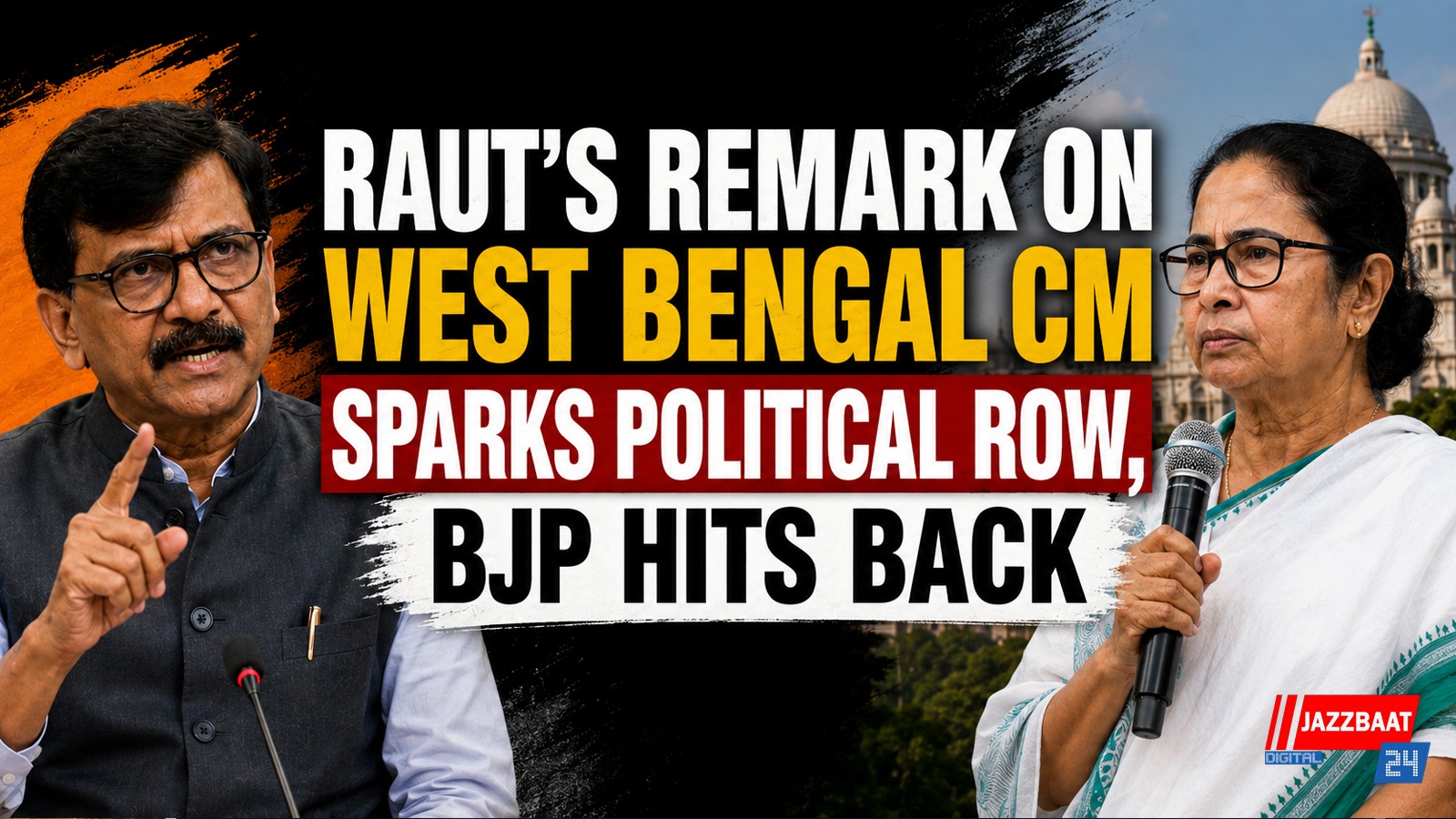
A fresh political controversy erupted on Saturday after senior leader Sanjay Raut launched a sharp attack on the ruling Bharatiya Janata Party, alleging that the party has a “tradition of giving power to corrupt” leaders, with his comments specifically targeting the political environment around the West Bengal Chief Minister.
Speaking to reporters, the leader claimed that corruption has become a recurring allegation in regions where the saffron party is either in power or attempting to expand its influence. He also suggested that the current political culture in several states reflects a deeper governance crisis, intensifying the ongoing political confrontation between opposition parties and the BJP.
The remarks quickly drew strong objections from the Bharatiya Janata Party, which dismissed the allegations as baseless and politically motivated. Party spokespersons argued that such statements are part of a deliberate attempt to mislead the public and divert attention from opposition-related controversies.
Reacting sharply, BJP leaders said the party has always acted against corruption and pointed to various investigations and actions taken in different states as evidence of its stand on clean governance. They also accused the opposition of repeatedly targeting the party without substantiated proof.
The political exchange has once again heightened tensions between the BJP and opposition groups, particularly in the context of West Bengal politics, where debates over governance, law and order, and administrative transparency have remained central issues.
Meanwhile, the comments have also drawn attention to the broader national political narrative, where allegations and counter-allegations between major parties have become increasingly common ahead of upcoming electoral contests. Analysts believe such exchanges are likely to intensify as political parties begin positioning themselves for future elections.
The West Bengal Chief Minister Mamata Banerjee has often been at the centre of political criticism from the BJP, while her party has consistently countered with accusations against the central leadership, making the state a key battleground in national politics.
As the verbal sparring continues, both sides remain firm in their positions, with no indication of the controversy settling soon. Political observers note that such exchanges further deepen the already polarised political climate, keeping the focus firmly on allegations rather than policy discussions.