
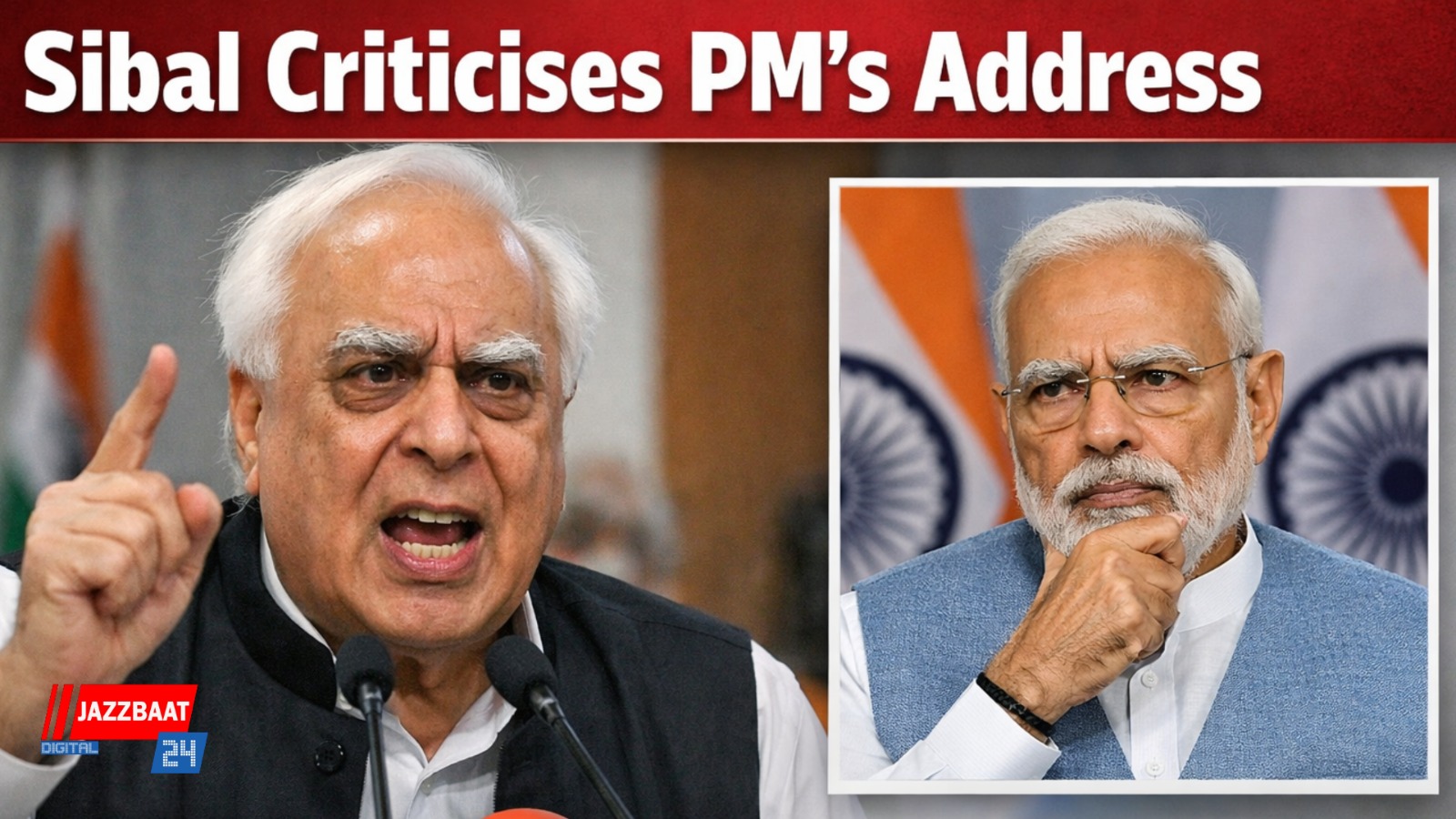
Rajya Sabha MP Kapil Sibal has strongly criticised Prime Minister Narendra Modi, describing the Prime Minister’s recent address to the nation as a “new low in Indian politics.” His remarks have triggered fresh political debate between the opposition and the ruling party, with sharp exchanges expected to continue in the coming days.
Kapil Sibal made the statement while reacting to the content and tone of the Prime Minister’s address, which had focused on national issues and recent government decisions. According to Sibal, the address reflected a deterioration in political discourse and set a troubling precedent for public communication from the highest office of the country.
He alleged that the speech was not in keeping with the dignity of the office of the Prime Minister and instead contributed to increasing political polarisation. Sibal further argued that such statements deepen divisions in society rather than promoting unity or constructive dialogue on pressing national concerns.
The senior lawyer and parliamentarian also said that the opposition expects the Prime Minister to rise above partisan politics while addressing the nation. He emphasised that the office of the Prime Minister carries a responsibility to maintain neutrality and uphold democratic values, especially during moments of political sensitivity.
The ruling party, however, has defended the Prime Minister’s address, stating that it was aimed at informing citizens about key policy decisions and national developments. BJP leaders have dismissed the criticism, suggesting that opposition parties often misinterpret or selectively criticise government communication for political mileage.
According to party representatives, the address was factual, policy-driven, and intended to reach citizens directly without distortion. They also accused opposition leaders of repeatedly targeting the Prime Minister’s credibility instead of engaging in constructive debate on governance issues.
The exchange has once again highlighted the growing political divide between the government and opposition benches, particularly over the tone and content of public speeches and national addresses. Political analysts note that such confrontations have become more frequent, reflecting heightened tensions in the country’s political landscape.
As the debate continues, both sides are likely to further sharpen their positions in Parliament and public forums. The controversy adds to an already charged political atmosphere, where statements from senior leaders often quickly escalate into wider national discussions.