

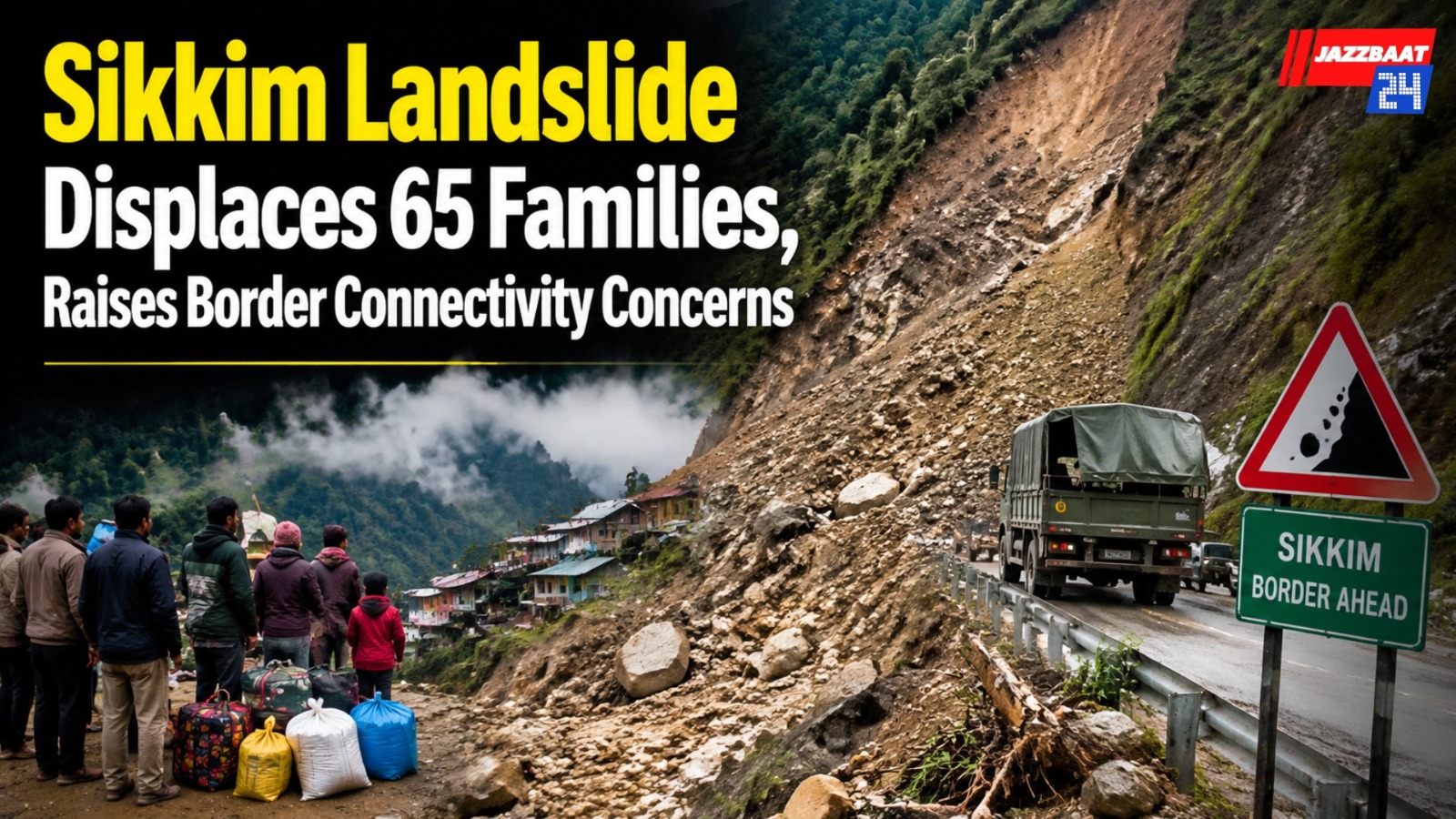
A massive landslide along the strategically important Jawaharlal Nehru (JN) Road in East Sikkim has displaced 65 families and triggered fresh concerns over connectivity to the Indo-China border. The landslide, located at the 7th Mile under Kyongnosla village, has remained active for nearly 10 days, forcing residents to leave their homes and seek shelter in temporary relief camps.
The landslide has completely washed away the old road leading towards the border, a route considered vital for civilian movement and access to several Indian Army camps stationed in the region. Although an alternative road remains operational, residents fear that continued rainfall and fresh landslides could block the only remaining access route, severely affecting border connectivity and emergency response.
According to local residents, the affected stretch falls under the jurisdiction of the General Reserve Engineer Force (GREF), which is responsible for maintaining roads in border areas. Locals alleged that officials informed them the damaged road is no longer in regular use because an alternate route exists and that there are currently no funds available for restoring the washed-away section. Residents, however, argue that relying on a single road is risky, especially during the monsoon season when landslides frequently disrupt traffic in the Himalayan region.
The displaced families continue to stay in temporary relief camps as authorities monitor the unstable hillside. Residents have also expressed disappointment over the lack of visits by senior administrative officials despite the seriousness of the situation and the strategic importance of the area. They have urged both the Government of India and the Government of Sikkim to conduct an immediate on-site assessment and take urgent measures to restore connectivity and strengthen the vulnerable stretch against future landslides.
The incident has once again highlighted the recurring challenge of landslides along the JN Road, which connects Gangtok with high-altitude areas including Tsomgo Lake and Nathu La. The route remains highly vulnerable during the monsoon due to unstable slopes and heavy rainfall. The Sikkim government has already been exploring sensor-based landslide early warning systems for vulnerable sections of the highway to improve disaster preparedness and reduce risks to commuters and security forces.
With continuous rainfall forecast in the region, authorities are expected to closely monitor the situation while residents hope for swift restoration of the damaged infrastructure. The incident underscores the need for long-term slope stabilization, improved disaster mitigation measures, and resilient infrastructure to safeguard both local communities and one of India's most strategically significant border corridors.