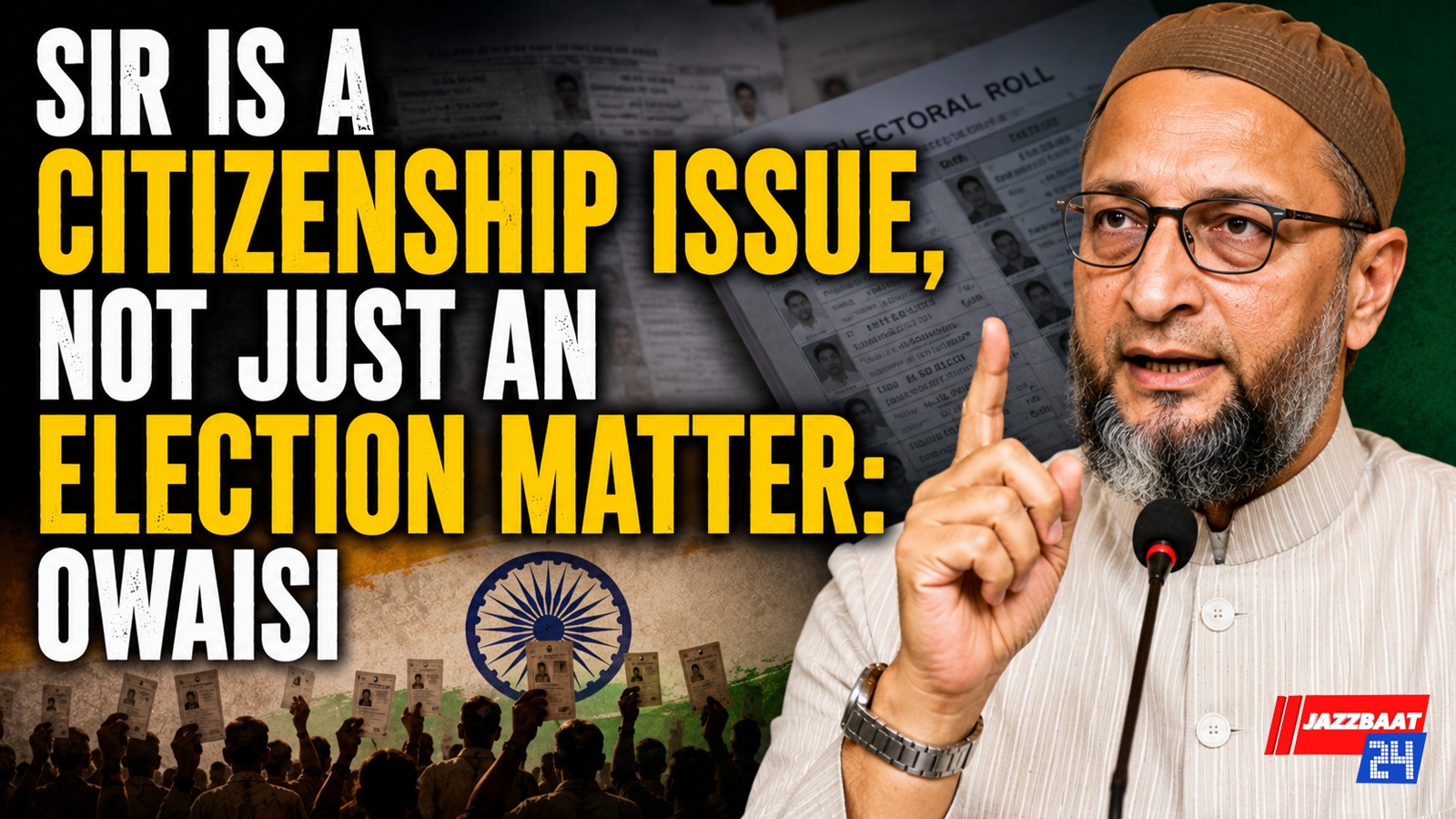
AIMIM chief Asaduddin Owaisi has intensified his criticism of the ongoing Special Intensive Revision (SIR) of electoral rolls, arguing that the exercise goes far beyond an election-related issue and directly impacts questions of citizenship and constitutional rights. Speaking at a public event, Owaisi warned that the process could have far-reaching consequences for millions of citizens if not conducted with complete transparency and fairness.
According to Owaisi, the requirement for voters to furnish documents proving their eligibility has created anxiety among economically weaker sections, migrant workers, and marginalized communities. He claimed that many citizens who have voted for years may now face difficulties in producing the required records, raising concerns about their inclusion in the electoral rolls.
The Hyderabad MP argued that voting rights are closely linked to citizenship and democratic participation. He stated that if a person's name is removed from the voters' list due to documentation issues, it could create doubts about that individual's status and rights as a citizen. For this reason, he said the SIR exercise should not be viewed merely as an administrative electoral process but as an issue with broader constitutional implications.
Owaisi also questioned the timing and implementation of the revision exercise, urging the authorities to ensure that no eligible voter is excluded. He called for greater public awareness, simplified procedures, and adequate opportunities for people to submit documents or correct errors before any final decisions are made.
Supporters of the revision exercise, however, maintain that updating electoral rolls is essential for maintaining the integrity of elections and removing duplicate, deceased, or ineligible entries. Election officials have repeatedly stated that the objective is to ensure accurate voter lists and that safeguards exist to protect genuine voters from wrongful exclusion.
The debate over the SIR has become a significant political issue, with opposition parties expressing concerns about possible disenfranchisement, while supporters argue that clean and updated voter rolls are necessary for free and fair elections. Political analysts note that the controversy is likely to remain in focus as electoral preparations continue in several states.
Owaisi reiterated that democratic institutions must ensure that every eligible citizen retains the right to vote and that administrative processes should strengthen, rather than weaken, public confidence in the electoral system. He urged authorities to conduct the exercise in a manner that is transparent, inclusive, and consistent with constitutional principles.
As discussions continue, the issue has evolved into a wider national debate about voter registration, documentation requirements, and the balance between electoral integrity and protecting citizens' democratic rights.