
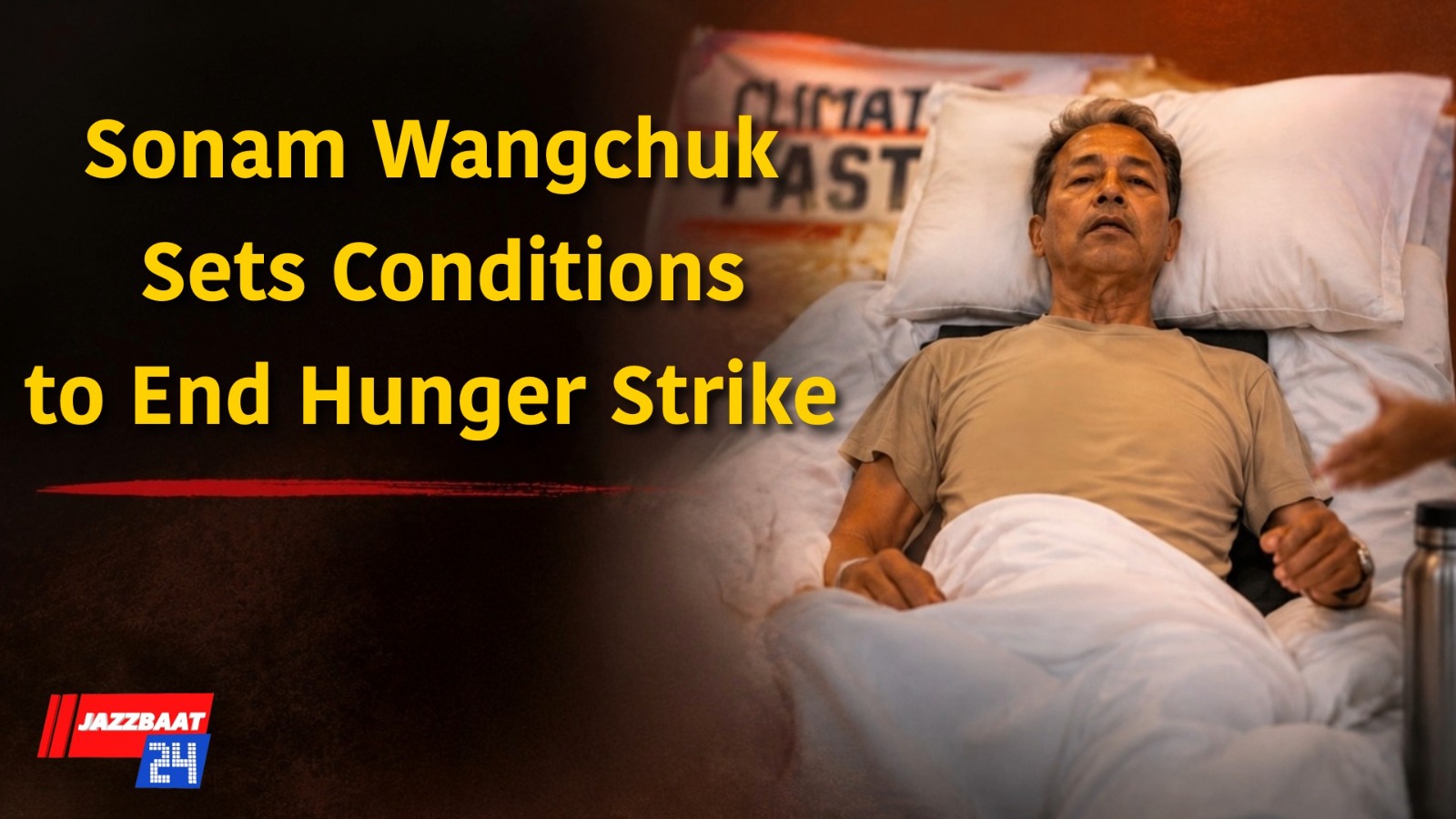
Climate activist and education reformer Sonam Wangchuk has said that he is ready to end his indefinite hunger strike if the Central government accepts responsibility for recent failures in India’s education system, including examination paper leaks and alleged irregularities.
In a message addressed to his supporters on Monday, Wangchuk said he had received several questions about when he planned to conclude his fast. Responding to them, he outlined three conditions under which he would consider ending the protest.
Wangchuk said the first condition was that the government must take accountability for recent failures in the education system, particularly incidents involving question paper leaks and examination irregularities. His protest has focused on demanding greater transparency, responsibility and reforms in the way important national examinations are conducted.
As an alternative, he said he would end the fast if he and the leadership of the protesting group were allowed to reach Parliament and received assurances from Members of Parliament and leaders of different political parties that the issue would be raised during the Monsoon Session.
Wangchuk also indicated that a clear assurance from political leaders to take up the question of educational accountability in Parliament could help bring the hunger strike to an end. His wife, Gitanjali J Angmo, had earlier said that he was prepared to conclude the protest if leaders personally met him and promised to raise the matter in the House.
The activist has been on an indefinite hunger strike over alleged failures in the education system and reported irregularities in competitive examinations, including the NEET-UG controversy. His health reportedly deteriorated during the protest, following which he was admitted to Delhi’s Safdarjung Hospital.
Despite being hospitalised, Wangchuk has continued his fast. He has also alleged that his freedom of movement, speech and communication has been restricted. His wife has challenged a Delhi High Court order that allowed him to remain at the government hospital, arguing that he was not under arrest and should have the right to decide where he receives treatment.
The statement came as the Monsoon Session of Parliament began on July 20. Wangchuk and his supporters are hoping that the protest will draw the attention of lawmakers and lead to a wider discussion on paper leaks, examination reforms and accountability within the education system.
The government has yet to publicly accept Wangchuk’s conditions. The activist has maintained that his protest is not against any individual but is intended to seek institutional responsibility and stronger safeguards for students across the country.