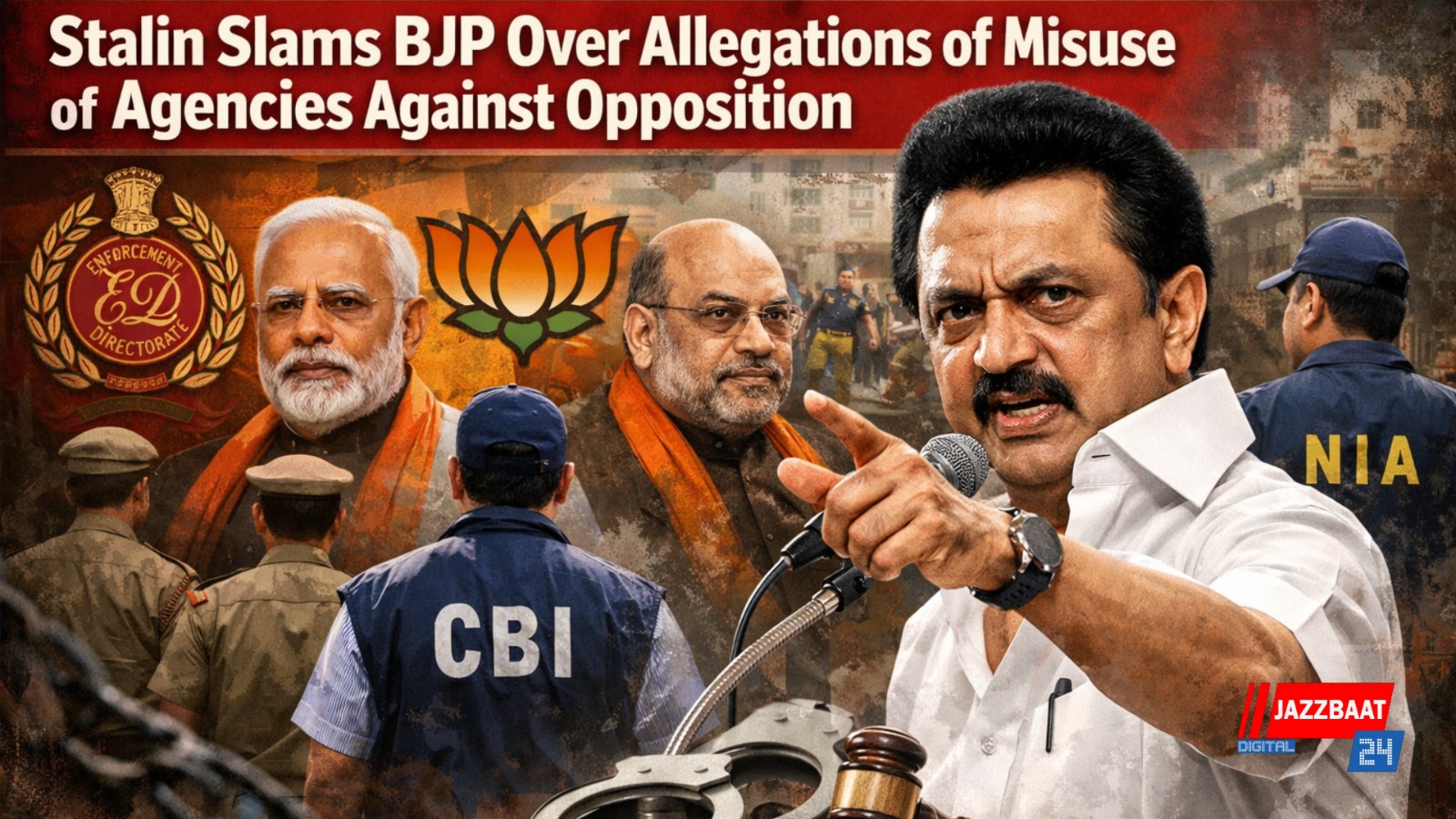
Tamil Nadu Chief Minister M K Stalin has sharply criticised the Bharatiya Janata Party (BJP), accusing it of resorting to “atrocities” and misusing central agencies to suppress opposition voices, following controversy over the alleged “unlawful confinement” of the Tamil Nadu Congress Committee (TNCC) chief by Income Tax Department officials.
The political row intensified after Congress leaders alleged that the TNCC chief was detained and questioned by Income Tax officials in a manner they described as coercive and procedurally improper. The Congress party has claimed that the questioning went on for several hours and that the leader’s movements and communication were restricted during the process, calling it an attempt to intimidate opposition leaders.
Reacting strongly to the development, M K Stalin expressed concern over what he termed as a growing pattern of pressure tactics against opposition parties. He alleged that the BJP-led central government has been using investigative agencies to target political rivals and create an atmosphere of fear. Stalin said such actions weaken democratic institutions and undermine the federal spirit of the country.
He further stated that the alleged treatment of the TNCC chief reflects a broader trend where central agencies are being deployed not just for enforcement of law but also for political purposes. According to him, this creates an uneven political playing field and raises serious questions about fairness and constitutional governance.
The Congress party has also escalated its criticism, accusing the BJP of systematically misusing agencies like the Income Tax Department, Enforcement Directorate, and others to harass opposition leaders. Party spokespersons have demanded accountability and insisted that investigative procedures must strictly follow due process without political interference.
On the other hand, BJP representatives have rejected all allegations, maintaining that central agencies function independently and act based on evidence and legal procedures. They have argued that any attempt to link ongoing investigations with political motives is an effort to deflect attention from accountability.
The controversy has triggered a wider political debate, with several opposition parties expressing concern over what they describe as increasing centralisation of investigative powers. Political observers note that such clashes between ruling and opposition parties over central agencies have become a recurring feature in national politics.
As tensions continue to rise, both sides remain firm in their positions, with opposition leaders demanding transparency and the ruling party defending the autonomy of investigative bodies. The issue is likely to fuel further political confrontation in the coming days.