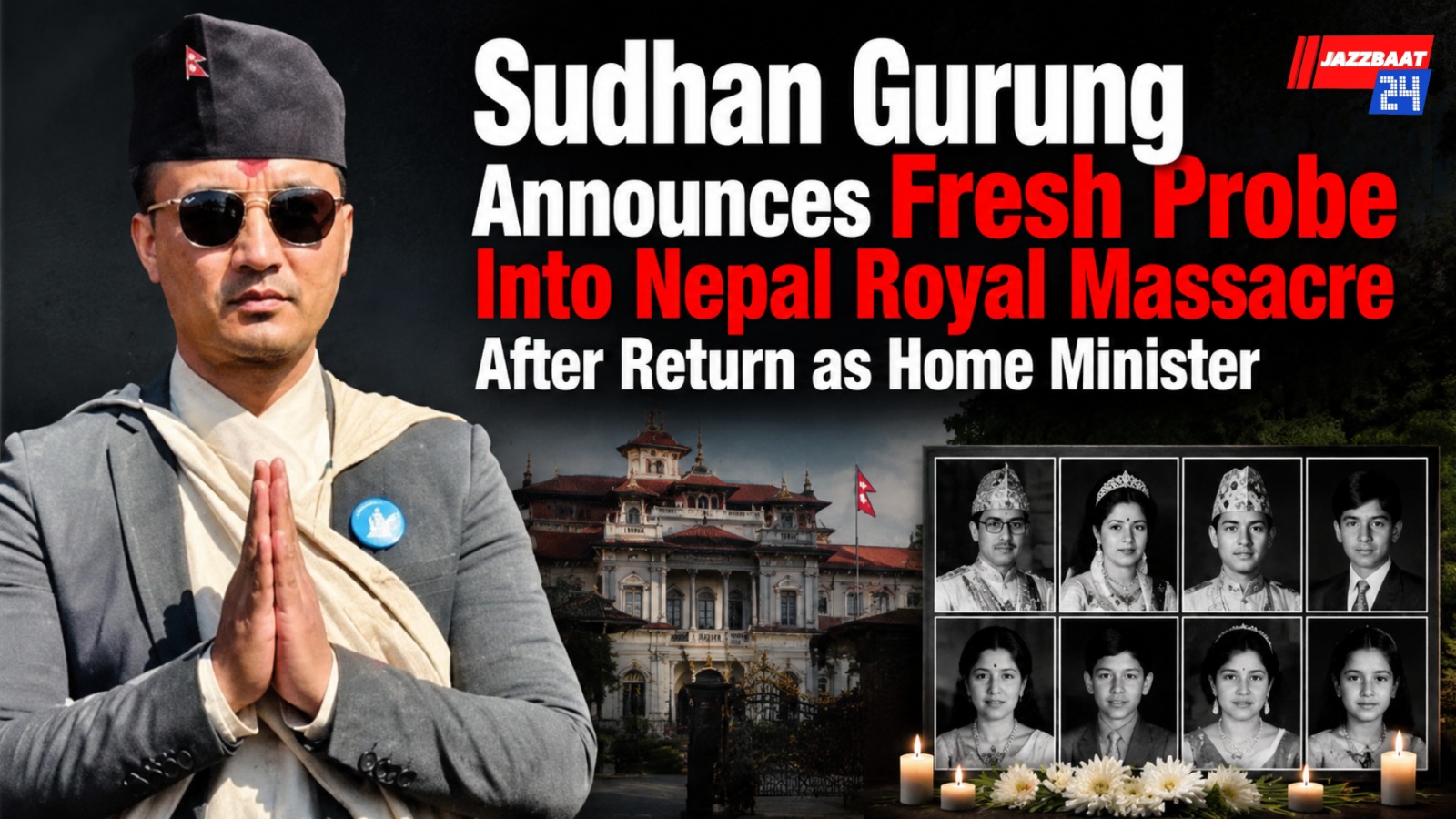
Nepal's Home Minister Sudan Gurung has announced plans for a fresh investigation into the 2001 Nepalese Royal Massacre, one of the country's most controversial and tragic events, shortly after returning to the Home Ministry. The move has reignited public debate over a case that officially closed more than two decades ago but continues to be surrounded by suspicion and unanswered questions.
Speaking to reporters in Kathmandu, Gurung said the government is committed to uncovering the full truth behind the massacre and addressing longstanding concerns raised by victims' families, historians, and sections of the Nepalese public. He stated that advances in forensic science and the passage of time make it appropriate to revisit the case and examine whether all relevant facts were properly investigated.
The Nepalese Royal Massacre occurred on June 1, 2001, at the Narayanhiti Royal Palace in Kathmandu. King Birendra, Queen Aishwarya, and several other members of the royal family were killed during a family gathering. The official investigation concluded that Crown Prince Dipendra carried out the shootings before turning the weapon on himself. A government-appointed inquiry interviewed more than 100 witnesses and ultimately blamed Dipendra for the killings.
Despite the official findings, many Nepalese citizens have questioned the investigation's conclusions over the years. Critics argued that the original inquiry was completed too quickly and failed to address several inconsistencies and conspiracy theories that emerged in the aftermath of the tragedy. The massacre significantly damaged public confidence in the monarchy and is widely regarded as a turning point that eventually contributed to the abolition of the royal institution in 2008.
Gurung indicated that the government may establish an independent commission comprising legal experts, forensic specialists, historians, and former investigators to review available evidence and determine whether additional findings can be made. However, he did not provide a specific timeline for the proposed investigation.
The announcement has drawn mixed reactions across Nepal. Supporters believe a renewed probe could help answer lingering questions and bring closure to one of the darkest chapters in the nation's history. Others have questioned whether a new investigation can produce meaningful results after 25 years, given the limited availability of physical evidence and surviving witnesses.
The government's decision is expected to remain a major political issue in Nepal in the coming months, as public attention once again turns to the events that reshaped the country's modern history.