
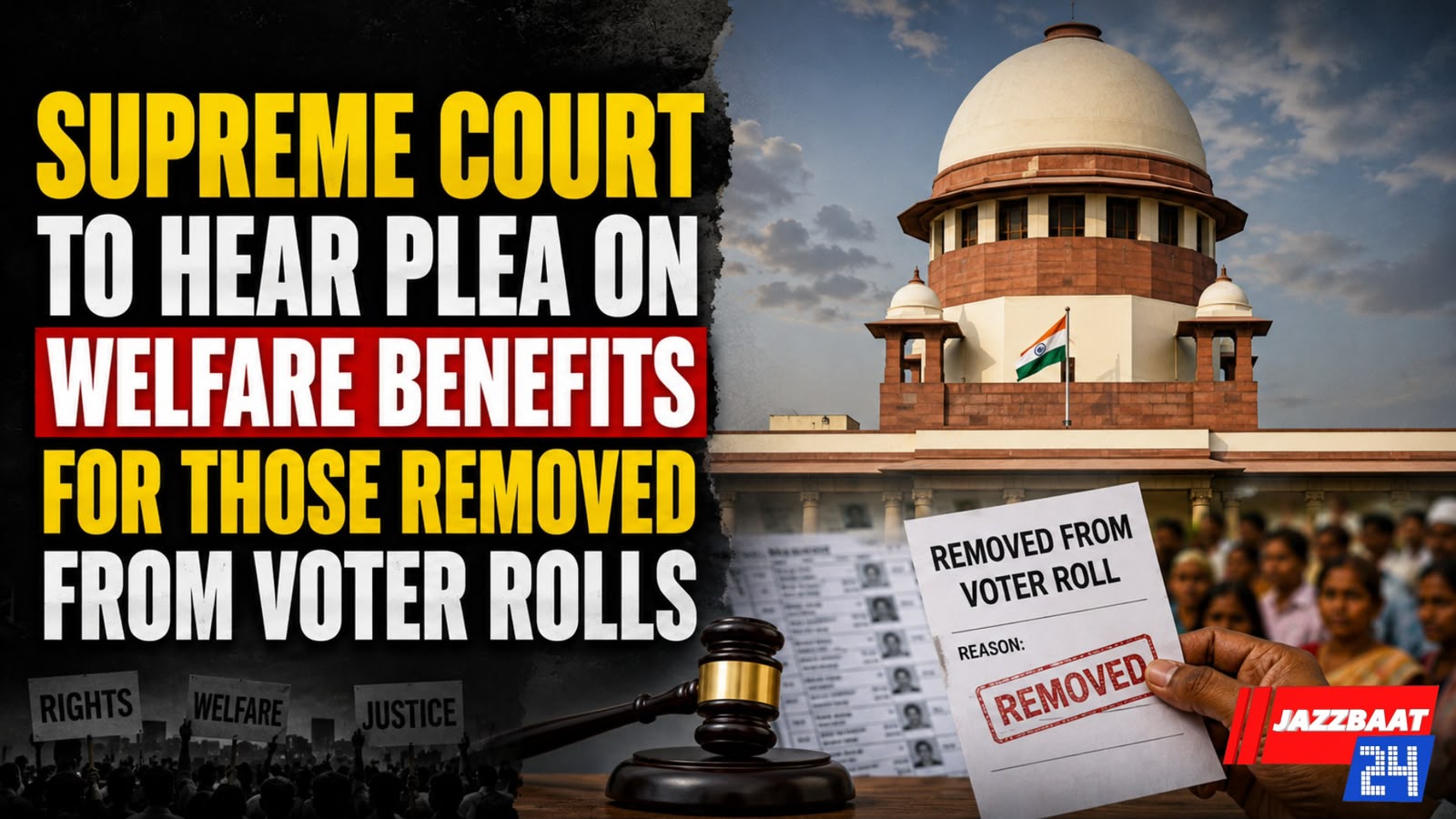
The Supreme Court on Friday agreed to examine whether individuals whose names have been deleted from the electoral rolls under the Special Intensive Revision (SIR) process can be denied benefits under government welfare schemes. The matter came up before a bench headed by Chief Justice of India Surya Kant, which issued notices to the Election Commission of India (ECI) and the West Bengal government on a petition raising concerns over the linkage between voter list exclusion and access to welfare benefits.
The petition, filed by Prasenjit Bose, argues that deletion from the electoral roll after rejection of appeals by Special Tribunals should not automatically result in the denial of benefits under schemes such as the Public Distribution System (PDS), the Annapurna scheme, and other social welfare programmes. The petitioner contended that electoral status and eligibility for welfare benefits are separate issues and should not be treated as interchangeable.
During the hearing, the Supreme Court indicated that it would consider the matter before July 25. The bench also reiterated an earlier observation that removal of a person's name from the electoral roll does not amount to a declaration that the individual has lost Indian citizenship. The court noted that the Election Commission is responsible for maintaining electoral rolls, while questions relating to citizenship are governed by separate legal provisions.
The issue has gained significance after concerns were raised over the possible impact of the SIR exercise on beneficiaries of welfare schemes in West Bengal. Critics have argued that excluding people from essential schemes solely because their names are absent from the electoral roll could adversely affect vulnerable sections of society. Supporters of the verification exercise, however, say it is aimed at preventing duplication and ensuring that benefits reach only eligible recipients.
The Supreme Court's decision to examine the matter is expected to clarify whether exclusion from voter lists can legally be used as a basis for denying access to welfare programmes. The notices issued to the Election Commission and the West Bengal government require them to respond to the petition before the next hearing. The outcome of the case could have significant implications for the relationship between electoral verification and the delivery of public welfare benefits.