
A major controversy has erupted around the Nashik unit of Tata Consultancy Services (TCS), following serious allegations of sexual harassment, workplace exploitation, and attempted religious conversion involving employees at its BPO centre. The case, which surfaced in March–April 2026, has now expanded into a multi-agency investigation, drawing national attention.
According to police reports, at least nine First Information Reports (FIRs) have been registered based on complaints by women employees, most of whom are aged between 18 and 25. The allegations span a period from 2022 to early 2026 and include sexual harassment, coercion, stalking, and pressure for religious conversion.
Investigators claim that a group of accused employees functioned like an organised network targeting vulnerable recruits, particularly those facing financial difficulties or personal issues. Victims alleged that they were manipulated emotionally, subjected to inappropriate comments, and in some cases pressured to change their religious practices.
So far, police have arrested multiple individuals, including senior staff members such as team leaders and a woman associated with the HR department, while at least one key आरोपी remains absconding. Authorities have formed a Special Investigation Team (SIT), which even deployed undercover women officers to gather evidence from within the workplace.
The role of the HR department has come under sharp scrutiny. Officials stated that complaints made by victims were allegedly ignored or discouraged. In one instance, a senior official reportedly told a complainant that “these things happen,” raising serious concerns about violations of workplace safety norms and the Prevention of Sexual Harassment (POSH) Act.
As the case intensified, TCS temporarily suspended operations at its Nashik facility and asked employees to work from home to ensure safety and avoid disruption.
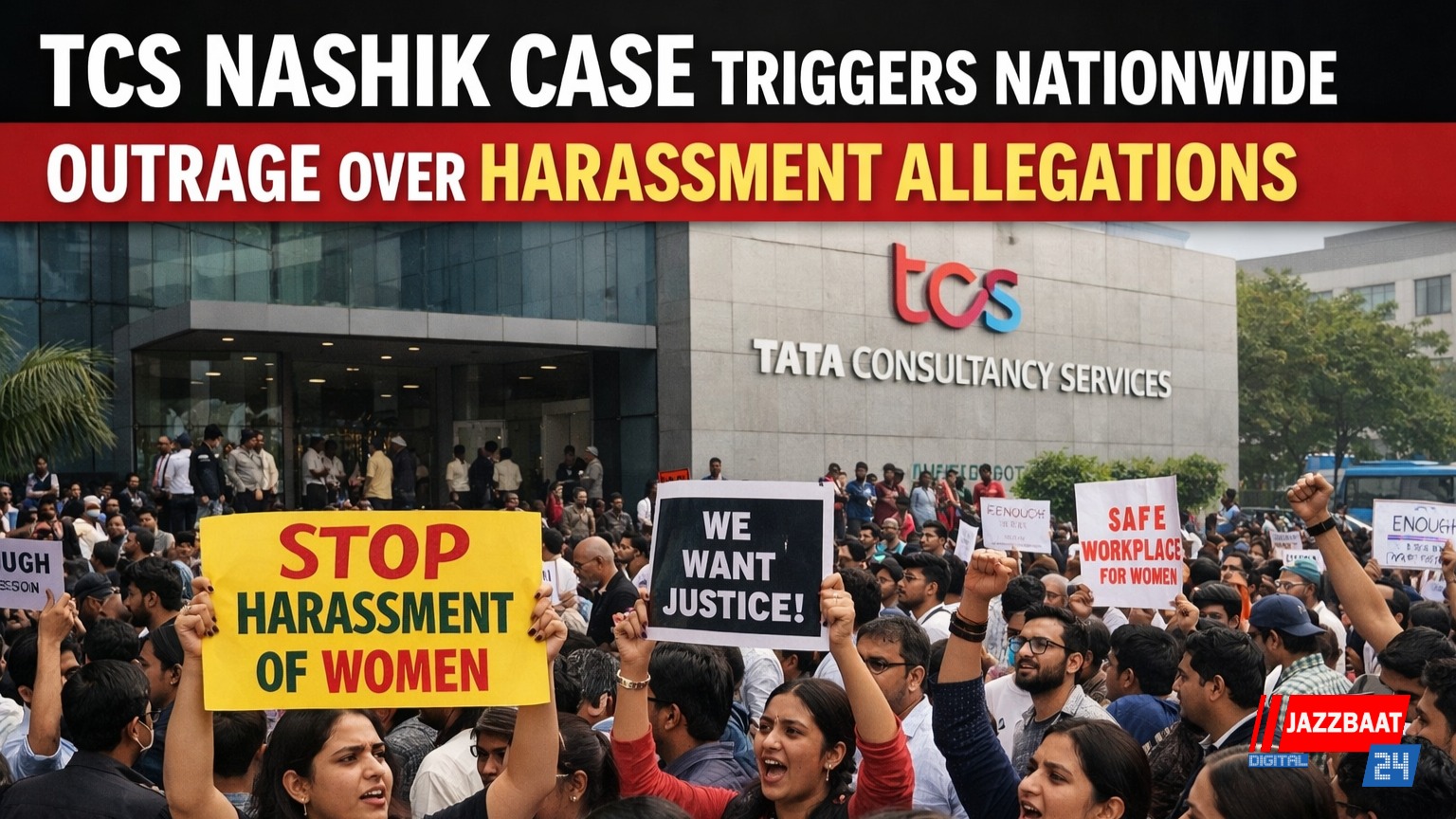
The controversy has also taken a political and legal turn. The National Commission for Women (NCW) has initiated a probe, while a petition has reached the Supreme Court seeking stricter action against forced religious conversions. Meanwhile, protests have been held in Nashik demanding justice for victims and stronger workplace protections.
TCS has stated that it follows a zero-tolerance policy toward harassment and has suspended the accused employees pending investigation. The company has also launched an internal inquiry.
As investigations continue, the case has sparked a broader debate on corporate accountability, employee safety, and the effectiveness of internal grievance mechanisms in India’s corporate sector.