
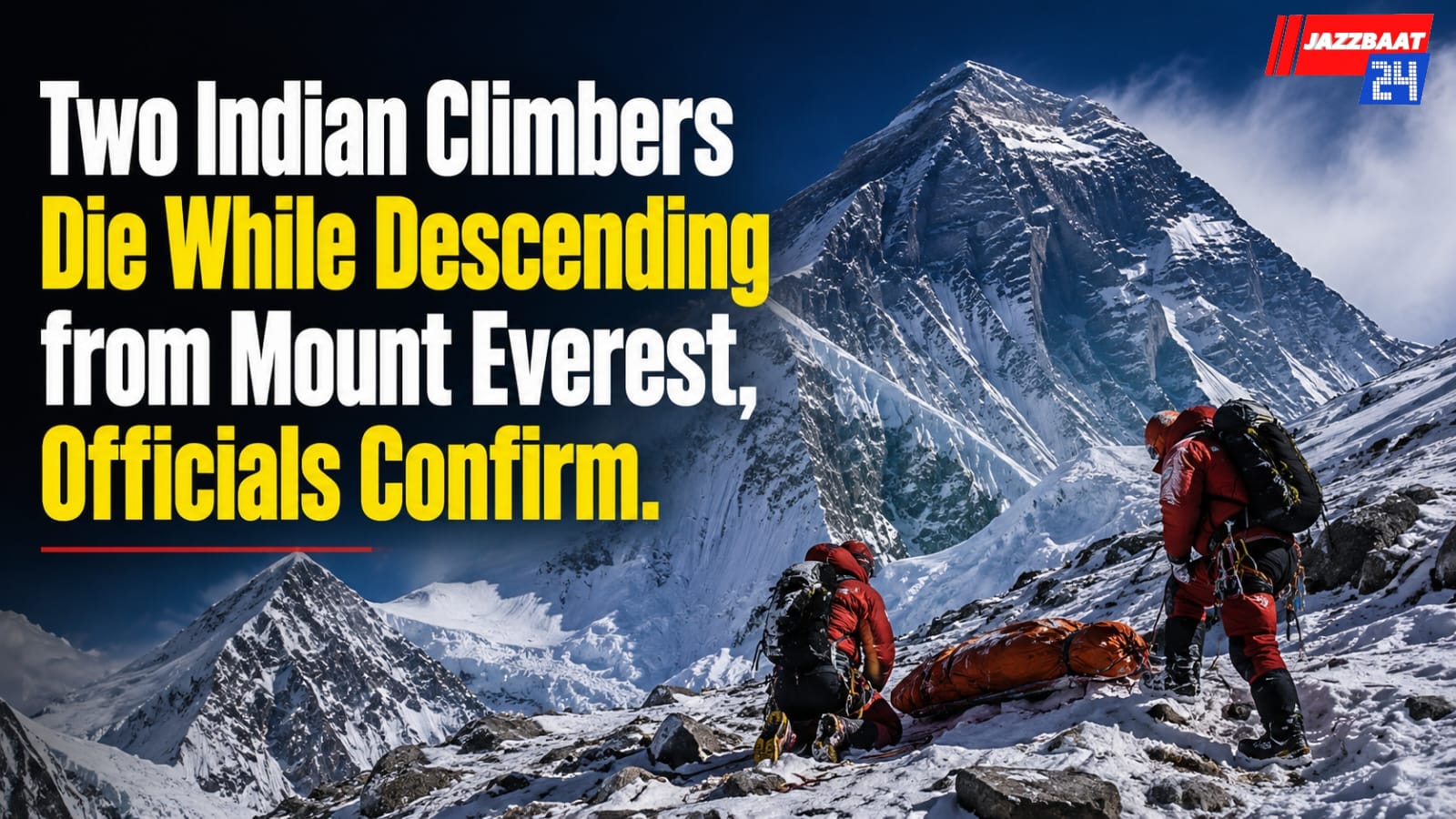
Two Indian mountaineers have died while descending from the summit of Mount Everest, officials confirmed, in yet another tragic incident highlighting the extreme risks of climbing the world’s highest peak.
According to Nepalese expedition authorities, the climbers had successfully reached the summit but encountered severe difficulties during their descent. Both reportedly succumbed to exhaustion and altitude-related complications in the “death zone,” an area above 8,000 metres where oxygen levels are critically low and survival becomes extremely difficult without supplemental oxygen.
Rescue teams were alerted after the climbers failed to return to lower camps within the expected timeframe. However, challenging weather conditions and the high altitude made immediate recovery operations extremely difficult. Their bodies are expected to be brought down once conditions improve and logistical arrangements are possible.
Officials have not yet released the identities of the deceased, pending notification of their families. The Indian embassy in Kathmandu is reportedly coordinating with Nepalese authorities and expedition organisers to provide necessary assistance.
The incident adds to the growing list of fatalities on Mount Everest, where unpredictable weather, overcrowding during summit windows, and physical exhaustion continue to pose serious risks even for experienced climbers. Experts note that most deaths on Everest occur during descent, when climbers are depleted after reaching the summit.
Authorities overseeing expeditions on the Nepal side have reiterated safety advisories for climbers, stressing the importance of proper acclimatisation, weather monitoring, and strict adherence to turnaround times. Despite improved infrastructure and rescue protocols over the years, Everest remains one of the most dangerous high-altitude climbing destinations in the world.
Mountaineering officials also highlighted that the 2026 climbing season has already seen multiple rescue operations due to altitude sickness and sudden weather changes, raising renewed concerns about safety standards and crowd management on the mountain.
The tragic deaths of the two Indian climbers have cast a shadow over this year’s expedition season, with calls for stronger safety regulations and better emergency response systems to reduce fatalities in extreme Himalayan conditions.