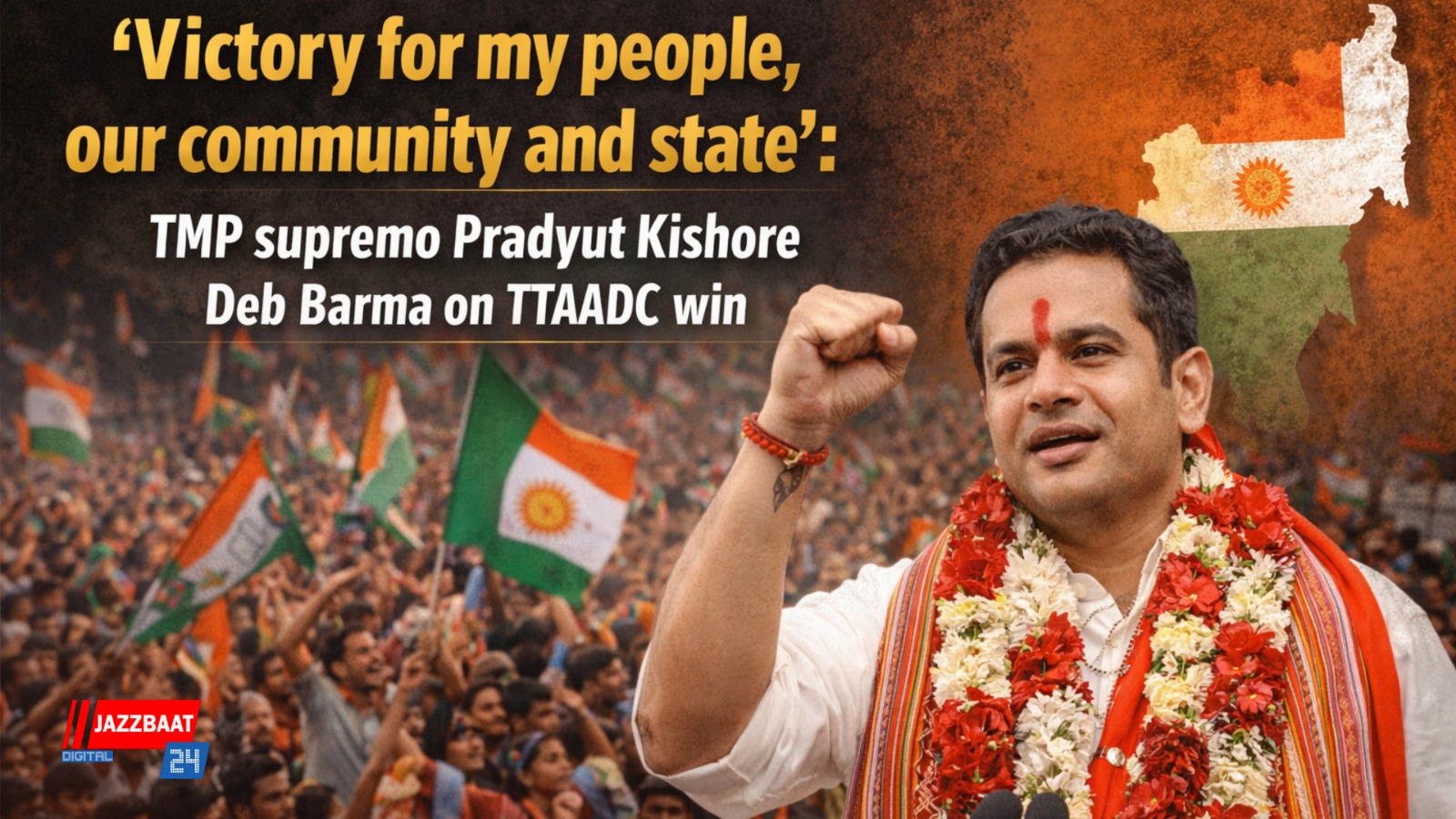
Tipra Motha Party (TMP) founder and supremo Pradyot Kishore Deb Barma has hailed the party’s sweeping victory in the Tripura Tribal Areas Autonomous District Council (TTAADC) general elections, calling it a mandate from the indigenous people of the state.
Speaking after the declaration of results, Deb Barma said the win belonged not to an individual but to the people of Tripura. “This victory is not mine. It is the victory of my people, our community and the state,” he said, expressing gratitude to voters for giving the party a strong mandate.
The TMP secured a decisive win in the 28-member council, winning 24 seats and significantly strengthening its position in the autonomous tribal governance body. The result marks another major political success for the party, which continues to maintain strong influence in the tribal-dominated regions of Tripura.
Deb Barma described the outcome as a message from the grassroots, saying that even smaller political forces can succeed if they remain committed to the rights and welfare of indigenous communities. He emphasised that the mandate reflected the aspirations of the Tiprasa people, especially on issues related to identity, development, and constitutional safeguards.
The TTAADC election saw participation from multiple political parties, but TMP emerged as the dominant force, while national and regional rivals struggled to secure significant representation. The results have once again highlighted the party’s strong organisational base in the autonomous council areas.
The Tipra Motha Party has consistently positioned itself as a voice for indigenous rights in Tripura, demanding greater autonomy and protection of cultural identity for tribal communities. Party leaders have said the latest victory will further strengthen their push for development and long-standing political demands.
With this win, TMP is expected to continue its focus on governance in the TTAADC region, including local development projects, infrastructure improvement, and preservation of indigenous culture.
Political observers view the outcome as a reaffirmation of the party’s influence in tribal politics in Tripura, setting the tone for future electoral battles in the state.