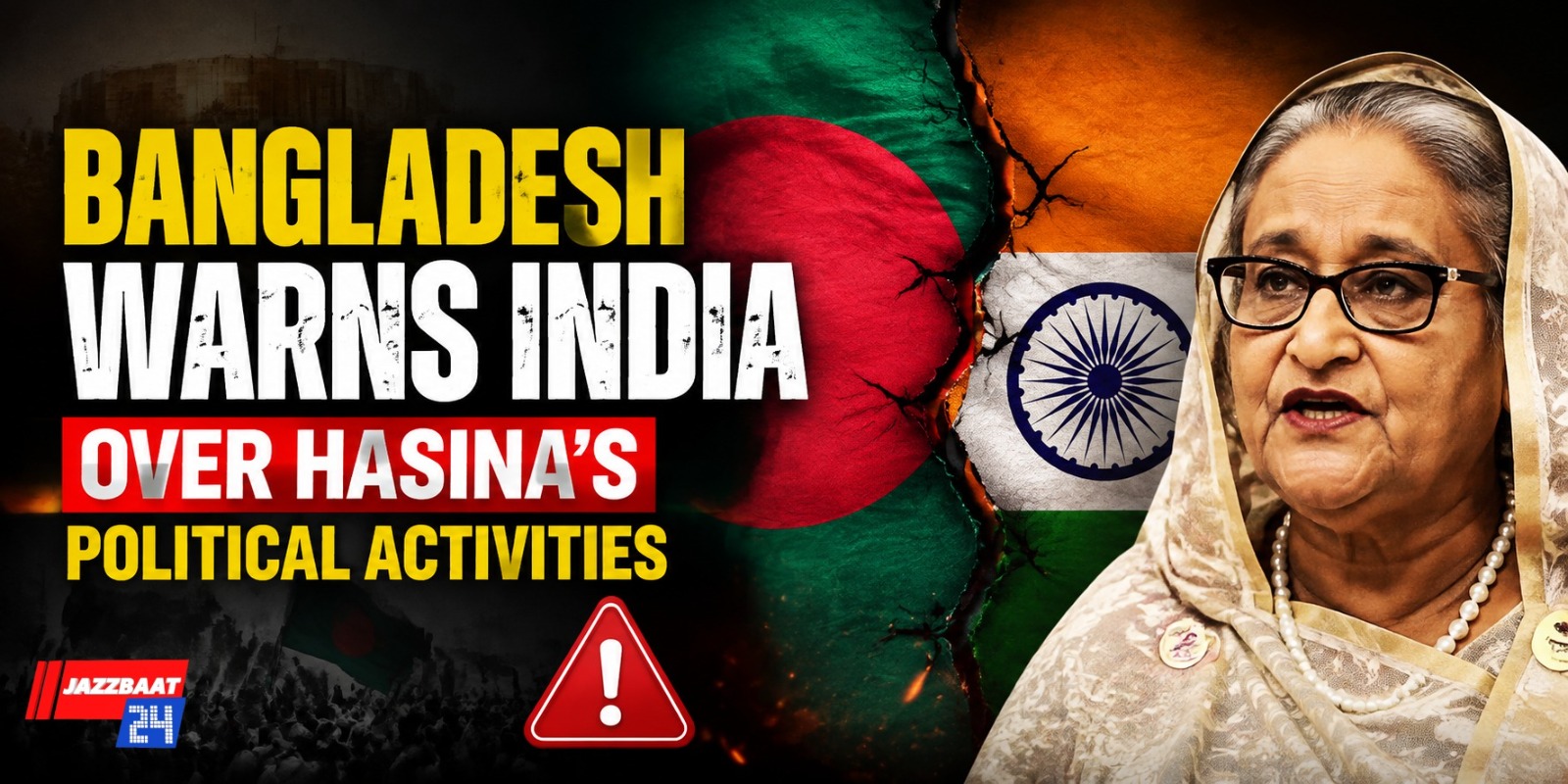
Bangladesh has asked India to clarify its position on former Prime Minister Sheikh Hasina’s planned virtual address from New Delhi, warning that allowing political activities by the ousted leader from Indian soil could damage efforts to improve relations between the two neighbouring countries.
Bangladesh’s State Minister for Foreign Affairs Shama Obaed Islam said Dhaka had sought India’s cooperation to ensure that Hasina does not engage in political activities while staying in India. Her remarks came ahead of a planned August 5 event organised by the Foreign Correspondents’ Club of South Asia (FCCSA), at which Hasina is expected to address supporters virtually from New Delhi.
Dhaka has made it clear that the issue is sensitive because Hasina, who has been living in India since leaving Bangladesh in August 2024, remains at the centre of a major political and diplomatic dispute. Bangladesh has repeatedly sought her extradition, while India has not agreed to hand her over.
Shama Obaed said allowing Hasina to conduct political activities from India could have an impact on bilateral relations. She stressed that Bangladesh wants India to make its position clear regarding the proposed event, particularly because the two countries have been trying to repair ties after a period of considerable tension.
Hasina was removed from power following the student-led uprising in Bangladesh in August 2024 and subsequently travelled to India. Relations between Dhaka and New Delhi have remained strained since her departure. Her continued presence in India, as well as public statements made from New Delhi, has repeatedly triggered criticism from the Bangladeshi authorities.
The former prime minister was sentenced to death in absentia in Bangladesh in 2025 in a case relating to the deadly crackdown during the 2024 uprising. The United Nations has estimated that as many as 1,400 people may have been killed during the violence. Hasina and her supporters have rejected the allegations and described the proceedings as politically motivated.
The latest dispute comes at a time when both countries have been looking to stabilise their relationship. Bangladesh has previously said that its demand for Hasina’s extradition should not prevent broader cooperation with India. In July, Shama Obaed said Dhaka needed India’s political and diplomatic goodwill to secure Hasina’s return, while maintaining that wider bilateral ties should continue.
India’s position on the planned August 5 event has not been publicly clarified. The FCCSA has also not publicly responded to Bangladesh’s concerns.
The issue is therefore likely to remain a sensitive point in India-Bangladesh relations. For Dhaka, preventing political activity by Hasina from Indian territory is closely linked to its domestic political transition. For New Delhi, handling the matter will require balancing its relationship with Bangladesh with the legal and diplomatic questions surrounding Hasina’s continued stay in India.
The latest warning underlines how deeply the former Bangladeshi prime minister’s presence in New Delhi continues to influence relations between the two countries.