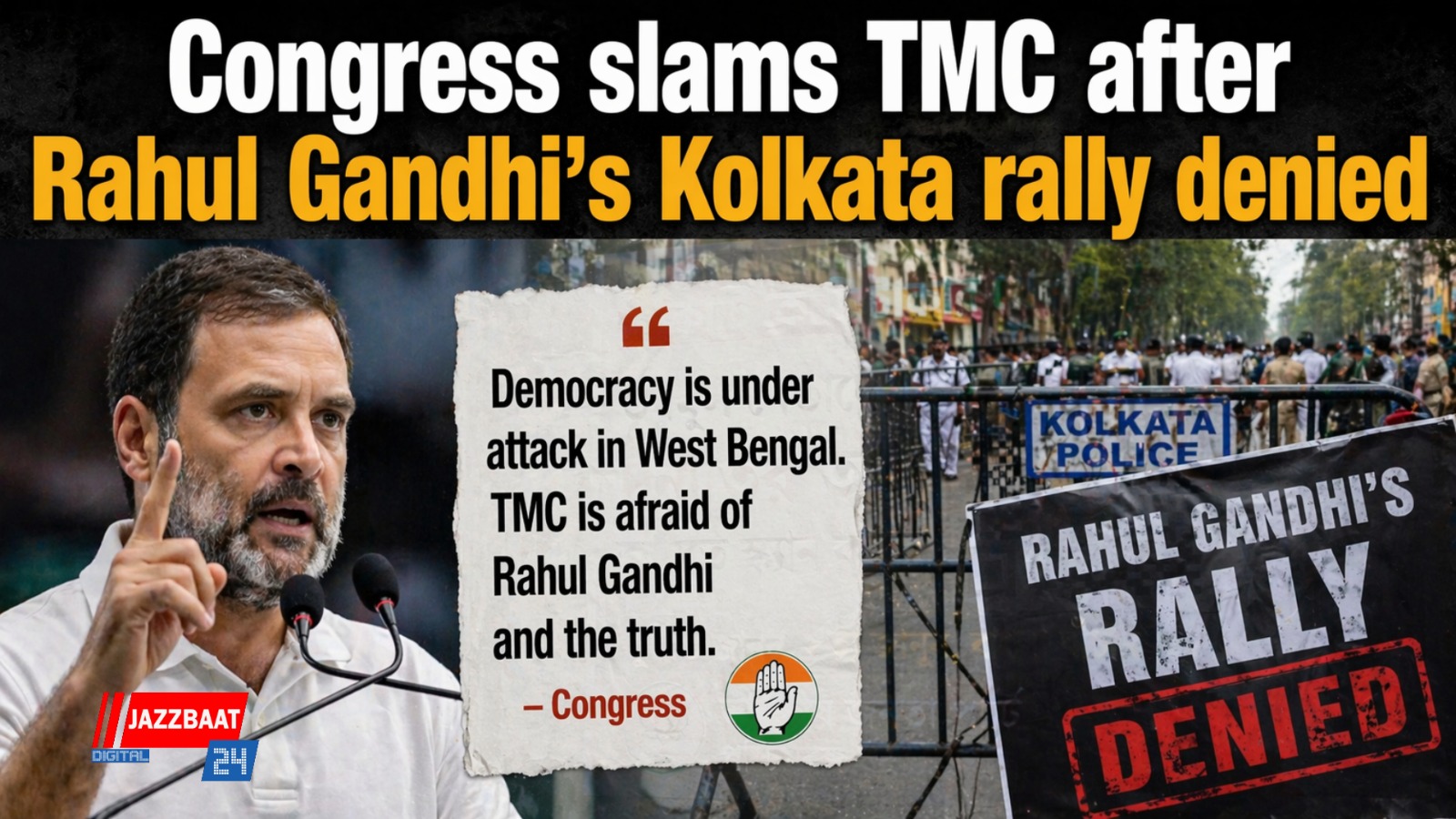
A political controversy has erupted in West Bengal after permission was allegedly denied for a rally by Congress leader Rahul Gandhi in Kolkata ahead of the first phase of Assembly elections.
The Indian National Congress has strongly criticised the ruling Trinamool Congress government, accusing it of deliberately blocking opposition voices. Party leaders alleged that the move reflects a “fear of democratic opposition” and claimed that such restrictions go against the principles of free and fair elections.
Congress representatives said that all necessary procedures were followed while seeking permission for the rally, but the request was either delayed or rejected without proper justification. They termed the decision “politically motivated” and aimed at curbing their outreach efforts in a crucial electoral phase.
Targeting Chief Minister Mamata Banerjee, Congress leaders accused her administration of misusing state machinery to prevent opposition parties from campaigning effectively. They argued that denying permission for rallies undermines democratic norms, especially during elections.
On the other hand, the state administration has maintained that decisions regarding rally permissions are taken based on logistical, security, and administrative considerations. Officials indicated that multiple political events and pre-poll arrangements often lead to scheduling constraints in a busy city like Kolkata.
The development comes at a time when campaigning has intensified across the state, with political parties trying to maximise outreach before the enforcement of the silence period. The Congress, though not the primary contender in the state, has been attempting to strengthen its presence through high-profile campaigns and alliances.
Political observers believe the incident could further strain relations between opposition parties in West Bengal, where electoral competition remains fierce. The controversy also highlights the broader issue of campaign restrictions and administrative neutrality during elections.
With the first phase of polling approaching, such disputes are likely to add to the charged political atmosphere, as parties continue to trade allegations over fairness and access in one of India’s most closely watched electoral battles.