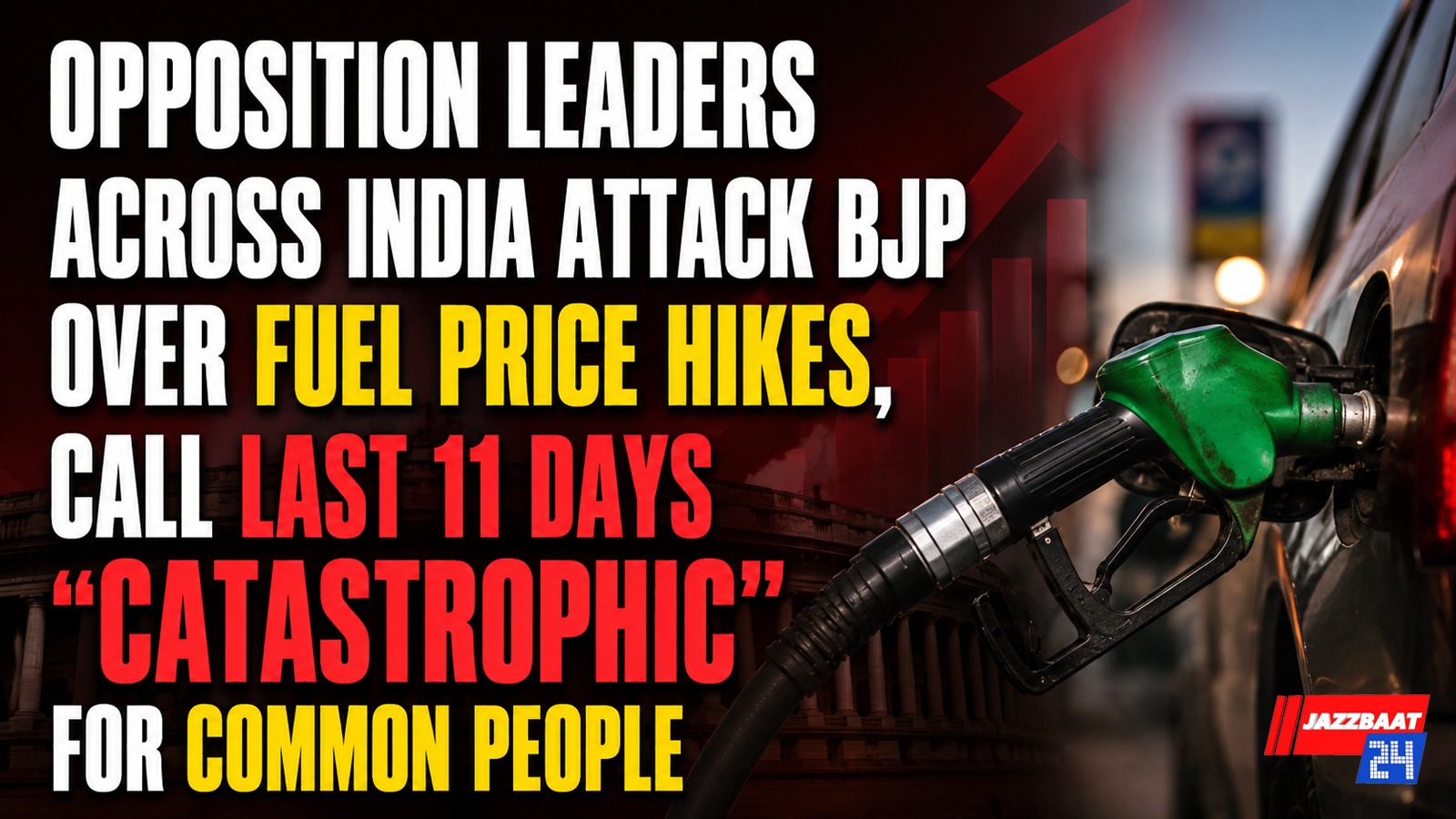
Opposition parties across the country have intensified their criticism of the central government over repeated fuel price hikes, alleging that the last 11 days have severely impacted household budgets and transportation costs.
Several opposition leaders have accused the ruling party of failing to control inflation, claiming that frequent revisions in petrol and diesel prices have placed additional financial pressure on ordinary citizens. They described the situation as “catastrophic for common people’s pockets,” arguing that rising fuel costs are directly driving up prices of essential goods and services.
The criticism comes amid reports of multiple fuel price revisions within a short span, which opposition parties say reflect poor economic management. Leaders from various parties have demanded immediate relief measures, including cuts in excise duties on fuel and greater transparency in pricing mechanisms.
Senior opposition figures, including members of the Congress and regional parties, have alleged that the burden of inflation is disproportionately affecting middle-class families, daily wage earners, and transport operators. They argued that even small increases in fuel prices have a cascading effect on food prices, logistics costs, and public transport fares.
Responding to the allegations, government sources have maintained that fuel pricing in India is linked to global crude oil rates and currency fluctuations. Officials argue that domestic retail prices are adjusted based on market conditions and that the government has previously taken steps to cushion consumers through policy interventions during periods of volatility.
Economists point out that global energy markets have remained unstable due to geopolitical tensions and supply chain disruptions, contributing to periodic fluctuations in fuel prices worldwide. However, they also note that frequent changes in retail prices can create public perception of instability, especially in price-sensitive economies like India.
The issue has now become a major political flashpoint, with opposition parties using it to attack the government’s economic record ahead of upcoming political battles. Ruling party leaders, meanwhile, have defended their policies, stating that India continues to maintain relatively stable fuel pricing compared to several other countries.
As the debate intensifies, fuel inflation is expected to remain a central issue in political discourse, with both sides exchanging sharp statements over its impact on the common people.