
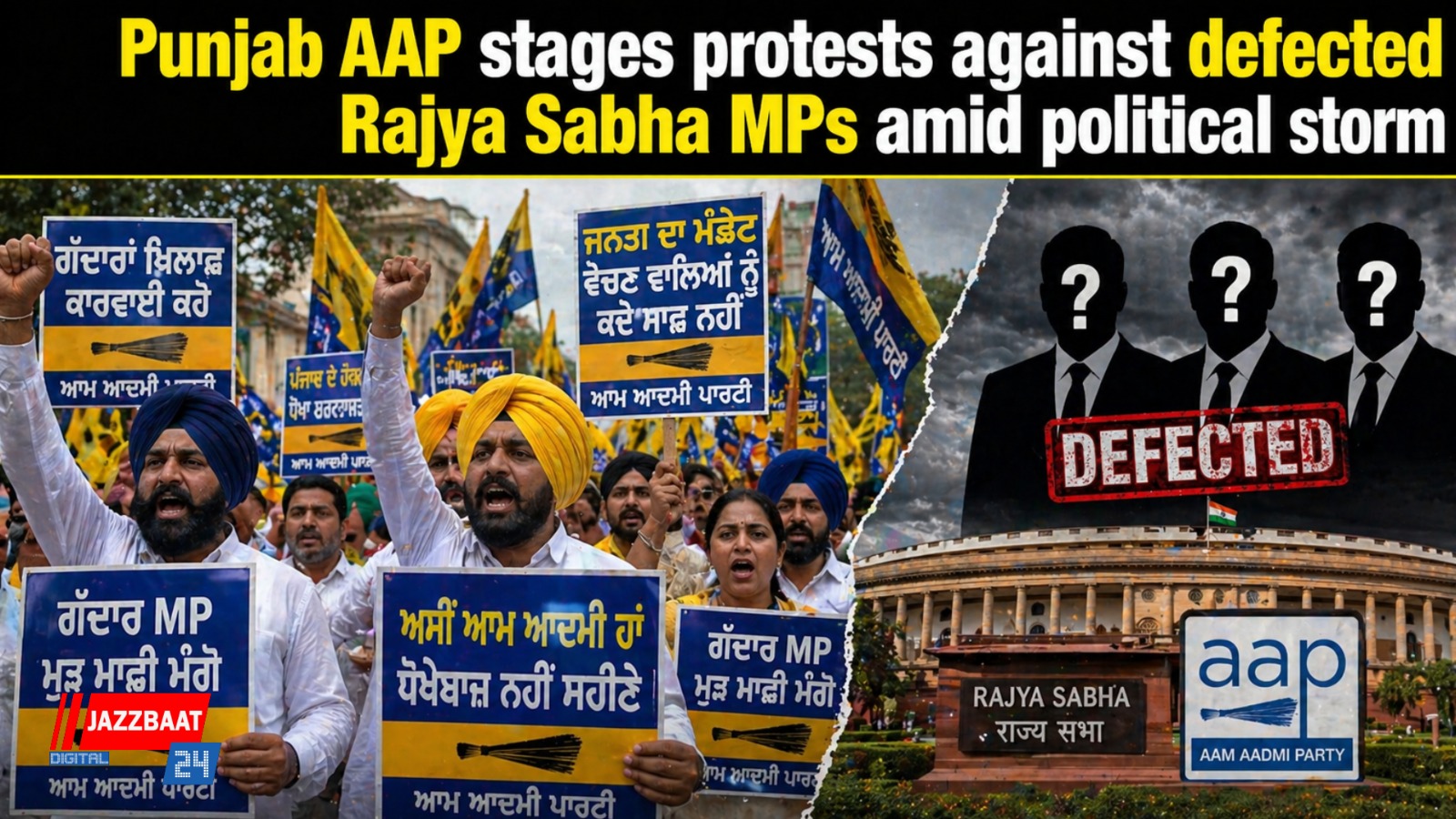
The Aam Aadmi Party (AAP) in Punjab on Saturday staged strong protests against its Rajya Sabha MPs who recently quit the party and joined the Bharatiya Janata Party (BJP), triggering a fresh political confrontation in the state.
The protests were organised outside the residences of several defected MPs, including Harbhajan Singh, Ashok Mittal and Rajinder Gupta. AAP workers raised slogans against the leaders, accusing them of “betraying Punjab” and abandoning the party’s ideology for political gain. In some places, protesters also displayed placards and shouted slogans demanding accountability from the defectors.
The development comes days after a major political shake-up in which multiple AAP Rajya Sabha MPs resigned and switched to the BJP, significantly weakening the party’s presence in the Upper House. The mass exit has reduced AAP’s strength in the Rajya Sabha from ten members to just a handful, intensifying internal pressure on the party leadership.
AAP leaders in Punjab alleged that the defections were part of a larger political strategy by the BJP to weaken the ruling party in the state. They accused the BJP of “poaching” elected representatives and undermining democratic mandates. Senior party leaders also met and planned further organisational responses, including legal and procedural steps against the defected MPs.
Meanwhile, tensions escalated on the ground as party workers expressed anger over the sudden shift in allegiance by senior leaders who were once prominent faces of AAP in Parliament. The party’s youth wing also participated in the demonstrations, emphasising that voters had elected these MPs on an AAP ticket and that their resignation amounted to a betrayal of public trust.
The political controversy has also drawn reactions from opposition parties in Punjab, with leaders criticising AAP’s internal management and accusing it of failing to retain its elected representatives.
The situation marks one of the most significant political crises for AAP in recent times in Punjab, as the party attempts to control damage and rebuild its organisational strength ahead of upcoming political challenges.