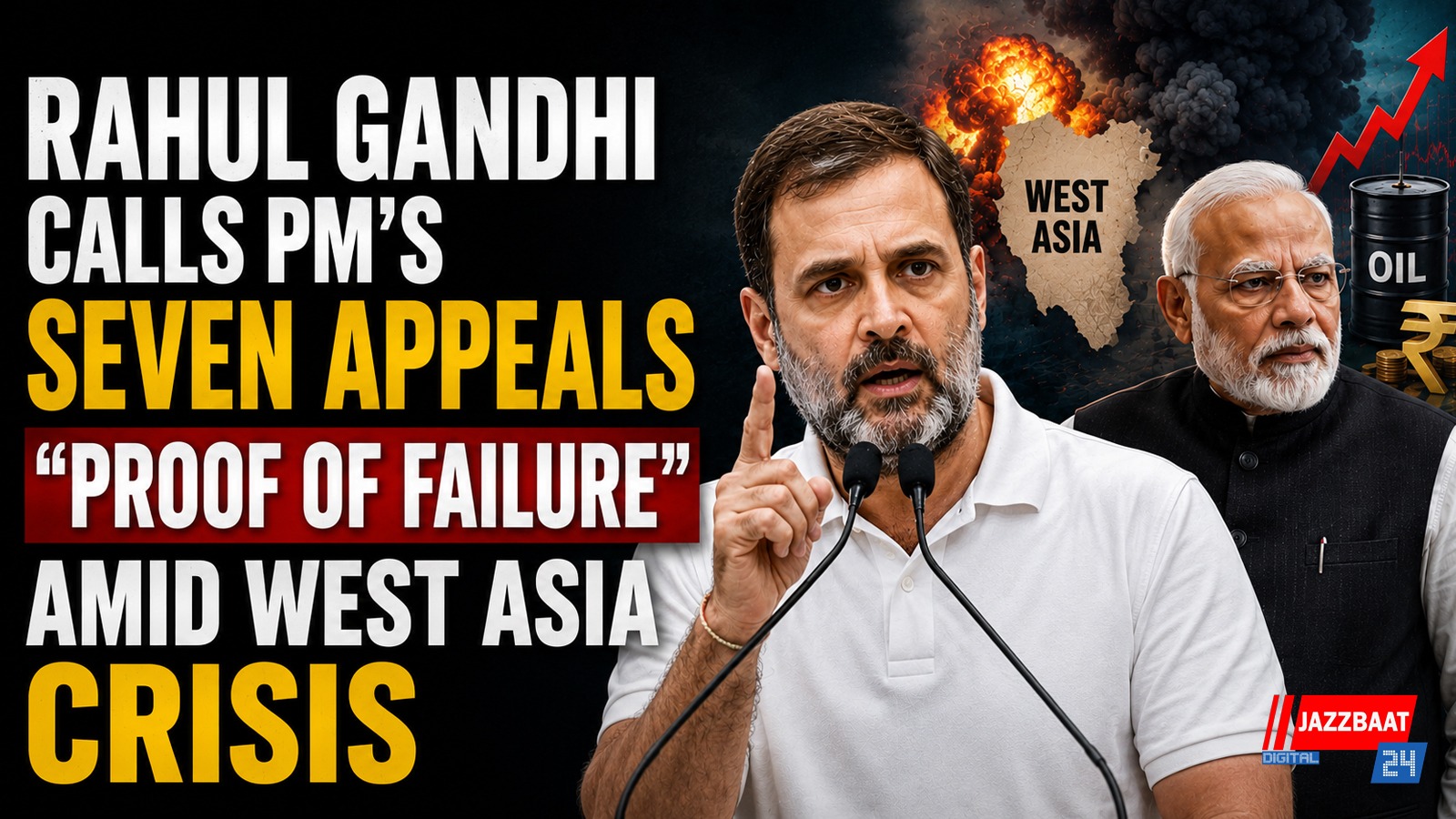
Congress leader Rahul Gandhi on Sunday launched a sharp attack on Prime Minister Narendra Modi over his seven-point appeal to citizens in view of the West Asia crisis, saying the suggestions were not “sermons” but evidence of the government’s failures.
Reacting to the Prime Minister’s call urging people to conserve fuel, reduce unnecessary expenditure and adopt cost-saving measures, Gandhi said such appeals shift the burden onto ordinary citizens instead of addressing policy shortcomings. He argued that the government should focus on structural solutions rather than asking people to make sacrifices.
The remarks come amid rising concerns over global instability due to tensions in West Asia, which have led to volatility in oil prices and fears of economic strain in import-dependent countries like India. Modi had recently urged citizens to act responsibly to help mitigate the impact, emphasising collective effort during challenging times.
Criticising the approach, Gandhi said the appeals reflect the government’s inability to manage the situation effectively. He added that citizens are already facing high inflation and rising living costs, and further calls for restraint only highlight the lack of concrete relief measures.
Leaders from the Indian National Congress echoed his views, stating that the focus should be on policy interventions to control prices and support households rather than relying on public appeals.
On the other hand, members of the Bharatiya Janata Party defended the Prime Minister, saying the appeal was a responsible step aimed at preparing the country for global uncertainties. They maintained that public cooperation is essential in times of economic stress.
The exchange has intensified the political debate over how the government is handling the economic impact of the West Asia situation, with both sides trading sharp criticism.
As geopolitical tensions continue to affect global markets, the issue is likely to remain a major talking point in the coming days, especially as opposition parties seek to corner the government over economic concerns.