
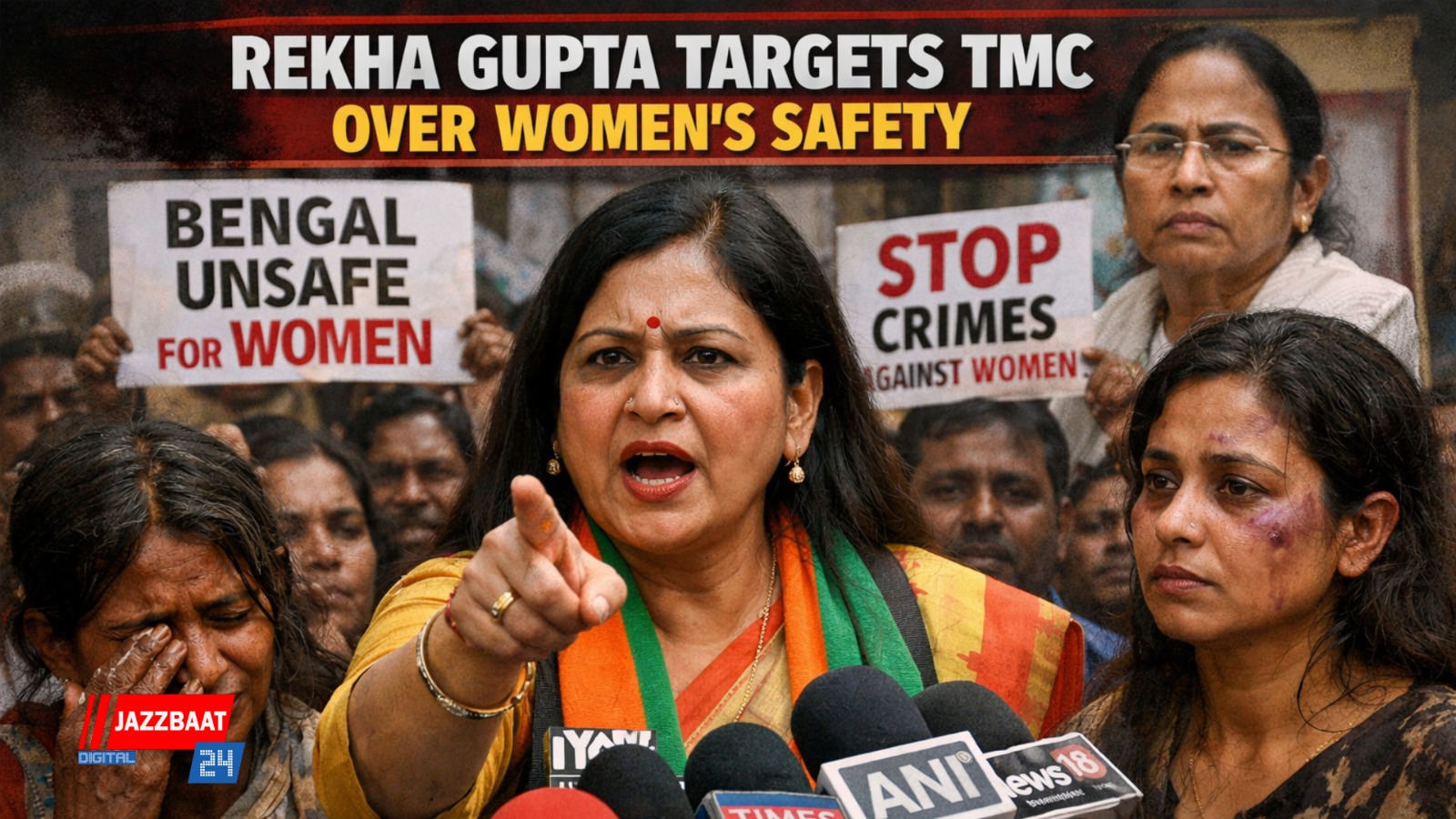
Delhi Chief Minister Rekha Gupta on Tuesday launched a strong attack on the Trinamool Congress (TMC) government in West Bengal, claiming that the “end of corruption and terror is close” in the state. She also accused the ruling party of failing to ensure the safety and security of women.
Addressing a public gathering during the ongoing election campaign, Gupta targeted West Bengal Chief Minister Mamata Banerjee, alleging that incidents of crime against women have increased under her leadership. She said that the state government has not taken adequate steps to address these issues, leading to fear and insecurity among citizens.
Gupta further claimed that people in West Bengal are looking for change and are determined to vote out the current government. She asserted that the Bharatiya Janata Party (BJP) is gaining strong support on the ground and will bring an end to what she described as a culture of corruption and lawlessness.
The Delhi Chief Minister also emphasized that women’s safety has been a key issue in the campaign, with BJP leaders repeatedly highlighting alleged shortcomings of the TMC government. She promised that if the BJP comes to power, it would implement stricter law enforcement measures and prioritize the protection of women.
In response, leaders from the Trinamool Congress dismissed the allegations, stating that the BJP is attempting to politicize sensitive issues for electoral advantage. They maintained that the West Bengal government has undertaken several initiatives to improve women’s safety and empowerment.
The political exchange underscores the intensifying rhetoric in the run-up to the elections, with leaders from different states campaigning actively in West Bengal. Issues such as governance, corruption, law and order, and women’s safety have emerged as central themes in the electoral battle.
As campaigning continues, both the BJP and the TMC are stepping up their efforts to influence voters, with sharp attacks and counterattacks becoming a regular feature of the political landscape. The outcome will ultimately depend on how voters respond to these competing narratives at the ballot box.